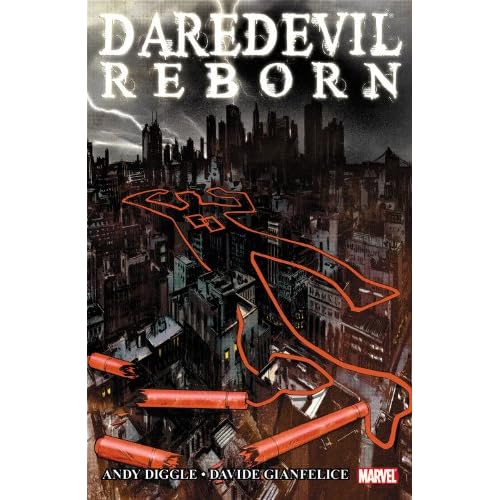
Daredevil: Reborn

I feel I owe an explanation.

Those of you with the disposable time needed to keep track of my posts no doubt noticed that there wasn’t one last Sunday. There was also no follow up from me as to why you were left devoid of any unfunny comic critiquing for a week.

The simple answer is because I was left a little jaded with new releases after I blasted DC Comics with both barrels the other day. Sure, I’ve got the next volumes of Batwoman and Animal Man ready to go, but really, the whole thing has left me with little drive to read comic books these past two weeks. That is, with one exception, which I’ll get to in a minute. Instead, I’ve dived back into the world of wordy novels. I’m currently between three at the moment – David Mitchell’s Cloud Atlas, Neil Gaiman’s American Gods, and the epic finale to The Wheel of Time – and it’s kinda refreshing to get back into stories that don’t require pictures to tell half the narrative. I tend to go through phases each year where I become stuck in one type of novel or the other, and it seems 2013’s phase for wordiness came early this time around.

So that leaves me with a problem, since I wouldn’t be worth my salt as a writer if I didn’t actually write something. That means this week you’ll be treated to a book I read recently that few of you will have heard of, even less will care about, and only one or two of you will stay with me after you read this review. Hopefully I can get everyone back onboard after the new Justice League hits shelves next week.
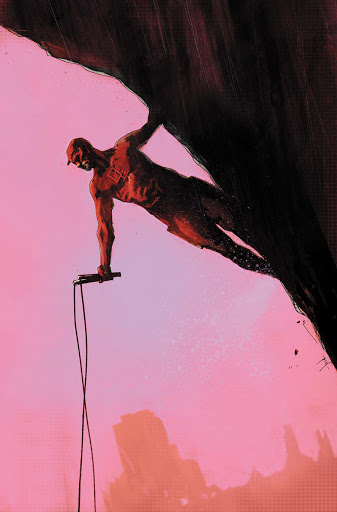
Daredevil has been one of Marvel’s big superheroes since 1964, though he’s something of an in-betweeny kind of character; he’s not popular enough to break into the A-list with Iron Man and Spider-Man, but he’s got a large enough presence to be considered greater than the B-list heroes like Iron Fist and Black Panther. As such, he’s nearly something of a niche interest in Marvel’s menagerie of magic men, and it’s a niche I’ve enjoyed exploring.

One thing that particularly sets Daredevil apart is how depressing his stories are. Over the course of the last decade he’s gone through enough psychological crap to make The Walking Dead look balanced by comparison. There’s no such thing as a happy ending when Daredevil’s involved, and that can either really draw you in or make you avoid it faster than a fish-scented coffee cup. As with all things, though, sooner or later something has to give, and there’s only so much mental damage a crimson-clad superhero can endure.

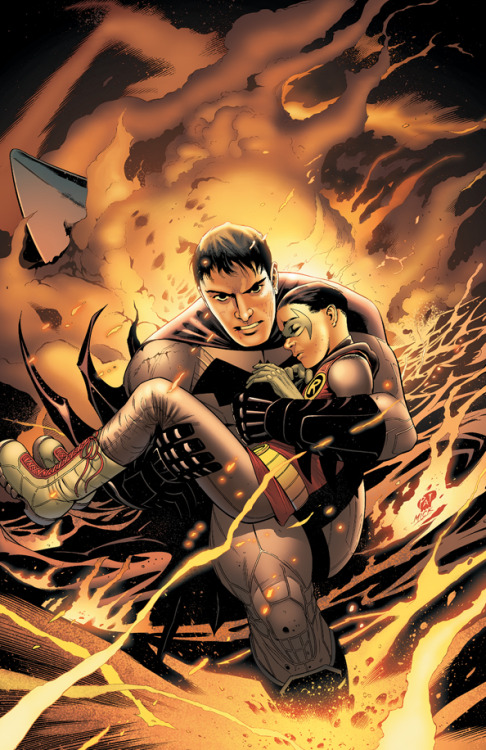
Daredevil: Reborn is exactly what it says on the tin. It’s the reformation of Daredevil and his civilian alter ego, Matt Murdock, following a complete nadir where the eponymous horny devil suffers a major enough breakdown to get possessed by a demon-thing (it makes sense in context). Murdock ends up going walkabout in America’s mid-west, getting involved in a scuffle with some arms-dealing dirty cops and acclimatising to life without the leather fetish outfit he calls a costume.

On paper, that’s really all the story is about. I’m making it sound more droll that it actually is, obviously, because it’s good enough for me to rank it against some of the best superhero scuffles I’ve ever read in spite of the fact that the titular character’s costume only makes a single appearance at the very end of the book. It feels a bit like how The Dark Knight Rises was once described – “a superhero story without a superhero”.

In my pre-enlightened days when Image Comics looked boring and I wouldn’t have touched anything that didn’t contain at least one colourful outfit you could fail at cosplaying in, I wouldn’t have gone anywhere near Daredevil: Reborn. A superhero story with no big villain, no other well-known supporting characters, no easily-recognisable emblem and no homoerotic clothing of any kind? Sounds about as good as an Attenborough documentary on paint drying.

But Reborn really does break away from that notion, and presents itself as a really character-driven piece that works really well without the costume. It allows you to become more attached to Matt Murdock as a character before he’s a proper superhero again, and the lack of any of the other regular Daredevil supporting players gives focus almost entirely on him. The dialogue by Andy Diggle also paints a realistic picture of a normal man in a bad situation in amongst the fantastic artwork by Davide Gianfelipe, and together it all meshes into a wonderful story that manages to walk a fine line between navel-gazing and action sequences.

It also works fantastically as an orientation point for new readers. Despite the fact the narrative makes references to past events that brought Murdock to where he is now, they’re not presented in a way that makes reading the previous installments a necessity. Sure it’ll flesh out the world a little, but on the whole Reborn is a really standalone story that masterfully sets up the subsequent run afterwards. It’s almost its own origin story, in a sense, except the murdered parent and psychologically-tormented childhood bits have already occurred – and some might find that to be an improvement. It does let itself down a little with a villain who only really shows up towards the end and is about as two-dimensional as a Scooby-Doo antagonist, but as with books like Born to Kill the villain isn’t the focus. The artwork also gets a little too artsy here and there, and most of the dirty cops all look the same, but these are just little complaints.

On the whole, Daredevil: Reborn is a wonderful attempt at a character relaunch without relying on heavy retcons or a complete reboot to get the job done, and also provides a great bridging chapter between sagas for veteran readers. It’s short, so it doesn’t outstay its welcome, and it gives off the impression that a lot of thought and heart has gone into it. And if you’re interested in checking out Mark Waid’s award-winning Daredevil run that’s currently kicking copious amounts of ass at the moment, Reborn acts as a really great prologue for it.

Now excuse me while I get back to some real high-brow literature.

/jks
STORY: 4.5/5
ARTWORK: 4/5
DIALOGUE: 4/5

OVERALL: 12.5/15

BEST QUOTE: “We’ve got work to do.” – Matt Murdock

Green Lantern: The Revenge of Black Hand

I have one gigantic complaint for DC’s New 52 effort that has won, lost, re-won and squandered most of the comics industry over the last two years: EMPLOY BETTER WRITERS.

Oh, wait, sorry, two complaints: MAKE TRADE RELEASES MORE FREQUENT.

It’s been nearly eight months since Volume 1 of the kinda-rebooted-but-really-not Green Lantern hit my shelf (hrm, probably too many hyphens in there), and while the underwhelming introductory book has gathered dust in my bedroom I’ve waited with bated breath while all the awesome and interesting new plot twists take effect each month in reviews and recaps. I knew I’d have to wait until January to see what happens next (which is frustrating, since Volume 2’s first issue was published around the same time Volume 1 came out) because DC seem to have this maddening new policy of not releasing any Volume 2s until all the various Volume 1s are out first.

Seriously, who the f@%k wants to wait for crap like Aquaman and Batgirl to come out while awesomeness like Batman and Swamp Thing gets pushed back more months than it needs to? It’s no sin to overlap, DC. You’re in enough trouble as it is, don’t make things worse for yourself by forcing devout readers like me wait ten months for Night of the Owls.

Ok, I think I’m done whinging now. #firstworldproblems, and all that.

So after Sinestro utterly failed as an introduction for new readers to the extensive Green Lantern mythos does The Revenge of Black Hand make steps towards reclaiming the glory Geoff Johns achieved previously during his run, or have we reached the shark-jumped era of Hal Jordan’s adventures?

Following straight on from Sinestro‘s conclusion we have kinda-more-responsible Hal Jordan being caught mid-coitus (more hyphens!) and forcibly re-inducted into Sinestro’s little GL offshoot. After threatening to blow out Carol Ferris’s brains in a way Isaac Newton would spew molten vomit at, Sinestro orders Hal to help him unravel the mysteries of the ever-prophetic Book of the Black while also contending with whatever nasty shenanigans the Guardians are cooking up on this particular week. Despite initial resistance, it isn’t long before Hal re-embraces his status as a Lantern and gets involved in some deep and dark plotting involving the Indigo Tribe, an allegedly-reformed Black Hand and something ominously titled “The Third Army”, intended as a replacement for the Green Lantern Corps.

Phew. I think that’s everything.

In contrast to Sinestro‘s Ke$ha-thin plot, Revenge moves at a not-inconsiderable pace. It links more and more back to the pre-Flashpoint GL saga, especially in regards to the events of Blackest Night, so newer fans may be slightly put off by all the references made before their supposed Volume 1 that make them scratch their head and reach for Wikipedia. Despite that, the story kicks a lot of ass all over the place – it’s punchy, gripping, with an involved-but-not-too-inane emotional core (sweet Jesus, the hyphens!) and some really fantastic payoffs from way back at the start of Johns’ run. There’s a scene in the middle that’s almost a direct parallel to a similar bit in Green Lantern: Rebirth, and any time the New 52 deigns it necessary to link back to its better, less greenback-driven days it makes me happy indeed.

Having said that, the branching out to touch on the other GL titles is done poorly. We get a few panels here and there, during the Guardians’ creation of the Third Army (who incidentally look like what I imagine most 4chan denizens resemble), where references are made to the little blue baldies also gunning for John Stewart and Guy Gardner, resident protagonists of the Green Lantern Corps series, and Kyle Rayner’s merry band of multicoloured misfits, the stars of Green Lantern: New Guardians. For someone like me, who keeps sorta up to date on all this, it’s alright, but I’m willing to bet most casual readers will be digging out the iPad and finding Wikipedia once again when that all happens.

On top of that, the Guardians’ motivations feel wonky. Long-time readers have known for yonks that they’ve secretly got it in for our Guys in Green, but there’s still almost nothing revealed here as to why. Is it because the Third Army are meant to embody that lack of emotion the Manhunters had alongside the organic competency and ability to innovate that the Lanterns possess? Or are they just bored with life and, not unlike Lindsay Lohan when she robs a jewellery store, trying to piss a load of people off when they feel there’s nothing better to do?

I have no doubt we’ll get more information on that front as time goes on, and as always I trust Geoff Johns to work it all out. He might’ve backed the movie, sure, but he also gave us Saint Walker. You can’t really fault him after that.

On that note, the artwork is the usual Doug Mahnke standard – big-lipped and full-figured, in the best way possible. There seems to be a far greater variety of colour than in previous books, and the human faces look less like Mandrakk the Vampire from Final Crisis and more realistic. I’m still not entirely sold on Carol Ferris having Usain Bolt’s abdominal muscles, but I guess she needs to have a hobby beyond screwing Hal and being Queen of a space empire.

Scripting feels a lot tighter and crisper than in Sinestro, and more of a return to form. The grudging-buddy-cop relationship between Hal and Sinestro (which has no shortage of more goddamn hyphens!) works well, and especially in moments like the halfway point – in which Hal revives Sinestro and tells him the tables have turned vis a vis their rings – it’s enough to make you out loud. Which is good, since Sinestro was about as funny as cracking your skull on a pool step.

I still feel, though, like we’re past the salad days of Geoff Johns’ Green Lantern run. We had an epic climax during Blackest Night with a lot of good buildup, the Brightest Day fallout worked marvelously as a segue into War of the Green Lanterns and the final expulsion of Hal from the Corps, and now everything after it feels a bit forced. It’s still good, don’t get me wrong, but it feels like we’re over the peak. The best has happened. I guess, especially since Blackest Night is my favourite GL story yet, it gives us unrealistic expectations that Johns will have to work hard to top the immensity of what he’s already done.

So, in the end, The Revenge of Black Hand gets a recommendation. Like Sinestro, it’s better if you’ve read the run up until now, but casual readers may still get a kick out of it. The book does act as a clear indicator that we may need to lower the bar just a bit to avoid further disappointment – unless Nekron somehow reappears and we get Blackest Night 2: Rainbow Boogaloo.

STORY: 4/5
ARTWORK: 3.5/5
DIALOGUE: 4/5

OVERALL: 11.5/15

BEST QUOTE: “A Green Lantern? And an ugly one at that!” – Natromo

Chris’s Indie Summer Circuit

Welcome back, one and all! I trust the New Year brought happiness, love and no small amount of liquor.

To dive straight back into it, I’d like to throw something at you all before we return to the monthly arrivals of superhero texts from the Big Two. I’d like to tell you all about Image Comics.

Now there’ll be a fuller-length explanation over on that other blog I write but to put it simply, Image Comics is one of the biggest and best comic book companies out there for publishing independent and creator-owned material. It provides a far greater degree of freedom in terms of content and a broader level of creativity in terms of narrative and character. I’ve spent most of the summer reading a lot of their books, partly because DC and Marvel had a bit of a nap from trade releases over Christmas, and partly because last year’s superhero offerings were, on the whole, disappointing.

This is not to say I’m swearing off superheroes and going so pretentious that I sound like I’m guffawing at the peasants every time I speak, but it does mean a larger number of Image and similar companies making appearances in my reviews every now and then. Because, seriously, they have some pretty freakin’ excellent stuff going at the moment, some of it by writers even the superhero-narrow-minded would know. Thus, here’s a brief selection of some of the best Image series I read over December and January. They won’t be given traditional scores this time around, but rest assured they are most definitely worth checking out.

Something to keep in mind as well – Image tends to be cheaper per book than most of the DC and Marvel stuff. So if you’re after “bang for your buck”, like I am, consider checking these out if only because you get vastly superior stories for comparitively economical prices.

REVIVAL, VOLUME 1: YOU’RE AMONG FRIENDS
Written by Tim Seeley, Art by Mike Norton


As many are aware by now, zombies appear to be as rooted in the modern cultural zeitgeist as flairs were in the 80’s. It seems the shambling grotesqueries of the walking dead now have a permanent place in the social constructs of the 2000s, and every man and their dog wants to get in on the action. Preferably with machetes and handguns.

In defiance of contemporary tradition, author Tim Seeley instead opts for a different take on the undead – rather than being Romero-esque walking corpses, the dead return to life in a manner similar to Torchwood‘s miniseries Miracle Day in that they stay whole, speak English and, unlike Shaun of the Dead, can’t necessarily have their head removed or brain destroyed in order to silence them.

Revival, touted as a “rural noir” about death, really feels like something a bit fresher than the zombie norm. It’s almost nothing like The Walking Dead except for the slightly Deep South setting, and the interpersonal dilemmas juxtaposed against the the resurrection of deceased loved ones – and all the political, social and religious problems that implies – are explored realistically and compellingly. It does take a little while to get going, but once you hit the climax of the first issue you’ll be hooked. God knows I was.

The artwork compliments the storytelling with fleshed-out colours, great use of colour contrasts and some wonderfully grotesque and creepy imagery that gives it extra kick. There’s an old woman with a pair of pliers that manages to do things that got to me way more than some of the goriest panels in Walking Dead. I pray I’m never going to need dentures one day.

Admittedly Revival‘s first volume is a tad short, and you’ll probably breeze through it in an hour or two, but as the start of what looks like an intriguing, unique twist on the undead genre it’s definitely worth a read.

Speaking of innovating an existing genre…


THE MANHATTAN PROJECTS, VOLUME 1: SCIENCE. BAD.
Written by Jonathan Hickman, Art by Nick Pitarra


Between movies, video games, alternate reality novels and cross-stitch patterns, World War II-era narratives have been, for all intents and purposes, done entirely to death. Yeah, we know, Hitler was a bad egg and the Japanese really need to think about who the better ally is when the next global conflict breaks out. And yeah, it’s kinda fun doing parallel universe stuff where good ol’ Adolf gets machine-gunned by Jewish-American freedom fighters while Quentin Tarantino stares at their feet.

But really, it gets a bit samey after a while – seeing the Nazis get their asses handed to them is only satisfying so many times. That is, until you get to Jonathan Hickman’s Manhattan Projects, an alternate reality take on WWII that features noted real world scientists – namely Einstein, Oppenheimer and Fermi – being brought together under the aegis of not only building the bomb that is destined to crash-tackle Hiroshima, but of creating and studying otherworldly weaponry to arm a planet that may soon find itself in the center of universal interest.

The story feels like a great mash-up of Torchwood, The X-Files and Men in Black with a dash of the science of Batman and a little bit of Doctor Who influencing it here and there. Oh, and with the violence of The Walking Dead and Game of Thrones added throughout. The artwork by Nick Pitarra is strongly reminiscent of the full-lipped, facially-lined masterworks of Frank Quitely, with quite a few unsettling visuals throughout (I seem to be into those a bit right now).

If I have one complaint it’s that there’s not much of a story per se, not until the last couple of issues (like Revival, it’s a little on the short side). It feels like one big introduction to the world, setting and characters, with a few little setups for future plotlines here and there. Don’t get me wrong, it’s still damn good and a great break off from regular alternaverse WWII fare, but don’t go into it expecting the kind of involving beginning of action and story that you get in Revival or the fast-paced plot present in…


CHEW, OMNIVORE EDITION VOLUME 1
Written by John Layman, Art by Rob Guillory


Everyone remember Invader Zim? Take the art style from that, wrap it in a blanket made of the surreal moments in Rocko’s Modern Life and the whimsical bits of Pushing Daisies, blend in a parody of the avian flu crisis from a few years ago, and include some dialogue and humour that wouldn’t be out of place in a Joss Whedon story.

In a nutshell, that’s Chew.

The world is bleak ever since chicken was outlawed as food following a viral outbreak of killer bird flu, and it’s up to men like Tony Chu – part of an agency regulating food-related crimes – to keep the peace. The only thing is Tony is a cibopath, meaning he can get mental impressions from things he eats. This can include how it was made, what pesticides were used on it and, in the case of several human bodies he needs to ingest bits of, how they were killed.

Part of me is glad I got into Chew a little later than others, because it means there’s several volumes I can pick up straight away rather than having to wait months for the next one. And thank goodness I can because the story is awesome. I haven’t laughed this much in a graphic novel since the Scott Pilgrim comics, and it’s all got this wonderfully off-kilter humour and demeanour that really sets it apart from others in the genre. The artwork has this creepy, exaggerated-proportions quality to it that doesn’t get obnoxious for me, aiding the storytelling and, in some cases, hitting you with more humour in one image than most superhero comics can give you in an entire novel. It all feels wonderfully organic (if you’ll pardon the pun), and the fact that writer John Layman has stated he has a beginning, middle and end plan for it makes me glad the humour most likely won’t go stale after several trades’ worth of gags.

Chew also provides a great contrast to the gritty seriousness present in…


FATALE, VOLUME 1: DEATH CHASES ME
Written by Ed Brubaker, Art by Sean Phillips

If you don’t know who Ed Brubaker is by now, read this first. Then come back here.

Fresh from having left Marvel in the dust and ending a Captain America run that will be remembered for decades hence, Brubaker takes a bit of a mash-up of noir crime drama and otherworldly Lovecraftian horror to create Fatale. The story follows Josephine, the apparently ageless eponymous femme fatale, who has the uncontrollable ability to ensnare men with her wiles whether she wants to or not. She’s embroiled in two worlds – the present day, where the unwitting Nicolas Lash investigates Josephine and the impossibilities or her being, and the 1930s, in an America even seedier and black-bellied than the one Brubaker wrote about during Captain America and Daredevil.

I don’t want to give away too much else of the plot (mostly because I haven’t finished it just yet, so the ending may completely suck – personally I doubt it) but this is definitely one worth investigating. Nothing is clean or simple or sparkly in this grim depiction of monsters, mad men and marvelously-proportioned madams (I really shouldn’t alliterate. Ever). Sean Phillips’ grungy artwork bears similarities to Michael Lark and Alex Maleev (both, coincidentally, former Daredevil artists), and really packs a wallop.

Admittedly, like Manhattan Projects, it takes a little while to get going. I found the first couple of chapters a little laggy, but once you get past the intro it takes off a bit better. Like Saga, Fatale is shaping up to be the kind of book I’ll wait for with bated breath when new collections are announced. Like everything else in this sampler, it just feels really unique in an industry that seems to either mostly rip each other off or stay mired in the same regurgitated plots all year long.

And at the end of the day, that’s what Image Comics’ work has really given me – unique stories. Tales I want to see more of because they’re different, not because they rely on superhero name branding or endless physical violence to solve all their problems. Don’t misunderstand me, superheroes do and always will hold a very special place in my heart, and as long as the right people are employed I’ll continue to read the good ones. But every now and then, when releases slow to a trickle or you get sick of seeing spandex-clad onomatopoeia on-screen at all times, find the Image section in your local store and pick something off the shelves.

Who knows, you might find something you like even more than Batman acting like a thirteen-year-old.

The Best and Worst 5 Graphic Novels of 2012

So 2012 has neared the end of its run, most of the major releases for Marvel and DC have all been analysed, results tabulated, checked against a spreadsheet and sorted by a complex algorithm into which were the best and the worst of the year. I decided I didn’t like the results it came up with, so I threw that all out and came up with my own Top 5 and Bottom 5 lists, just like a real critic.

Before we dive in, a couple of guiding rules. First, don’t take each book’s individual scores as an indicator of whether or not I’ll choose them – something that got 11 or 12 could very easily end up in my Bottom 5, or vice versa. This is based on the subjective amount of fun I got out of each reading, and which ones leap out at me when I look over the past twelve months of time wasted by engaging with them.

Second, the following reviews from this year are exempt from being chosen due to publication in previous years:

– The Black Mirror (and trust me, if it was eligible it’d win hands-down)
– The Walking Dead
– Flashpoint
– Final Crisis
– Batman R.I.P.
– Anything with “Facebook Review” in the title
– Any of the “Dash’s Top Five” entries
– X-Men: Schism
– Uncanny Avengers #1 (although it came out this year, it ain’t a graphic novel)
– The Sandman books
– Iron Man: Extremis

It might sound like that precludes almost the entirety of my reading list this year, but anything else posted in 2012 is a potential winner or loser. So with that in mind, let’s get to it.

BOTTOM FIVE:


This should’ve been the groundbreaking, masterfully-written climax to almost a decade’s worth of Marvel storytelling. Instead, we got a bland, schizophrenic tale that tried – and failed – to paint both sides of combatants as equally in the right, when it was clearly a one-sided fight against the X-Men. While it has breathed some much-needed new life into Marvel’s long-lived properties, and has brought us such wonders as Uncanny Avengers to usher in 2013, Avengers vs. X-Men left me disappointed, annoyed and kinda wishing Ed Brubaker had just written the whole thing himself. Maybe then it wouldn’t feel quite so shallow.
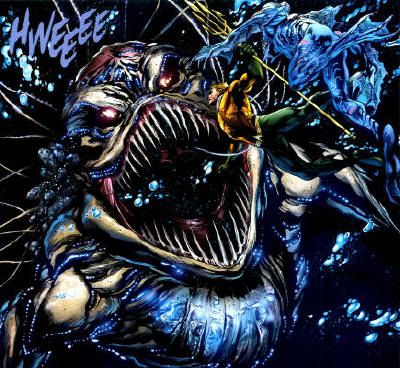
I’m all for giving things a try once, especially when it comes to comic books, and the wave of hype that brought Aquaman to my shores gave me unrealistic expectations when it came to the story. Despite the fact that scribe-extraordinaire Geoff Johns wrote it, The Trench feels like it was lacking coherency, decent characterisation and dialogue that doesn’t belong in an episode of Days of our Lives. The fact that DC’s big crossover for next year, Throne of Atlantis, means all my favourite characters will be interacting with his series – and thus, means I’ll have to buy the bloody thing – makes me sorely wish for the pre-Crisis days where crossovers were few and far-between.
The rebirth of Barbara Gordon being a sub-par story didn’t come as a surprise to me (not least of all because Gail Simone wrote it) but the combination of a cop-out recovery, incredibly schizophrenic dialogue and the perversion and retconning of the previous Batgirl run – which I praised to high heaven – left me annoyed and irritated at what I had in front of me. While I will admit that Ardian Syaf’s artwork rocks my socks off, the story and dialogue can go dive under a train. On reflection, it feels more like an earnest attempt by DC to stick a middle finger up at all the disabled people who viewed Gordon’s time as paralyzed heroine Oracle as inspirational, marvelous and a great change from the norm. Call me when they bring Stephanie Brown back so I can start giving a toss again, or when DC’s PR team decide that segregating the physically impaired isn’t a good way to write stories.

Superheroes do not belong in The O.C. That’s the overwhelming message I must convey after reading this piece of trash. An epic, eighteen-month tale meant to bridge the gap between House of M and AvX turned into a trite, soapy rag of dross with minimal characterisation besides “everyone angst all the time”, some severe character derailment for Captain America, a lacklustre finale and the impression that the story was mostly written out of sufferance on behalf of Allan Heinberg. The artwork by Jim Cheung is absolutely, fantastically, orgasmically gorgeous (and in fact one of the few areas where AvX excelled) but the story and dialogue are just very badly constructed. I could’ve maybe given it more points if Emma Frost had gone all Mrs Robinson on Speed or Wiccan, but alas, it was not to be.
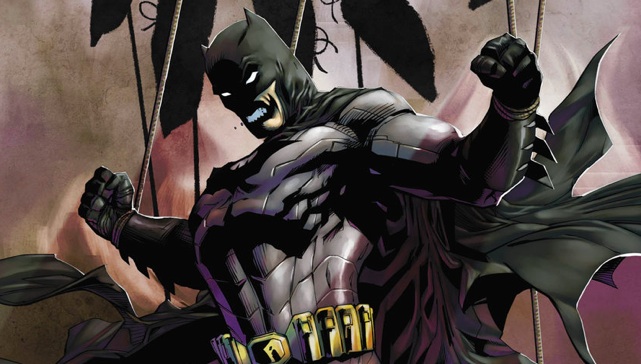
It’ll probably come as no surprise to people that this is Number 1, as I’ve taken every opportunity since reading it to openly rag on it, but it really is a stupid, putrescent piece of comic book garbage. I got so angry at time of reading at how overtly-masculine and self-aggrandizing it was, and subsequent glances over it whenever I feel like getting myself annoyed only serve to highlight how utterly asinine the entire experience is. Batman is characterized like a thirteen-year-old, the characters have two-dimensional personalities so bland they make January Jones look deep by comparison, the plot (such as it is) is messed up six ways to Sunday with all the aimless BS it has to keep balanced, the artwork is fairly sub-par and definitely not Tony Daniel’s best work, and the ending is a complete disappointment (which is kind of like saying “this bowl of dog vomit is so bad because it’s garnished with armpit hair”). I may sound like I’m going over the top by blowing my stack over this, but it really is an incredibly poor offering. And the worst part? IT’S A FRIGGING BATMAN STORY. Seriously, do you know how terrible I feel giving my “Worst Graphic Novel of the Year” award to a BATMAN STORY??? What has the world come to?

TOP FIVE


Despite my outburst above, there were actually some good Bat-titles this year. While it’d be quite easy for me to fill out the entire Top 5 list with these titles alone, I figure a couple of them need to be judged outside the spectrum a little.
Incorporated gets a mention since I’m more than a little biased about Grant Morrison, and it’d be somewhat unfair for most of the other choices in this category to compete with my unadulterated, creepy man-love for his stories. It’s a damn solid work, better for those who’ve read his previous stuff but still good, I think, for those who haven’t.
Born to Kill gets one since it’s the most heartfelt, cerebral Batman story I’ve read this year. You’d think that’d put it somewhere within the list proper, but on the whole I don’t want to judge it against the others because it feels to me like a different kind of story. Peter Tomasi and Patrick Gleason made a really involving, emotional tale that didn’t sound like it was ripped from a Hallmark movie’s plot, and had a denouement that gave closure to the story without resorting to fisticuffs or a deus ex machina
Both mentions left me solidly satisfied, like eating a deliciously flavoured sundae full of good story and chopped nuts, and are definitely among the more intelligent stories I’ve read this year.

I’m always a big fan of something new when it comes to superheroes, and Jeff Lemire’s first outing on Animal Man certainly gave me that. Having a superhero with a proper family and realistic family-related drama alongside all the supernatural shenanigans that goes on gave Buddy Baker greater depth, more emotional engagement with his problems and a story that really felt organic and unforced. The artwork by Travel Foreman added masterfully to the creepy tone set by the narrative’s pacing, and the dialogue did not evoke the very worst familial and angsty stereotypes inherent in American fiction these days (probably because they were Canadian). It makes me really glad DC are actually making good moves with their supernatural “The Dark” line, and titles like this and Swamp Thing really invigorate the company by giving it titles that can compliment the bog-standard superhero ones. Plus, Animal Man’s crossover in Rotworld next year means Scott Snyder gets to write part of it.
I was actually hard-pressed to find Marvel titles I enjoyed this year, since most of it was either ongoing volumes of series I haven’t reviewed yet (like Mark Waid’s Daredevil, which is awesome despite me not having reviewed it) or just plain crap. Kinda makes me a bit gladder their new wave of Marvel NOW! titles are coming out soon. Anyway, Jason Aaron’s work on the heels of X-Men: Schism incorporates great pacing, involving characters, one of the few actually-decent representations of Wolverine I’ve read and a nicely-quirky twist on both the standard high school plot device and the past experiences the X-Men had as members of that school. The artwork might not be up to scratch, at least at the start, but it’s still a well-written, well-executed work.
I’m not usually big on non-canon Elseworlds-style stories, but Earth One left a very good taste in my mouth after reading it. Great characters that strike a balance between being different yet still recognisable to long-term and new fans, a plot that feels organic and has more than one hero’s journey going on in tandem, artwork that knocks it out of the park and feels fully fleshed-out, and dialogue that, while at times a tad glurgy, works overall. As I said in the review the only big negative I can give is the possibility that we’ll have to possibly wait two years for the next one (like Superman: Earth One did) but I hold out hope that when it does arrive, it’ll be as engrossing and have as much an original flavour as its predecessor does. 

Yeah, I know it’s not a superhero comic, but I cannot praise this enough. It’s one of those rare stories where no part of it felt boring for me, every character’s arc felt well-structured and marvelously executed, the artwork captures realistic facial textures beautifully, the overarching plot is engrossing and involving (I’m using those words a lot, aren’t I?), and the end result left me hungry for more. It might seem a bit incongruous that I’m giving second-place to what is effectively an indy comic (or, at least, a non-superhero title) but Saga stood out to me not just for the above reasons, but also because it galvanized me into a new action for next year. Saga proved to me that there is more out there than just superhero stuff, which may seem a bit narrow-minded of me to not have thought of it until now, and it means next year you’re going to see more of an even split between superhero and non-superhero, rather than superhero and the odd non-superhero here and there, like a trio of doo-wop singers walking through post-war Baghdad. If you haven’t already, read Saga. It is most definitely worth your time.

1 – JUSTICE LEAGUE: ORIGIN

It was the first trade released in DC’s New 52 this year. It was the beginning of a reboot that, through triumphs and utter failures, reshaped the DC Universe forever. And it was, without hyperbole, the best superhero team-book I’ve ever read.

Origin, despite the many failings DC’s reboot presented this year, managed to strike a balance between characterisation, action and interpersonal moments without getting too bogged down in any one area. The story was basic, granted, but if you get down to it, so was The Avengers movie’s – not that that’s a bad thing at all, if it’s done properly. Joss Whedon’s film and Origin both managed to execute a masterstroke of superhero teaming up without being too overly-indulgent or two-dimensional, and that’s what made them both memorable. The Justice League’s new artwork looks fantastic, the script was nuanced and crisp, and I never felt like the story lagged anywhere. It was just a brilliant, kickass superhero beat-em-up that was elevated above other attempts at its well-worn narrative by having a writer and artists who treated the universe and the characters with respect – no matter how screwed up the universe may have gotten after that point.

So that’s the best and worst for 2012, folks. It’s been quite a year, particular for DC, and if the NOW! reboot gives any indication it’s that Marvel will have an equally-massive year in 2013. But hey, if Marvel end up taking the Best Graphic Novel of 2013 crown next year, that wouldn’t be a bad thing – might make me believe they’re not solely running off the financial steam The Avengers provided.


Everyone at Sunday in the Comics with Christopher (and by everyone we mean that one guy) wish all readers a happy and safe holiday, a kickass New Year (with minimal hangover) and we’ll see you all in January 2013!

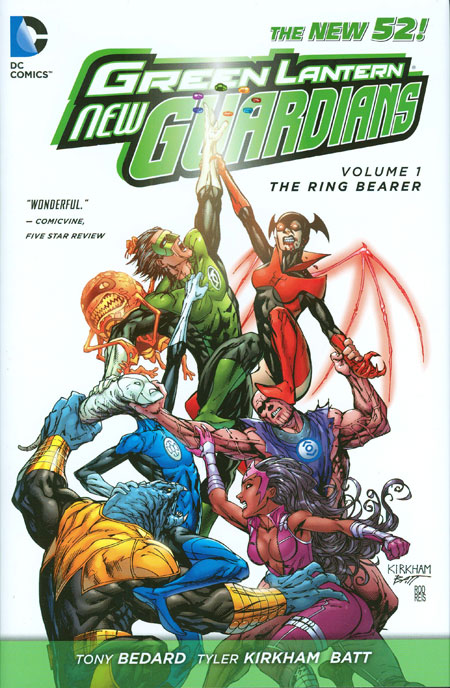
[THE NEW 52] Green Lantern – New Guardians: The Ring Bearer

Readers who were with me back in May know that I was left somewhat disappointed by the latest installment of Geoff Johns’ multi-year epic Green Lantern saga, and that it utterly failed as an introductory first volume for the New 52 comic book virgins wanting to have their emerald cherry popped. I was heartened by the presence of a new spin-off in DC’s ever-expanding line of merchandise-driven superhero punch-ups titled Green Lantern – New Guardians, which purported to carry themes and characters first introduced in Johns’ run but instead utilising underdog Lantern Kyle Rayner in place of wisecracking douche-hero Hal Jordan.

On paper it sounded awesome, and a great way to introduce newcomers to the mythos, but in practice does it live up to what it advertises?

The story kicks off in the wake of War of the Green Lanterns, with Kyle Rayner acting as one of the last Lanterns attached to Earth and saving people all over the place. His mission is curtailed when a variety of coloured Lantern rings suddenly appear and try to attach themselves to him like clingy ex-girlfriends, causing the rings’ original owners – one from each Corps – to appear on Earth and rather grumpily demand an explanation for why their superpowered bling has suddenly been drawn to him. After establishing a very haphazard alliance, if one can call it that, Kyle and co. head off to discover who is behind the rings detaching from their owners and what they could possibly want with the young Green Lantern in particular.

As if the title The Ring Bearer didn’t already make it obvious, the story carries a bit of a Lord of the Rings vibe to it, and not just because of the specific ring MacGuffins the protagonists are chasing. There’s a strong sense of fellowship – albeit a disjointed one – that runs throughout the narrative, each of the characters seems to inherit a trait from the original Tolkien party of nine – for example, Saint Walker doing a rather uncanny Gandalf at times – and the end goal looks like it’s shaping up to be everyone battling a particularly massive foe who threatens galactic stability, a la Sauron. I say “looks like”, since this volume seems to be the first act in a several-act story and, thus, ends without a real resolution.

That’s not to say it’s bad, because it isn’t; there’s some good characterisation here and there, even for crazy and psychotic nutters like resident Sinestro Corps party member Arkillo, and in the end everyone ends up with a personality beyond a two-dimensional representation of the emotional elements their respective Corps’ embody. That said, the story doesn’t jump out at me the way others in the New 52 have. It feels like it’s missing something; what that something is I don’t know, but it needs a spark to really bring it to life and elevate it above other attempts at team-books. Maybe it’ll get a bit better when Volume 2 comes out.

The artwork by Tyler Kirkham and Batt works really well, and really pops the way the art in Geoff Johns’ Green Lantern: Brightest Day did. The colours all mesh together fantastically, and there’s some great action sequences where neon Lantern trails cover the page in a way that make double-page spreads look awesome. It does have moments where the multitude of hues can get a bit disorienting here and there, but on the whole looks great.

Dialogue is fairly standard, which is a little disappointing; scribe Tony Bedard wrote part of War of the Green Lanterns and it went down pretty well, but here it just seems a little pedestrian in comparison. By the end he seems to have found his feet and given the character dialogue some greater depth, but it’s still nothing terribly engaging. Again, not bad, just a bit ordinary.

I’d recommend The Ring Bearer since it acts as a pretty good introduction to the contemporary Green Lantern mythos mostly through having all the important Corps present and having a little bit of exposition that establishes where everybody is and, roughly, how they got there. Don’t read it expecting anything as universe-altering or groundbreaking as Johns’ run, but just a bit of fun with some nice colour and action in it. It kicks the ass out of the movie, at any rate.

STORY: 3.5/5
ARTWORK: 4/5
DIALOGUE: 2.5/5

OVERALL: 10/15

BEST QUOTE: “Oh, this can’t be good.” – Kyle Rayner

[THE NEW 52] Red Hood and the Outlaws: Redemption

Sexism and the comic book industry have a relationship similar to a meth addict and his dealer: once they’re together, they’re in it for life whether they like it or not. For as long as I can remember women in comic books, on the whole, have had absurd proportions and flat-sided personalities in deference to the towering, Adonic male archetypes who dominate the medium. As the TvTrope definition for ‘Most Common Superpower’ says, “if [a character] is female, she is straining against the bonds of gravity…but not in a flying sort of way’.

It’s unfortunate that most female characters, especially in superhero yarns, exist solely as a squeaky toy the male model heroes can cuddle every now and then. As always, there are exceptions to this rule, but what many would term as a ‘sexist’ representation of women in superhero comics has been, rather degradingly, the norm for many decades. Even in a ‘progressive’, ‘right-thinking’ and ‘forward-marching’ society as ours, there is still plenty of justification for why female heroes should, in the minds of their artists, continue to exist as ‘larger than life’ representations with mammaries the size of airplane fuselages.

One book of late that’s copped more than a bit of flak for perceived over-sexualisation is Red Hood and the Outlaws, featuring former Teen Titan character Starfire as a buxom, giving-it-away-for-free-to-anyone-with-a-penis space alien. There really does come a point where breast proportions become ridiculous, and with that latter word in mind let’s dive into this alleged celebration of misogyny and manpower.

Fresh from having died at the hands of Joker and being revived in one of the al Ghul family’s famed Lazarus Pits (patent pending), former Robin Jason Todd has taken a sabbatical from starring in Batman Incorporated and has joined up with former Green Arrow sidekick Arsenal and the aforementioned former Teen Titans Playboy Bunny reject (I see a pattern emerging with the “former” thing here). Apparently Todd wants to form a group called the Outlaws who go around fighting ancient prophecy-driven antagonists and some chick who looks like Solstice from Teen Titans‘s ugly stepsister. Things progress from there in a very muddled direction, where some ancient evil cult that Todd was involved in sends a curvy black sheriff with super-regenerative powers to stick a hand inside his liver.

I wish I was kidding.

While the superhero subgenre does carry something of a stigma towards being classified as nothing but “low-brow” entertainment, there are stories that manage to break those chains and ascend to become truly great pinnacles of human artistic endeavour. There are some stories that make you weep in joy or sadness as much as the best tear-jerking movies or television shows can. There are timeless classics in the comic book pantheon that stand shoulder to shoulder with some of the greatest artistry in the history of human achievement.

Rest assured, Red Hood and the Outlaws is not one of them.

This book is utter rubbish, but not in a way that makes me hate it. It sticks to the far, dark end of the low-brow stick, indulging in sex, violence and an incoherent plot after the first few pages, but it doesn’t make me angry the way some other works do. It just makes me pity it, especially since writer Scott Lobdell has had a pretty good track record with me so far. The story isn’t merely bad, it’s stupid.

Putting aside the misogynist element of stripping Starfire down to two purple tissues and some hooker heels whilst giving her the personality of a bent teaspoon, the narrative and dialogue are just absolutely ridiculous. The number of times I facepalmed at awfully awkward scripting from characters on all sides was so numerous that I’m pretty sure I have a permanent hematoma now. The “radical, dude!” level of language, the hints at sexual perversion, the random inclusion of supernatural enemies with plot that doesn’t end up anywhere stable, it’s all just crap on a platter. It’s like someone took a bunch of superhero comic tropes, coated them in glue mixed from whale sperm and marmalade, and threw them all higgledy-piggledy at a canvas while saying “Yeah, that’s our comic! Totally! Whoo-hoo, Spring Break!”

The artwork fits in nicely with the themes and scripting mentioned above, and in that respect gets marked down to Hades. Every vaguely-female character has measurements that’d make Barbie blush, Starfire is one light breeze away from having uncovered nips at all times (unless her orange skin carries some natural glue-like substance) and the male characters are the usual indistinct blobs of abdominal muscle and penis envy. Todd doesn’t look anything like how he did in previous stories, Arsenal just looks like a wanker, and the ancient evil cult business looks like something rejected out of a Justice League Dark story.

This book really does carry a sort of teen-influenced element to it, aimed specifically at high school kids who have no idea what “cultured” means. I’d sooner recommend sculling spider venom over reading this trash, but if I had to recommend it to somebody it’d be the kids who still think exploding bodies and naked breasts are appropriate workplace conversation topics. It’s not bad enough for me to spew liquid fury at it, nor is it bad in an endearing, Mel Brooks kind of way. It’s just stupid, brain-draining dross that makes Home and Away look deep by comparison.

STORY: 2/5
ARTWORK: 2/5
DIALOGUE: 2/5

OVERALL: 6/15

BEST QUOTE: “Finally. Someone to shoot.” – Red Hood

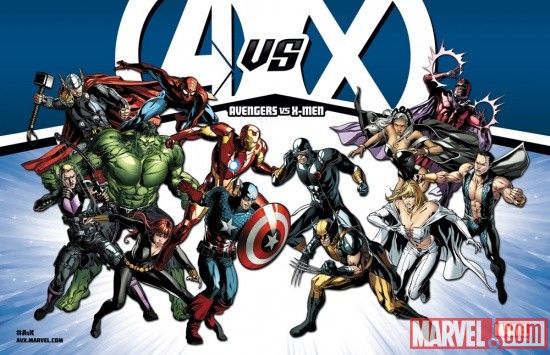
Avengers vs. X-Men

I’ve spoken at length about the impact a crossover can have on either of the Big Two’s storylines, both good and bad. If it’s a year-long, heavily-hyped event it can hurt or hinder a company’s integrity, a storyline’s enjoyment factor, and a character’s awesomeness. Good crossovers innovate the story, provide consistent and engaging characterisations and give a finale that at least carries some air of originality and anticipation. Bad crossovers have nothing but fight scenes, two-dimensional characters and an over-reliance on protagonist mortality rates to increase expectations for an explosive finale that ultimately fails to deliver.

So, having spent the year anticipating its hardcover release, which camp does Avengers vs. X-Men fit into?

After reading all the required prologues (which, in actuality, are probably as long, combined, as the main story itself) I felt I was quite ready to get into the intricate, carefully-planned and multi-layered story of AvX that promised great fight scenes, awesome art, good dialogue and a thought-provoking argument presented by both sides of the conflict that makes them not so much ‘teams’ as they are opposite sides of a disagreement with separate, but equally valid, reasons for disagreeing. The premise involves the Phoenix, a mega-powerful cosmic force that does bad things to good people, arriving at Earth and threatening to blow the crap out of it – and seriously, why do all crossovers at the moment rely almost entirely on blowing Earth up? Can we not have a villain with a major vendetta against one of our protagonists, a la Skyfall, or someone that wants to hurt the heroes themselves rather than dominate or annihilate our piece of intergalactic real estate? Is Earthly destruction the only plot device the writers can conceive these days?

Whatever. The Phoenix approaches Earth and everyone believes it’ll use latent mutant Hope Summers, aka the Mutant Messiah, as its host when it lands. In one corner we’ve got Captain America and his band of Liberal-esque Avengers who want to stick Hope in some kind of superhero Guantanamo Bay to prevent the Phoenix getting her, and in the other we’ve got Cyclops and his host of Democrat X-Men who want the Avengers to piss off and let things happen as they may, with Cyclops himself believing the Phoenix’s arrival heralds an end to the “no more mutants” declaration made by Scarlet Witch all the way back in House of M.

Using political parallels in that last paragraph is making the story seem more intelligent and thought-provoking than it actually is, because by the midpoint of the book the argument becomes null and void and the teams-with-equal-validity thing gets pissed against a wall when the narrative takes a decidedly one-sided slant against the X-Men, who end up being portrayed as a mashup of the Hitler regime and the Ubermensch concept. The story tries what Civil War did, giving us two sides of the argument that we can root for either way, but it all falls flat when the X-Men start creating a Utopia, if dictatorial, society that seems hell-bent on killing anyone even slightly Avenger-shaped, and the Avengers themselves become the equivalent of Will Smith’s character in Enemy of the State.

To stop beating around the bush, the story is stupid. I feel like the moral conflict is presented very two-dimensionally and doesn’t engage me the way Civil War did, and even that book didn’t quite live up to expectations. This feels like a narrative born almost solely out of marketing rationales, giving us the “let’s you and him fight” fantasy aspect that The Avengers movie pulled off well but this book relies way too much on. Yes, it is kind of cool to see Cap and Cyclops go at it like a pair of jilted ex-lovers. Yes, seeing X-Man Magik beat the crap out of Black Widow with a magic sword is sweet, if a little fetishised in the artwork department. And yeah, the grand-scaled football match-style battles where both teams brawl like a bunch of Orks in a Blood Bowl game looks gorgeous and does carry quite a bit of awesome behind it.

But that’s really the story’s only strength, having bust-ups between heroes we know and love against mutants we know some of and think are kind of ok. As I said, the moral centre of the story gets thrown against the wall and pummelled repeatedly by the story’s midpoint, and the thin-on-the-ground narrative progression in the story’s latter half just makes the whole effort laughable. So much of the story feels like artificial padding, and it’s clear they could’ve made a far more satisfying story if they’d halved the number of issues, tossed out a few of the writers and worked on it solidly for a few months extra rather than rushing it out to get the entirety of the narrative in stores by year’s end.

On that subject, the veritable army of writers and artists give both characterisation and illustration a degree of schizophrenia. Granted, most of that army is made up of some of the best talent Marvel has on tap at the moment, but I feel like they were all watered down by whichever marketing figure was behind the whole mess. Jason Aaron’s dialogue during his chapters doesn’t feel anywhere near as snappy and crisp as it did in X-Men: Schism, Ed Brubaker doesn’t sound like Ed Brubaker during the bits where he wrote Cap’s dialogue, and Brian Bendis’ usual flare for great conversational dialogue with elements of realism intertwined with the superheroic paranormal isn’t present.  It’s all rather disappointing since these are supposed to be some of the premier writers at that overgrown marketing machine they call a company, and yet they all feel incredibly bland.

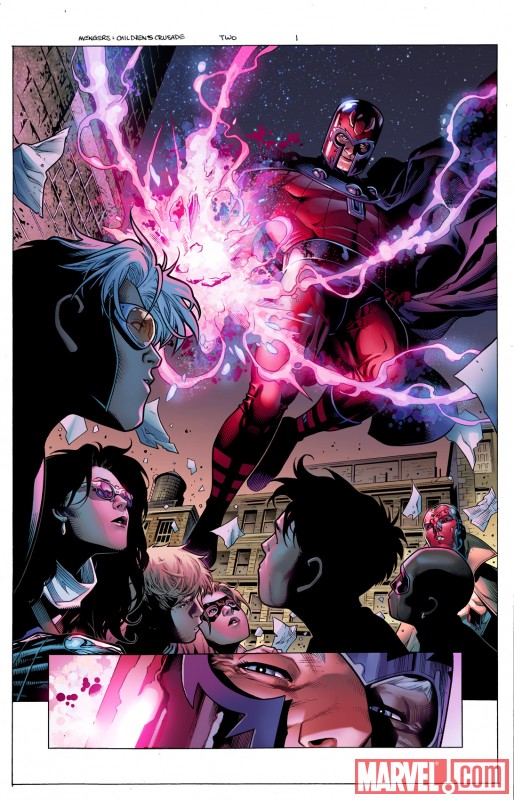
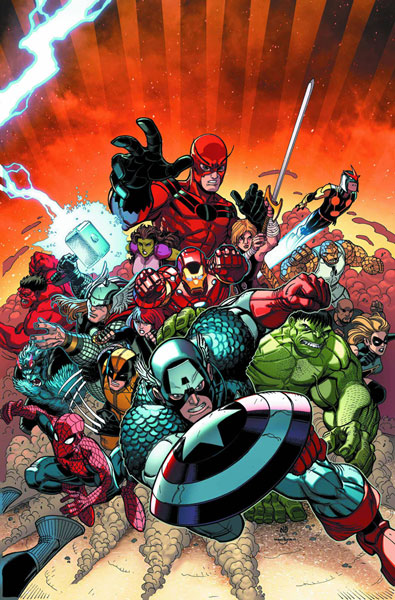
The artwork gets a bit of a markdown in that area as well, not least of all because they got frikkin’ John Romita Jr. in to do the first half of the book. For those not aware, Romita Jr.’s father (John Romita Sr., funnily enough) did some great artwork back in the heyday of superhero comics, but his son’s work doesn’t come close to matching it. It’s way too reliant on overshading and too many lines of facial definition, and really threw me out of the story with its overly-cartoonish look (see the image above for an idea of what I’m on about). The latter chapters done by Adam Kubert and Olivier Coipel were a lot better, so while the story floundered in mediocrity the artwork was definitely putting the hammer down (especially when Thor was around).

For those of you not facepalming about how terrible that last pun was, you’re probably asking me if, in the final analysis, Marvel’s massive multiplayer crossover for 2012 was good or not. In short, no. It left me very disappointed, especially for an event that was touted as both the end of nearly a decade’s worth of storytelling arcs (starting with Avengers Disassembled) and also as the jumping-on point before Marvel’s NOW! relaunch last October. Flashpoint managed to act in that latter capacity quite well, with less than half the issues AvX used to get the job done, and as such proved you don’t need an entire omnibus worth of issues to finish the story off.

Avengers vs. X-Men is one of the most disappointing, lacklustre crossovers I’ve ever read from either company, and if the announcement for the Bendis-penned ten-issue Age of Ultron crossover in 2013 is any indication we can expect more of the same there. Personally, I’ll stick to Rick Remender and his awesome new run of Uncanny Avengers. At least its dialogue doesn’t sound like the marketing department had too many hands in it.

STORY: 2/5
ARTWORK: 3.5/5
DIALOGUE: 1.5/5

OVERALL: 7/15

BEST QUOTE: “One thing I’ve learned about being an Avenger…your moment will come. It’s a big group. Lotta moving parts. Lotta big awesome people doing big awesome things. They don’t always have time to stop and take a knee to explain to you what the heck is going on. You learn to follow the guys who always seem to know where they’re headed. And you wait for your moment. Doesn’t matter how many gods or super-soldiers or Hulks they got on the payroll. Once you’re an Avenger, it never fails…sooner or later the time comes when it’s your turn to step up to the plate. You just gotta make sure you’re ready.” – Spider-Man

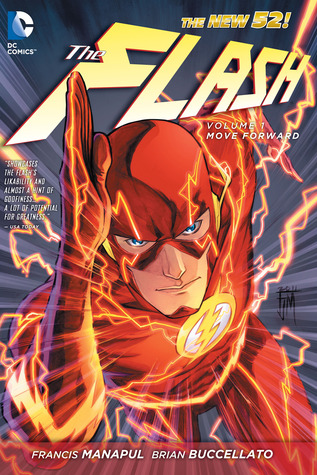
[THE NEW 52] The Flash: Move Forward

Sometimes it feels like there are particular heroes that should really be given greater focus than they’re currently afforded. Take someone like Batwoman – her stories seem to fly mostly under the radar, even though they fare better than some of the other Bat-crap that’s out these days. It seems if the character isn’t marketable as a merchandising icon, a potential film adaptation or just someone they’re trying desperately to reestablish as a potent hero again, then they don’t deserve as much attention.

The Flash seems to be a victim of that process. Despite the fact he, y’know, started this thing in the first place, he really doesn’t seem to have the spotlight on him quite the way Batman, Superman or their other cohorts do right now. It’s a shame, really – Geoff Johns’ pre-Flashpoint was really fun, bouncy and had just the right amount of seriousness to make it a great read. So, can Francis Manapul and Brian Buccellato inherit Johns’ mantle and make a story worthy of the Speed Force, or will the Flash’s red outfit become a stop sign for another horribly bland superhero outing?

Yeah, I really should be more selective with my metaphors.

Like Superman, the Flash’s story has been heavily retconned to remove any trace of wife, extended family or anyone else to ever take up the Flash mantle. Compared to stories like The Flash: Rebirth, where there’s a whole host of speed force users making one big, happy, hyper-consuming family, Move Forward feels a little bit empty in that respect. It’s not a markdown against it, but I do miss the sight of four generations of Flash taking on Professor Zoom with a whole “world’s most kickass family” vibe to it.

In this reality, Barry Allen seems to be have been the only person to bear the Flash name (which infuriated no small number of Wally West fans back in the real world) and is entering into a relationship with fellow forensics officer Patty Spivot, rather than the marriage he had pre-Flashpoint to Iris West who, in this story, is as annoying and persistent a journalist as Lois Lane was in Action Comics. Part of me wonders if Manapul and Grant Morrison compared notes before writing their respective stories, coz there’s a lot of similarity on that front.

The Flash is tasked with taking down random goons when he suddenly gains the inexplicable ability to speed up his mind as well as his muscles, becoming, by his own admission, the superhero equivalent of an ADD sufferer. The super-sped ends up causing more problems than he solves, including an EMP blackout throughout Central City and an accidental move that seriously pisses off arch-nemesis Captain Cold, who’s gone through a bit of a power-boost since last we saw him. Working with Patty and a very polite doctor, with a city blaming him for their issues and a supervillain bent on ruining his day, the Flash needs to sort stuff out quick-smart or else be doomed to run for the rest of his life.

I might sound like I’m taking the piss a little here, but I’m really not. I actually really enjoyed Move Forward. It defied my previous complaints about artists being writers and failing at the extra task, since Manapul does a pretty decent job as a writer and as principal illustrator. It’s not as hard-hitting or cerebral a story as some others I’ve read this year, but it’s still good, popcorn fun with an undercurrent of character development, some good interpersonal stuff between Barry and Patty, and a nice – if rather abrupt – sequel hook at the end, which makes me pray I don’t have to wait until November next year for Volume 2. That seems to be something a lot of New 52’s stories are doing at the moment, sequel hooks that make me long for the next one. Those cunning DC penny-pinchers.

The artwork is solid, though at times the positioning of comic panels during the Flash’s “superhero ADD” moments can get a bit schizophrenic and hard to follow. I’m all for non-linear storytelling, but it broke up the flow a little too much for me. I was looking forward to Manapul’s artwork here since his work on the last Flash run looked fantastic, and while it’s not his best effort it’s still really enjoyable. Bright colours, great use of shading and line articulation, and to my mind the female characters’ most obvious physical traits seems to be toned down and realistically proportioned compared to other works (lookin’ at you, Rob Liefeld).

Dialogue is…a little disappointing. It’s not bad, per se, but it’s not great either. I wasn’t expecting Shakespearean levels of wordiness when going into this book, but a lot of it feels very Hollywood, like it was written for a Michael Bay film rather than an intelligent graphic novel. It is nice that they showed Captain Cold has a little bit of depth beyond “kill Flash, steal money” but the scenes where that happens feel a little schmaltzy and overwrought. Still, at least Barry’s not running around ranting about how awesome a dude he is on every bloody page.

To answer my previous question, yes, Manapul and Buccellato have written a story I think worthy of the Johns Flash mantle. It’s not going to light the world on fire but it’s a nice time-killer, with some good story, great pacing, nice character moments and lovely artwork, even if the dialogue’s a bit spotty. I would definitely recommend it, but I’d recommend reading the Johns run first. Even if most of it gets retconned out like Ant-Man’s domestic abuse traits, it gives a bit more background on Flash and the Speed Force than you get here.

That is, until the “superhero ADD” gets introduced.

STORY: 3.5/5
ARTWORK: 4/5
DIALOGUE: 2.5/5

OVERALL: 10/15

BEST QUOTE: “Unless this is some sort of ‘cosmic’ treadmill, all you’re gonna end up with is spare parts.” – The Flash

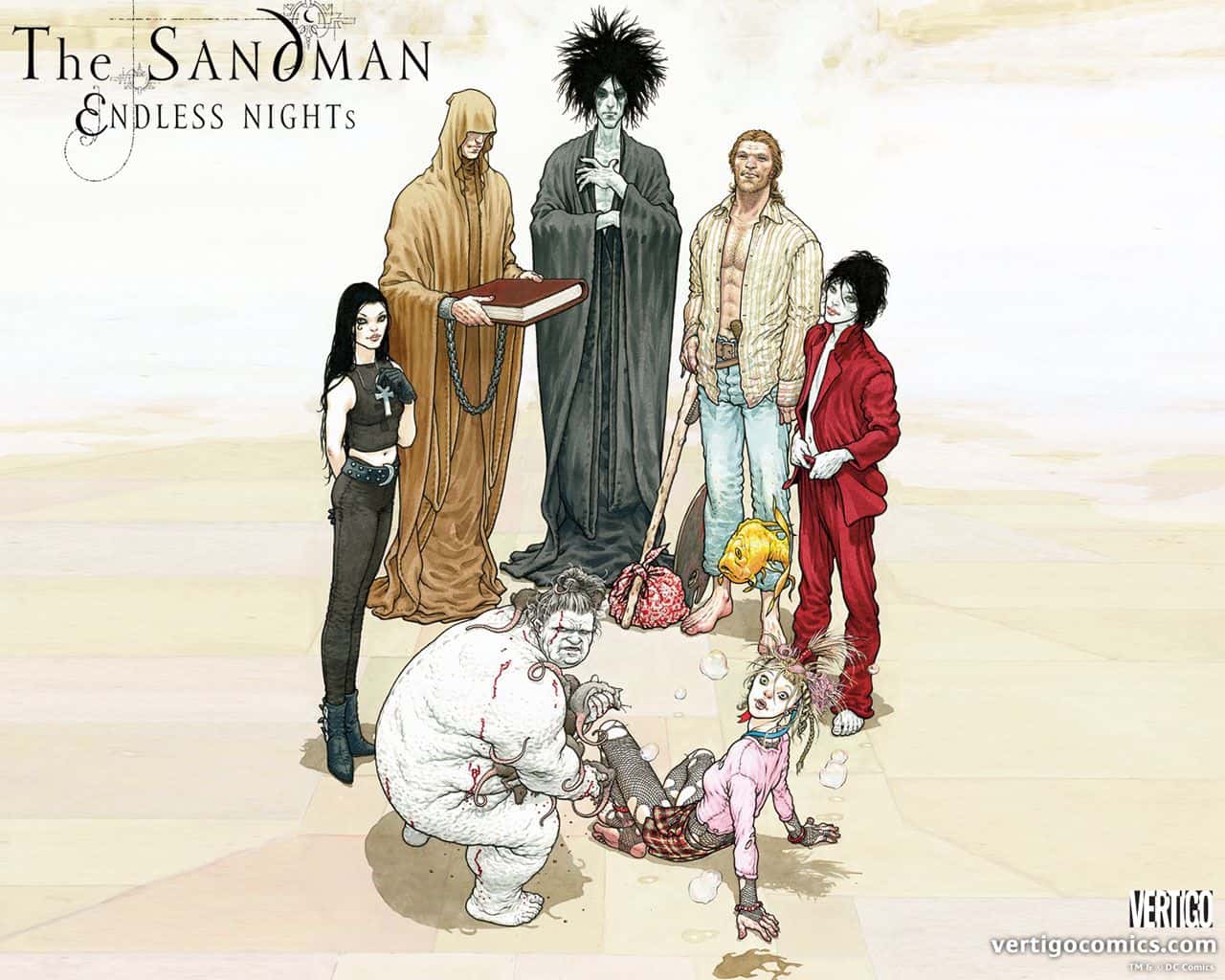
The Sandman

Approximately eleven months ago, when DC’s New 52 releases were still to arrive on shelves and the Marvel line had halted somewhat in the run-up to Avengers vs. X-Men, I was perusing the local comic haunt’s shelves and found this curious little series called The Sandman. Penned by Neil Gaiman, it was not completely unknown to me. I knew vaguely it had something to do with David Bowie and it had won a lot of awards, consistently referenced as one of those magnum opus works as a highlight of a writer’s career. Since disposable income was more plentiful back then, when my plans didn’t involve saving for an apartment, I picked up the first volume on a whim – coincidentally, around the same time I first picked up The Walking Dead. While that one turned out to be awesome for being a stark, depressing odyssey into the depths of the human soul during a zombie apocalypse set to last for at least the next decade, The Sandman expressed its unparalleled brilliance by going in the other direction.

I would be very hard pressed to do justice to Sandman‘s plot in a few brief sentences, but essentially it’s the tale of Dream of the Endless, one of a septumvirate of ancient beings who have guarded the universe for untold eons as personifications of emotional and existential aspects. Dream, captured by a human wizard as the story opens, starts off as a self-centered, vain, set-in-his-ways entity who slowly learns, through joy and tragedy, what it means to exist and how that existence can touch, and be touched by, those around him.

Yeah, that really is selling it short, but it’s difficult to put down in words what Sandman is ultimately about. It’s one of those rare, once-in-a-lifetime reading experiences where it transcends the medium it occupies and presents you with a thought-provoking, utterly unique tale. It’s an amalgam of fairy tales (without all that Once Upon A Time crap), Grimm stories (without the contemporised detective and horrible acting) and Shakespearean influence (without the tedious dialogue that puts me to sleep whenever I read Antony and Cleopatra), meshing together into a moving, flowing narrative far beyond any other, graphic or literary, that I’ve ever experienced.

TvTropes states that Sandman is able to tell any story through any medium, and it really can. It’s got this wonderful ability to pull in varieties of genres – crime, supernatural, romance, drama, comedy, even a bit of sci-fi here and there – and merge them near-seamlessly together into Dream’s series-long narrative arc. While it can seem a bit juxtaposed at times, especially early on when DC characters like Martian Manhunter and Constantine make appearances, it all works in the end.

I’m going to sound gushy throughout this review, since that’s how The Sandman has left me – emotional. It’s such a powerfully-evocative work, through its deft character development and layered but still coherent plot. It’s a story that really gets to you, and not just through the tragedy of Dream as he moves from selfish to self-aware. You really start to care about the other characters, in a way most graphic narratives have to really work to achieve but which Sandman pulls off effortlessly. You’ll feel sad when Rose Walker’s grandmother reminisces about her stolen past in Volume 2. You’ll laugh whenever Mervyn Pumpkinhead vents how frustrating Dream is to right-hand man Lucien, while Dream stands behind him staring disapprovingly. You’ll probably cry, as I did, during the story’s final – and extremely masterful – arc.

And upon its conclusion, you may be left, as I was, with a peculiar sensation. You know when you finish something at a place like, say for instance, high school, with friends who, over the course of a long period of time, you grow deeply attached to. You’ve spent so long with these people, learning them inside and out, moving through triumph and despair and reaching the conclusion of your time together. Once it’s all over, it leaves you with a longing that is different to wanting more from something because it let you down. It’s a longing far apart from that of a desire for the story to continue, however ill-advised such a move would be. It’s not even a longing of missing the people entirely, because experience has shown me that if you work at it, it’s really not that difficult to make the effort to see high school friends if you really want to.

It’s the longing of absent friends, of truly missing these characters, and missing the uniqueness of the particular experience you had with them. It’s what I felt when I read The Sandman‘s final page, and while it was one of the most poignant, appropriate endings for any story I’ve ever read, it left me missing everybody in a way that, despite the fact I can always re-read the story whenever I want to, I will probably feel every time I think about them. Of the Endless themselves – Dream’s stoic poses, Death’s perky, upbeat nature, Destruction’s warrior poet roots, Delirium’s fun and crazy warped persona – and the side-characters – Mervyn Pumpkinhead’s wise-ass remarks, Lucien’s cultured and mannered librarian predilections, Cain and Abel’s constant immortal sibling rivalry – I would miss them all. So much so that I wept for a while after I finished the final volume. We’d reached the conclusion, and while we’d still see each other again it wouldn’t be in the same, special way we had first met.

It sounds really strange and schmaltzy, I know, but the whole experience of reading The Sandman has had an effect on me that no other comic book I’ve ever read – including the Caped Crusader himself – has had before, or possibly ever will. It’s become a part of my graphic library, no doubt, but it’s now become an intrinsic part of how I think about things. Like how Doctor Who made me question mirrors, motes of dust and perception filters, so too has Sandman made me think more about what lies beyond this brief, mortal existence. If I had to choose an afterlife where I could be truly happy and relish the experience, where I could find enough enigma and stimulation to keep me busy for eons as a non-corporeal life-form, I’d choose Sandman‘s. Just send me to The Dreaming, and I’ll never look back.

Sorry, this has all gotten horribly self-indulgent and ridiculously subjective, but that’s the kind of book The Sandman is. It’s not any one genre, or any one interpretation, or any one story – Gaiman himself, in the epilogue of Volume 10, describes it as “a story about stories” (and of course, that’s a summation that does far greater justice than mine did earlier). That’s exactly what it is. It’s a unique, singular narrative experience that cannot be trapped or analysed under any single definition. Well, perhaps except one – it is, truly and utterly, brilliant.

I’m not giving it a score, because it really defies any kind of scoring for me. Like my Top 5, Sandman is way too close to my heart to give an objective number to. All I can say is that there are few comics I could recommend that come close to the level of praise I sing for The Sandman, and nothing I could suggest to you to read could cap the sweet symphony that is, in my opinion, Neil Gaiman’s greatest accomplishment. Go find the books, shell out the cash for the remastered editions, and just read. Even if you’re not a graphic novel fan, it is well worth your time to check it out.

The Sandman is beautiful, marvelous, evocative, provocative, depressing, spectacular, saddening, hilarious, enlightening, moving, multi-faceted and just damn good.

THE SANDMAN:
Volume 1: Preludes and Nocturnes
Volume 2: The Doll’s House
Volume 3: Dream Country
Volume 4: Season of Mists
Volume 5: A Game of You
Volume 6: Fables and Recollections
Volume 7: Brief Lives
Volume 8: World’s End
Volume 9: The Kindly Ones
Volume 10: The Wake

BEST QUOTE (way too many to list, but if I had to pick one…): “I am a world, space-floating, life-nurturing. I am the Universe – all things encompassing, all life embracing. I am hope.” – Dream of the Endless

Iron Man: Extremis

As it turns out, there’s a metric ton of stuff for me to read right now. Last week’s releases alone saw The Flash, Red Hood and the Outlaws, the final volume of Sandman and the voluminous tome collecting all of Avengers vs. X-Men. All of these are sitting on a bedside table, waiting to be perused and punctured by my scathingly awful wit, but they’re going to take some time – especially the latter title, since it’s big enough to smack someone unconscious with.

So that leaves me with a retrospective week until I can be arsed to get up and go through these new excuses to fund the comics industry. But what to review? Batman seems like fairly well-trod ground, the X-Men are probably the equivalent of loaned-out prostitutes on this blog and my plans for the Daredevil books involve a VS. review that I’m simply non compus mentis right now to construct. My weekend has involved no small amount of Heineken.

Well, since there’s a brand spankin’ new film featuring the Crimson Avenger next year, I figure it’s time to give him a look again. I’ve already elucidated how awesome Matt Fraction’s run is, but I’m stepping back a little bit more here. This is the book that, by and large, revitalized the character and provided more than enough fuel for movies to one day be made. It’s so good, in fact, that it’s part of the basis for 2013’s Iron Man 3, so consider this a SPOILER ALERT for anyone who doesn’t potentially want elements spoiled in this review.

So when the initial issues came out in 2005, the Avengers had been ravaged by the events of Disassembled and it was apparent they were going to be split down the middle for a good while. One of the biggest heroes affected by the change, and a later proponent of what would later become the Superhero Registration Act, was Iron Man. Extremis, being the first story for him post-Disassembled, deals with a bioengineered superweapon – the eponymous Extremis – being stolen by persons unknown and used on a dude who looks like Goyle from the Harry Potter books. This dude ends up going on a rampage and killing a shedload of people, and it’s up to Iron Man to take him down, discover the true nature of Extremis, and also confront his checkered past in order to move forward into the future.

Fans of the first movie may find a number of familiar elements in the backstory, where Tony Stark tells through flashbacks how he was kidnapped by Middle Eastern extremists and forced to make the original Iron Man suit IN A CAVE!! WITH A BOX OF SCRAPS!!! There really is a lot of Extremis‘ DNA in the Iron Man movies, and it’s a marvelous jumping-on point for new readers. I picked this up a couple of years ago, with no prior knowledge of Iron Man beyond the films themselves, and rolled with it easily. The characters are greatly defined, and Tony’s playboy antics are present if a little bit toned down. It’s a great snapshot at the larger world of Iron Man, presenting a lot of facets that would later become integral to the character’s contemporary presence while establishing past elements that appear to have been modernized – such as the origin story – to better appeal to current readers. Warren Ellis’ script is also deft at establishing motivation and characterisation, giving a very cinematic experience within the comic that doesn’t solely rely on big explosions and buckets full of exposition to grab an audience.

The illustrations by artwork savant Adi Granov only augment the awesomeness of the story. It’s a very CG and normal artwork blend that works brilliantly, even if at times the human faces look a little like something Pixar might make after a night on vodka cocktails. The fight scenes, while not overwhelming, are the best drawn and coloured within the book, and every appearance of the iconic Iron Man armour not only looks bloody gorgeous but also has enough realistic definition to carry a great sense of “Hell yeah!” whenever it appears to kick the crap out of whichever villain is on-panel at the time.

Mostly, Extremis comes across as a very human story, hence no reliance on staple Iron Man villains like the Mandarin or anyone from the Stane family. Tony, as the main character, is the driving force behind everything that happens, acting sympathetic to readers while still displaying the roguish traits we know and love from the movies. If you’re looking for somewhere to start with Mr Stark’s escapades you could do worse than either this book or Fraction’s titanic super-run, so definitely check it out.

Now, apologies are in order for A. not posting anything last week and B. not posting anything new this week. NaNoWriMo, work and the usual plethora of lame excuses all got in the way. It’s back to schedule now, so something new will appear next Sunday – unless Mitt Romney decides to exact revenge on Obama by nuking Australia. Coz somehow, that’ll totally piss him off.

STORY: 4/5
ARTWORK: 4/5
DIALOGUE: 4/5

OVERALL: 12/15

BEST QUOTE: “Okay, have fresh clothes and coffee sent down to the garage. The gallon drum of coffee. And possibly some kind of intravenous drip.” – Tony Stark