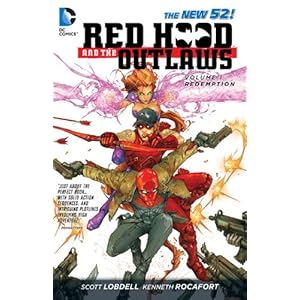
[THE NEW 52] Red Hood and the Outlaws: Redemption

Sexism and the comic book industry have a relationship similar to a meth addict and his dealer: once they’re together, they’re in it for life whether they like it or not. For as long as I can remember women in comic books, on the whole, have had absurd proportions and flat-sided personalities in deference to the towering, Adonic male archetypes who dominate the medium. As the TvTrope definition for ‘Most Common Superpower’ says, “if [a character] is female, she is straining against the bonds of gravity…but not in a flying sort of way’.

It’s unfortunate that most female characters, especially in superhero yarns, exist solely as a squeaky toy the male model heroes can cuddle every now and then. As always, there are exceptions to this rule, but what many would term as a ‘sexist’ representation of women in superhero comics has been, rather degradingly, the norm for many decades. Even in a ‘progressive’, ‘right-thinking’ and ‘forward-marching’ society as ours, there is still plenty of justification for why female heroes should, in the minds of their artists, continue to exist as ‘larger than life’ representations with mammaries the size of airplane fuselages.

One book of late that’s copped more than a bit of flak for perceived over-sexualisation is Red Hood and the Outlaws, featuring former Teen Titan character Starfire as a buxom, giving-it-away-for-free-to-anyone-with-a-penis space alien. There really does come a point where breast proportions become ridiculous, and with that latter word in mind let’s dive into this alleged celebration of misogyny and manpower.

Fresh from having died at the hands of Joker and being revived in one of the al Ghul family’s famed Lazarus Pits (patent pending), former Robin Jason Todd has taken a sabbatical from starring in Batman Incorporated and has joined up with former Green Arrow sidekick Arsenal and the aforementioned former Teen Titans Playboy Bunny reject (I see a pattern emerging with the “former” thing here). Apparently Todd wants to form a group called the Outlaws who go around fighting ancient prophecy-driven antagonists and some chick who looks like Solstice from Teen Titans‘s ugly stepsister. Things progress from there in a very muddled direction, where some ancient evil cult that Todd was involved in sends a curvy black sheriff with super-regenerative powers to stick a hand inside his liver.

I wish I was kidding.

While the superhero subgenre does carry something of a stigma towards being classified as nothing but “low-brow” entertainment, there are stories that manage to break those chains and ascend to become truly great pinnacles of human artistic endeavour. There are some stories that make you weep in joy or sadness as much as the best tear-jerking movies or television shows can. There are timeless classics in the comic book pantheon that stand shoulder to shoulder with some of the greatest artistry in the history of human achievement.

Rest assured, Red Hood and the Outlaws is not one of them.

This book is utter rubbish, but not in a way that makes me hate it. It sticks to the far, dark end of the low-brow stick, indulging in sex, violence and an incoherent plot after the first few pages, but it doesn’t make me angry the way some other works do. It just makes me pity it, especially since writer Scott Lobdell has had a pretty good track record with me so far. The story isn’t merely bad, it’s stupid.

Putting aside the misogynist element of stripping Starfire down to two purple tissues and some hooker heels whilst giving her the personality of a bent teaspoon, the narrative and dialogue are just absolutely ridiculous. The number of times I facepalmed at awfully awkward scripting from characters on all sides was so numerous that I’m pretty sure I have a permanent hematoma now. The “radical, dude!” level of language, the hints at sexual perversion, the random inclusion of supernatural enemies with plot that doesn’t end up anywhere stable, it’s all just crap on a platter. It’s like someone took a bunch of superhero comic tropes, coated them in glue mixed from whale sperm and marmalade, and threw them all higgledy-piggledy at a canvas while saying “Yeah, that’s our comic! Totally! Whoo-hoo, Spring Break!”

The artwork fits in nicely with the themes and scripting mentioned above, and in that respect gets marked down to Hades. Every vaguely-female character has measurements that’d make Barbie blush, Starfire is one light breeze away from having uncovered nips at all times (unless her orange skin carries some natural glue-like substance) and the male characters are the usual indistinct blobs of abdominal muscle and penis envy. Todd doesn’t look anything like how he did in previous stories, Arsenal just looks like a wanker, and the ancient evil cult business looks like something rejected out of a Justice League Dark story.

This book really does carry a sort of teen-influenced element to it, aimed specifically at high school kids who have no idea what “cultured” means. I’d sooner recommend sculling spider venom over reading this trash, but if I had to recommend it to somebody it’d be the kids who still think exploding bodies and naked breasts are appropriate workplace conversation topics. It’s not bad enough for me to spew liquid fury at it, nor is it bad in an endearing, Mel Brooks kind of way. It’s just stupid, brain-draining dross that makes Home and Away look deep by comparison.
STORY: 2/5
ARTWORK: 2/5
DIALOGUE: 2/5

OVERALL: 6/15

BEST QUOTE: “Finally. Someone to shoot.” – Red Hood

Avengers vs. X-Men

I’ve spoken at length about the impact a crossover can have on either of the Big Two’s storylines, both good and bad. If it’s a year-long, heavily-hyped event it can hurt or hinder a company’s integrity, a storyline’s enjoyment factor, and a character’s awesomeness. Good crossovers innovate the story, provide consistent and engaging characterisations and give a finale that at least carries some air of originality and anticipation. Bad crossovers have nothing but fight scenes, two-dimensional characters and an over-reliance on protagonist mortality rates to increase expectations for an explosive finale that ultimately fails to deliver.

So, having spent the year anticipating its hardcover release, which camp does Avengers vs. X-Men fit into?

After reading all the required prologues (which, in actuality, are probably as long, combined, as the main story itself) I felt I was quite ready to get into the intricate, carefully-planned and multi-layered story of AvX that promised great fight scenes, awesome art, good dialogue and a thought-provoking argument presented by both sides of the conflict that makes them not so much ‘teams’ as they are opposite sides of a disagreement with separate, but equally valid, reasons for disagreeing. The premise involves the Phoenix, a mega-powerful cosmic force that does bad things to good people, arriving at Earth and threatening to blow the crap out of it – and seriously, why do all crossovers at the moment rely almost entirely on blowing Earth up? Can we not have a villain with a major vendetta against one of our protagonists, a la Skyfall, or someone that wants to hurt the heroes themselves rather than dominate or annihilate our piece of intergalactic real estate? Is Earthly destruction the only plot device the writers can conceive these days?

Whatever. The Phoenix approaches Earth and everyone believes it’ll use latent mutant Hope Summers, aka the Mutant Messiah, as its host when it lands. In one corner we’ve got Captain America and his band of Liberal-esque Avengers who want to stick Hope in some kind of superhero Guantanamo Bay to prevent the Phoenix getting her, and in the other we’ve got Cyclops and his host of Democrat X-Men who want the Avengers to piss off and let things happen as they may, with Cyclops himself believing the Phoenix’s arrival heralds an end to the “no more mutants” declaration made by Scarlet Witch all the way back in House of M.

Using political parallels in that last paragraph is making the story seem more intelligent and thought-provoking than it actually is, because by the midpoint of the book the argument becomes null and void and the teams-with-equal-validity thing gets pissed against a wall when the narrative takes a decidedly one-sided slant against the X-Men, who end up being portrayed as a mashup of the Hitler regime and the Ubermensch concept. The story tries what Civil War did, giving us two sides of the argument that we can root for either way, but it all falls flat when the X-Men start creating a Utopia, if dictatorial, society that seems hell-bent on killing anyone even slightly Avenger-shaped, and the Avengers themselves become the equivalent of Will Smith’s character in Enemy of the State.

To stop beating around the bush, the story is stupid. I feel like the moral conflict is presented very two-dimensionally and doesn’t engage me the way Civil War did, and even that book didn’t quite live up to expectations. This feels like a narrative born almost solely out of marketing rationales, giving us the “let’s you and him fight” fantasy aspect that The Avengers movie pulled off well but this book relies way too much on. Yes, it is kind of cool to see Cap and Cyclops go at it like a pair of jilted ex-lovers. Yes, seeing X-Man Magik beat the crap out of Black Widow with a magic sword is sweet, if a little fetishised in the artwork department. And yeah, the grand-scaled football match-style battles where both teams brawl like a bunch of Orks in a Blood Bowl game looks gorgeous and does carry quite a bit of awesome behind it.

But that’s really the story’s only strength, having bust-ups between heroes we know and love against mutants we know some of and think are kind of ok. As I said, the moral centre of the story gets thrown against the wall and pummelled repeatedly by the story’s midpoint, and the thin-on-the-ground narrative progression in the story’s latter half just makes the whole effort laughable. So much of the story feels like artificial padding, and it’s clear they could’ve made a far more satisfying story if they’d halved the number of issues, tossed out a few of the writers and worked on it solidly for a few months extra rather than rushing it out to get the entirety of the narrative in stores by year’s end.

On that subject, the veritable army of writers and artists give both characterisation and illustration a degree of schizophrenia. Granted, most of that army is made up of some of the best talent Marvel has on tap at the moment, but I feel like they were all watered down by whichever marketing figure was behind the whole mess. Jason Aaron’s dialogue during his chapters doesn’t feel anywhere near as snappy and crisp as it did in X-Men: Schism, Ed Brubaker doesn’t sound like Ed Brubaker during the bits where he wrote Cap’s dialogue, and Brian Bendis’ usual flare for great conversational dialogue with elements of realism intertwined with the superheroic paranormal isn’t present.  It’s all rather disappointing since these are supposed to be some of the premier writers at that overgrown marketing machine they call a company, and yet they all feel incredibly bland.

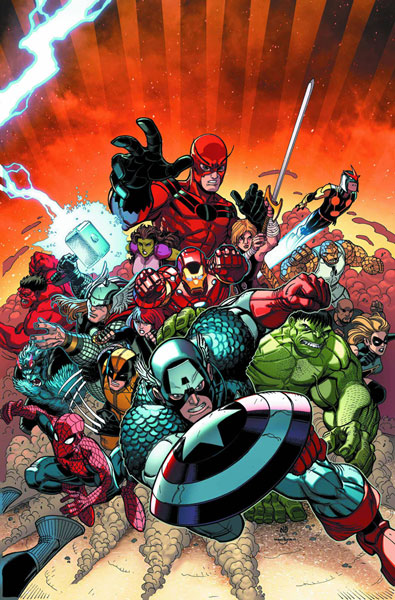
The artwork gets a bit of a markdown in that area as well, not least of all because they got frikkin’ John Romita Jr. in to do the first half of the book. For those not aware, Romita Jr.’s father (John Romita Sr., funnily enough) did some great artwork back in the heyday of superhero comics, but his son’s work doesn’t come close to matching it. It’s way too reliant on overshading and too many lines of facial definition, and really threw me out of the story with its overly-cartoonish look (see the image above for an idea of what I’m on about). The latter chapters done by Adam Kubert and Olivier Coipel were a lot better, so while the story floundered in mediocrity the artwork was definitely putting the hammer down (especially when Thor was around).

For those of you not facepalming about how terrible that last pun was, you’re probably asking me if, in the final analysis, Marvel’s massive multiplayer crossover for 2012 was good or not. In short, no. It left me very disappointed, especially for an event that was touted as both the end of nearly a decade’s worth of storytelling arcs (starting with Avengers Disassembled) and also as the jumping-on point before Marvel’s NOW! relaunch last October. Flashpoint managed to act in that latter capacity quite well, with less than half the issues AvX used to get the job done, and as such proved you don’t need an entire omnibus worth of issues to finish the story off.

Avengers vs. X-Men is one of the most disappointing, lacklustre crossovers I’ve ever read from either company, and if the announcement for the Bendis-penned ten-issue Age of Ultron crossover in 2013 is any indication we can expect more of the same there. Personally, I’ll stick to Rick Remender and his awesome new run of Uncanny Avengers. At least its dialogue doesn’t sound like the marketing department had too many hands in it.

STORY: 2/5
ARTWORK: 3.5/5
DIALOGUE: 1.5/5

OVERALL: 7/15

BEST QUOTE: “One thing I’ve learned about being an Avenger…your moment will come. It’s a big group. Lotta moving parts. Lotta big awesome people doing big awesome things. They don’t always have time to stop and take a knee to explain to you what the heck is going on. You learn to follow the guys who always seem to know where they’re headed. And you wait for your moment. Doesn’t matter how many gods or super-soldiers or Hulks they got on the payroll. Once you’re an Avenger, it never fails…sooner or later the time comes when it’s your turn to step up to the plate. You just gotta make sure you’re ready.” – Spider-Man

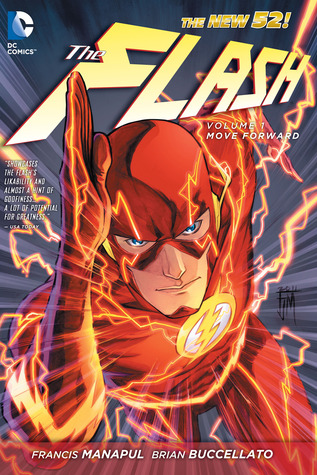
[THE NEW 52] The Flash: Move Forward

Sometimes it feels like there are particular heroes that should really be given greater focus than they’re currently afforded. Take someone like Batwoman – her stories seem to fly mostly under the radar, even though they fare better than some of the other Bat-crap that’s out these days. It seems if the character isn’t marketable as a merchandising icon, a potential film adaptation or just someone they’re trying desperately to reestablish as a potent hero again, then they don’t deserve as much attention.

The Flash seems to be a victim of that process. Despite the fact he, y’know, started this thing in the first place, he really doesn’t seem to have the spotlight on him quite the way Batman, Superman or their other cohorts do right now. It’s a shame, really – Geoff Johns’ pre-Flashpoint was really fun, bouncy and had just the right amount of seriousness to make it a great read. So, can Francis Manapul and Brian Buccellato inherit Johns’ mantle and make a story worthy of the Speed Force, or will the Flash’s red outfit become a stop sign for another horribly bland superhero outing?

Yeah, I really should be more selective with my metaphors.

Like Superman, the Flash’s story has been heavily retconned to remove any trace of wife, extended family or anyone else to ever take up the Flash mantle. Compared to stories like The Flash: Rebirth, where there’s a whole host of speed force users making one big, happy, hyper-consuming family, Move Forward feels a little bit empty in that respect. It’s not a markdown against it, but I do miss the sight of four generations of Flash taking on Professor Zoom with a whole “world’s most kickass family” vibe to it.

In this reality, Barry Allen seems to be have been the only person to bear the Flash name (which infuriated no small number of Wally West fans back in the real world) and is entering into a relationship with fellow forensics officer Patty Spivot, rather than the marriage he had pre-Flashpoint to Iris West who, in this story, is as annoying and persistent a journalist as Lois Lane was in Action Comics. Part of me wonders if Manapul and Grant Morrison compared notes before writing their respective stories, coz there’s a lot of similarity on that front.

The Flash is tasked with taking down random goons when he suddenly gains the inexplicable ability to speed up his mind as well as his muscles, becoming, by his own admission, the superhero equivalent of an ADD sufferer. The super-sped ends up causing more problems than he solves, including an EMP blackout throughout Central City and an accidental move that seriously pisses off arch-nemesis Captain Cold, who’s gone through a bit of a power-boost since last we saw him. Working with Patty and a very polite doctor, with a city blaming him for their issues and a supervillain bent on ruining his day, the Flash needs to sort stuff out quick-smart or else be doomed to run for the rest of his life.

I might sound like I’m taking the piss a little here, but I’m really not. I actually really enjoyed Move Forward. It defied my previous complaints about artists being writers and failing at the extra task, since Manapul does a pretty decent job as a writer and as principal illustrator. It’s not as hard-hitting or cerebral a story as some others I’ve read this year, but it’s still good, popcorn fun with an undercurrent of character development, some good interpersonal stuff between Barry and Patty, and a nice – if rather abrupt – sequel hook at the end, which makes me pray I don’t have to wait until November next year for Volume 2. That seems to be something a lot of New 52’s stories are doing at the moment, sequel hooks that make me long for the next one. Those cunning DC penny-pinchers.

The artwork is solid, though at times the positioning of comic panels during the Flash’s “superhero ADD” moments can get a bit schizophrenic and hard to follow. I’m all for non-linear storytelling, but it broke up the flow a little too much for me. I was looking forward to Manapul’s artwork here since his work on the last Flash run looked fantastic, and while it’s not his best effort it’s still really enjoyable. Bright colours, great use of shading and line articulation, and to my mind the female characters’ most obvious physical traits seems to be toned down and realistically proportioned compared to other works (lookin’ at you, Rob Liefeld).

Dialogue is…a little disappointing. It’s not bad, per se, but it’s not great either. I wasn’t expecting Shakespearean levels of wordiness when going into this book, but a lot of it feels very Hollywood, like it was written for a Michael Bay film rather than an intelligent graphic novel. It is nice that they showed Captain Cold has a little bit of depth beyond “kill Flash, steal money” but the scenes where that happens feel a little schmaltzy and overwrought. Still, at least Barry’s not running around ranting about how awesome a dude he is on every bloody page.

To answer my previous question, yes, Manapul and Buccellato have written a story I think worthy of the Johns Flash mantle. It’s not going to light the world on fire but it’s a nice time-killer, with some good story, great pacing, nice character moments and lovely artwork, even if the dialogue’s a bit spotty. I would definitely recommend it, but I’d recommend reading the Johns run first. Even if most of it gets retconned out like Ant-Man’s domestic abuse traits, it gives a bit more background on Flash and the Speed Force than you get here.

That is, until the “superhero ADD” gets introduced.

STORY: 3.5/5
ARTWORK: 4/5
DIALOGUE: 2.5/5

OVERALL: 10/15

BEST QUOTE: “Unless this is some sort of ‘cosmic’ treadmill, all you’re gonna end up with is spare parts.” – The Flash

The Sandman

Approximately eleven months ago, when DC’s New 52 releases were still to arrive on shelves and the Marvel line had halted somewhat in the run-up to Avengers vs. X-Men, I was perusing the local comic haunt’s shelves and found this curious little series called The Sandman. Penned by Neil Gaiman, it was not completely unknown to me. I knew vaguely it had something to do with David Bowie and it had won a lot of awards, consistently referenced as one of those magnum opus works as a highlight of a writer’s career. Since disposable income was more plentiful back then, when my plans didn’t involve saving for an apartment, I picked up the first volume on a whim – coincidentally, around the same time I first picked up The Walking Dead. While that one turned out to be awesome for being a stark, depressing odyssey into the depths of the human soul during a zombie apocalypse set to last for at least the next decade, The Sandman expressed its unparalleled brilliance by going in the other direction.

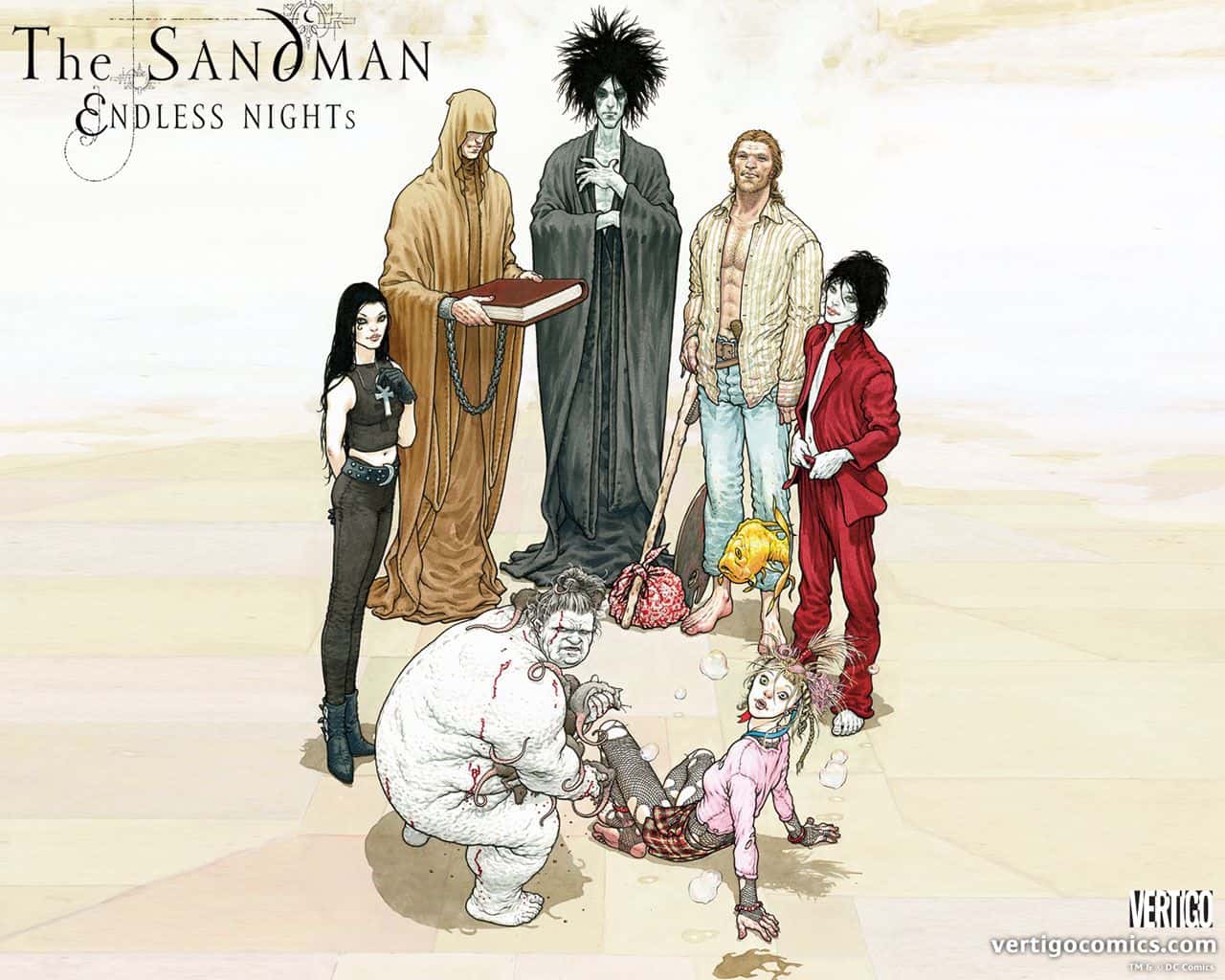
I would be very hard pressed to do justice to Sandman‘s plot in a few brief sentences, but essentially it’s the tale of Dream of the Endless, one of a septumvirate of ancient beings who have guarded the universe for untold eons as personifications of emotional and existential aspects. Dream, captured by a human wizard as the story opens, starts off as a self-centered, vain, set-in-his-ways entity who slowly learns, through joy and tragedy, what it means to exist and how that existence can touch, and be touched by, those around him.

Yeah, that really is selling it short, but it’s difficult to put down in words what Sandman is ultimately about. It’s one of those rare, once-in-a-lifetime reading experiences where it transcends the medium it occupies and presents you with a thought-provoking, utterly unique tale. It’s an amalgam of fairy tales (without all that Once Upon A Time crap), Grimm stories (without the contemporised detective and horrible acting) and Shakespearean influence (without the tedious dialogue that puts me to sleep whenever I read Antony and Cleopatra), meshing together into a moving, flowing narrative far beyond any other, graphic or literary, that I’ve ever experienced.

TvTropes states that Sandman is able to tell any story through any medium, and it really can. It’s got this wonderful ability to pull in varieties of genres – crime, supernatural, romance, drama, comedy, even a bit of sci-fi here and there – and merge them near-seamlessly together into Dream’s series-long narrative arc. While it can seem a bit juxtaposed at times, especially early on when DC characters like Martian Manhunter and Constantine make appearances, it all works in the end.

I’m going to sound gushy throughout this review, since that’s how The Sandman has left me – emotional. It’s such a powerfully-evocative work, through its deft character development and layered but still coherent plot. It’s a story that really gets to you, and not just through the tragedy of Dream as he moves from selfish to self-aware. You really start to care about the other characters, in a way most graphic narratives have to really work to achieve but which Sandman pulls off effortlessly. You’ll feel sad when Rose Walker’s grandmother reminisces about her stolen past in Volume 2. You’ll laugh whenever Mervyn Pumpkinhead vents how frustrating Dream is to right-hand man Lucien, while Dream stands behind him staring disapprovingly. You’ll probably cry, as I did, during the story’s final – and extremely masterful – arc.

And upon its conclusion, you may be left, as I was, with a peculiar sensation. You know when you finish something at a place like, say for instance, high school, with friends who, over the course of a long period of time, you grow deeply attached to. You’ve spent so long with these people, learning them inside and out, moving through triumph and despair and reaching the conclusion of your time together. Once it’s all over, it leaves you with a longing that is different to wanting more from something because it let you down. It’s a longing far apart from that of a desire for the story to continue, however ill-advised such a move would be. It’s not even a longing of missing the people entirely, because experience has shown me that if you work at it, it’s really not that difficult to make the effort to see high school friends if you really want to.

It’s the longing of absent friends, of truly missing these characters, and missing the uniqueness of the particular experience you had with them. It’s what I felt when I read The Sandman‘s final page, and while it was one of the most poignant, appropriate endings for any story I’ve ever read, it left me missing everybody in a way that, despite the fact I can always re-read the story whenever I want to, I will probably feel every time I think about them. Of the Endless themselves – Dream’s stoic poses, Death’s perky, upbeat nature, Destruction’s warrior poet roots, Delirium’s fun and crazy warped persona – and the side-characters – Mervyn Pumpkinhead’s wise-ass remarks, Lucien’s cultured and mannered librarian predilections, Cain and Abel’s constant immortal sibling rivalry – I would miss them all. So much so that I wept for a while after I finished the final volume. We’d reached the conclusion, and while we’d still see each other again it wouldn’t be in the same, special way we had first met.

It sounds really strange and schmaltzy, I know, but the whole experience of reading The Sandman has had an effect on me that no other comic book I’ve ever read – including the Caped Crusader himself – has had before, or possibly ever will. It’s become a part of my graphic library, no doubt, but it’s now become an intrinsic part of how I think about things. Like how Doctor Who made me question mirrors, motes of dust and perception filters, so too has Sandman made me think more about what lies beyond this brief, mortal existence. If I had to choose an afterlife where I could be truly happy and relish the experience, where I could find enough enigma and stimulation to keep me busy for eons as a non-corporeal life-form, I’d choose Sandman‘s. Just send me to The Dreaming, and I’ll never look back.

Sorry, this has all gotten horribly self-indulgent and ridiculously subjective, but that’s the kind of book The Sandman is. It’s not any one genre, or any one interpretation, or any one story – Gaiman himself, in the epilogue of Volume 10, describes it as “a story about stories” (and of course, that’s a summation that does far greater justice than mine did earlier). That’s exactly what it is. It’s a unique, singular narrative experience that cannot be trapped or analysed under any single definition. Well, perhaps except one – it is, truly and utterly, brilliant.

I’m not giving it a score, because it really defies any kind of scoring for me. Like my Top 5, Sandman is way too close to my heart to give an objective number to. All I can say is that there are few comics I could recommend that come close to the level of praise I sing for The Sandman, and nothing I could suggest to you to read could cap the sweet symphony that is, in my opinion, Neil Gaiman’s greatest accomplishment. Go find the books, shell out the cash for the remastered editions, and just read. Even if you’re not a graphic novel fan, it is well worth your time to check it out.

The Sandman is beautiful, marvelous, evocative, provocative, depressing, spectacular, saddening, hilarious, enlightening, moving, multi-faceted and just damn good.

THE SANDMAN:
Volume 1: Preludes and Nocturnes
Volume 2: The Doll’s House
Volume 3: Dream Country
Volume 4: Season of Mists
Volume 5: A Game of You
Volume 6: Fables and Recollections
Volume 7: Brief Lives
Volume 8: World’s End
Volume 9: The Kindly Ones
Volume 10: The Wake

BEST QUOTE (way too many to list, but if I had to pick one…): “I am a world, space-floating, life-nurturing. I am the Universe – all things encompassing, all life embracing. I am hope.” – Dream of the Endless

The Dead Don’t Shuffle (They Run)

The above title is taken from a rather excellent Miracle Of Sound song. I suggest you listen to it, not least of all because it makes what I’m about to dissect here seem even more appalling by comparison.

So the new trailer for next year’s World War Z film adaptation has gone live. To say it disappoints me is grossly selling the point short – it looks like a fetid, congealed piece of Hollywood garbage, and a quite possible contender for worst film in the history of existence. That might sound a bit over-the-top even for me, but I’m not exaggerating when I say the World War Z trailer got me really goddamn angry.

You might say it’s a waste of time being angry at a film, especially one which many people predicted years ago would turn out to be rubbish. You might also say that I shouldn’t judge this book by its cover, but the problem is that the book this is a cover of (see what I did there?) is freakin’ excellent, and easily one of the best zombie fics ever written. But really, how many people mouth off at Gavin Hood because he raped beloved Marvel characters in Wolverine? How many slews of fans took some chunks out of Julie Anne Robinson after One for the Money turned out to be a crapshoot? I feel I’m well within my rights to rail on Brad Pitt’s newest feckless addition to his CV, despite the fact it ain’t out yet, as both a fan of the book and a fan of zombies in general.

First, let’s examine this as a fan of the book – the original World War Z was a documentary-style text that compiled a series of enlightening interviews with survivors of the zombie holocaust that befell an Earth not too far removed from our own. Max Brooks, son of legendary comedian and filmmaker Mel Brooks, did painstaking research to add as much realism and believability to the story as possible, making this zombie threat something that could conceivably take humanity on and entrench itself in every level of our society – political, environmental, military and anything else you care to name. The book was a damn good read and genuinely horrifying quite a few times throughout, and didn’t feel the need to resort to using a heroic protagonist on an epic quest to rid the world of undead shamblers. The only real main character (for lack of a better term) is the omnipresent journalist who documents everyone’s experiences during the war, and who deliberately stays out of having a characterisation or a purpose beyond expositing backstory for the inteviewees. This makes the ensemble cast stand out more as universal entities rather than satellites orbiting an action hero protagonist.

Instead, Brad Pitt has now given himself a character (and a name) with a familial element to his story that will no doubt be so pumped full of cheese and sap I’ll need a tarpaulin to stem the flow. He’s also no longer a held-back entity merely providing a framing device for the narrative, but is instead presented in the trailer as an action hero protagonist with apparent knowledge of how to kill the shamblers. The Wikipedia article claims that Pitt’s character goes around interviewing people about how to hold back the undead, but I saw absolutely non of that in the trailer besides Brad Pitt being how Brad Pitt usually is in an action film. This either means the press release is lying its ass off or the trailer does an incredibly poor effort at dissuading the notion that this has been turned into Dawn of the Dead 2.0.

Speaking of, they’ve made it an action film – it never was an action story. There was plenty of action, certainly, especially in the military recaps of events like the Battle of Yonkers, but it was not presented as a strictly linear action film the way something like Transformers is. They don’t even make it appear to have the horror elements needed for a good serious zombie film, like in 28 Days Later. It’s just action. Don’t we have enough of that already? Isn’t Michael Bay good for that kind of shit? Just saying.

Also, by the look of the cast list it’s a predominantly-American gig. The book was incredibly multicultural, going out to places like India, Pakistan, Israel, China, Russia and even my dear old Oz to interview natives who’d experienced the terror firsthand. Here we just seem to have Brad Pitt, a bunch of Yankees and a few (being the operative word) other ethnicities. I can’t help but feel the filmmakers are going to take an ‘America save the day’ angle if that’s the case, which, while they did certainly help in the book, didn’t happen that way. The victory was only assured through a collaborative effort between a variety of nations, not the Americans riding in on their tanks and Bradleys and turning the zombies into plant food. The implied jingoism there makes me uneasy, and possibly speaks volumes about what the filmmakers thought about the original text’s solution to the zombie problem. Does that mean if America falls first in a zombie invasion we’re all screwed because we’re clearly not as advanced or heroic as our Western comrades?

Now, looking at it as a zombie film – THE ZOMBIES RUN. And I don’t mean the way some of them rush forward in The Walking Dead or Zombieland, I mean they’re the frikkin’ Usain Bolt of the zombie pantheon. The trailer barely even gave us a look at them since they were moving apparently faster than the speed of light, like an unholy combination of The Flash and Solomon Grundy. In fact, for a while I wasn’t even sure I was watching the right trailer since there seemed to be no sign of zombies when trucks started taking Brad Pitt’s car door off and the streets turn to chaos.

Then it was revealed that they were just moving really super-fast. A later scene in the trailer had piles of them trying to climb up what looked like a dam wall, dogpiling on each other like monkeys chasing a balloon. That was the point I slammed my hands down on my computer desk and cried “F**K OFF. NO F**KING WAY.” That, for me, was the moment the trailer did a nice little hop over the shark and entered the territory of utter garbagey bullcrap.

Not to sound too much like a purist who’s as open to innovation as the Tea Party, but zombies do not run that way. And even if they did, they wouldn’t move at a speed that’d make Cathy Freeman hang her head in shame. Something like the 28 Days Later movies work because technically they’re not zombies, or at least not presented as zombies in the traditional sense. This just makes them look superhuman, undefeatable and completely Hollywood. What, did the producers not think a horde of millions of slowly-infected shambling corpses was enough of a stake-raising threat for Brad Pitt’s action hero? God forbid they decide to include latent superpowers in Pitt as the only method of their eventual defeat.

As I said earlier, there’s little to no horror presented in the trailer. I understand it’s only two and a half minutes of footage, but part of the purpose of a trailer is to present an idea of what you can expect in the final product. Something that is universal in the majority of good serious zombie pieces is the horror factor, the scary element that really augments the sense of isolation, hopelessness and real struggle that things like The Walking Dead pull off nicely. All I really got out of this was a bit of Cloverfield-esque city-wide panic and a bit where Brad Pitt and family attempt to get through a door, praying there isn’t anything on the other side. The rest of the trailer was just explosions, helicopters and Americans. If this is an indication of the finished product, I’d probably get a more fulfilling zombie experience playing Resident Evil 6 instead. It’d certainly have the aforementioned real struggle element, at least.

As always, I’m happy to be proven wrong. I had someone come down on me the other day for condemning the Star Wars Episode VII announcement as a bad idea, but I emphasised I’d be quite open to both seeing the film and having all the things I’ve just whinged about be thrown aside like banana peels. While I admit I’m significantly more pissed off about this than Star Wars (especially when you consider the fact that World War Z‘s writer has had middling reception to his previous work, and the director made Quantum of Solace), I’ll still give it a go. As with Fifty Shades I can’t really condemn a work until after I’ve experienced it, so if nothing else I’ll probably check it out to make a follow-up post either proving my incredible prescience or my lack of open mindedness. But on paper, and based on the stupifyingly awful excuse for a trailer it squeezed out, World War Z‘s filmic adaptation looks like an absolute mound of regurgitated fail. Hell, it might even be so bad that Transformers 4 beats the crap out of it.

Though if it does, enjoy your last days since the apocalypse will be nigh.

Iron Man: Extremis

As it turns out, there’s a metric ton of stuff for me to read right now. Last week’s releases alone saw The Flash, Red Hood and the Outlaws, the final volume of Sandman and the voluminous tome collecting all of Avengers vs. X-Men. All of these are sitting on a bedside table, waiting to be perused and punctured by my scathingly awful wit, but they’re going to take some time – especially the latter title, since it’s big enough to smack someone unconscious with.

So that leaves me with a retrospective week until I can be arsed to get up and go through these new excuses to fund the comics industry. But what to review? Batman seems like fairly well-trod ground, the X-Men are probably the equivalent of loaned-out prostitutes on this blog and my plans for the Daredevil books involve a VS. review that I’m simply non compus mentis right now to construct. My weekend has involved no small amount of Heineken.

Well, since there’s a brand spankin’ new film featuring the Crimson Avenger next year, I figure it’s time to give him a look again. I’ve already elucidated how awesome Matt Fraction’s run is, but I’m stepping back a little bit more here. This is the book that, by and large, revitalized the character and provided more than enough fuel for movies to one day be made. It’s so good, in fact, that it’s part of the basis for 2013’s Iron Man 3, so consider this a SPOILER ALERT for anyone who doesn’t potentially want elements spoiled in this review.

So when the initial issues came out in 2005, the Avengers had been ravaged by the events of Disassembled and it was apparent they were going to be split down the middle for a good while. One of the biggest heroes affected by the change, and a later proponent of what would later become the Superhero Registration Act, was Iron Man. Extremis, being the first story for him post-Disassembled, deals with a bioengineered superweapon – the eponymous Extremis – being stolen by persons unknown and used on a dude who looks like Goyle from the Harry Potter books. This dude ends up going on a rampage and killing a shedload of people, and it’s up to Iron Man to take him down, discover the true nature of Extremis, and also confront his checkered past in order to move forward into the future.

Fans of the first movie may find a number of familiar elements in the backstory, where Tony Stark tells through flashbacks how he was kidnapped by Middle Eastern extremists and forced to make the original Iron Man suit IN A CAVE!! WITH A BOX OF SCRAPS!!! There really is a lot of Extremis‘ DNA in the Iron Man movies, and it’s a marvelous jumping-on point for new readers. I picked this up a couple of years ago, with no prior knowledge of Iron Man beyond the films themselves, and rolled with it easily. The characters are greatly defined, and Tony’s playboy antics are present if a little bit toned down. It’s a great snapshot at the larger world of Iron Man, presenting a lot of facets that would later become integral to the character’s contemporary presence while establishing past elements that appear to have been modernized – such as the origin story – to better appeal to current readers. Warren Ellis’ script is also deft at establishing motivation and characterisation, giving a very cinematic experience within the comic that doesn’t solely rely on big explosions and buckets full of exposition to grab an audience.

The illustrations by artwork savant Adi Granov only augment the awesomeness of the story. It’s a very CG and normal artwork blend that works brilliantly, even if at times the human faces look a little like something Pixar might make after a night on vodka cocktails. The fight scenes, while not overwhelming, are the best drawn and coloured within the book, and every appearance of the iconic Iron Man armour not only looks bloody gorgeous but also has enough realistic definition to carry a great sense of “Hell yeah!” whenever it appears to kick the crap out of whichever villain is on-panel at the time.

Mostly, Extremis comes across as a very human story, hence no reliance on staple Iron Man villains like the Mandarin or anyone from the Stane family. Tony, as the main character, is the driving force behind everything that happens, acting sympathetic to readers while still displaying the roguish traits we know and love from the movies. If you’re looking for somewhere to start with Mr Stark’s escapades you could do worse than either this book or Fraction’s titanic super-run, so definitely check it out.

Now, apologies are in order for A. not posting anything last week and B. not posting anything new this week. NaNoWriMo, work and the usual plethora of lame excuses all got in the way. It’s back to schedule now, so something new will appear next Sunday – unless Mitt Romney decides to exact revenge on Obama by nuking Australia. Coz somehow, that’ll totally piss him off.

STORY: 4/5
ARTWORK: 4/5
DIALOGUE: 4/5

OVERALL: 12/15

BEST QUOTE: “Okay, have fresh clothes and coffee sent down to the garage. The gallon drum of coffee. And possibly some kind of intravenous drip.” – Tony Stark

[THE NEW 52] Batman – The Dark Knight: Knight Terrors

If comics were a whorehouse, Batman would now be the prostitute everyone wants to have a go with.

Of all the reinventions present since the New 52 hit, Batman’s had the most series that have spun out of them. The character himself stars in 4, with a further 5 being denoted as under the Bat-family label featuring appearances or allusions to the caped crusader, and it also doesn’t include featuring in Justice League, JLI and God knows where else right now. I’d half-expect him to be a supporting player in Voodoo or I, Vampire for Christ’s sake.

While I still love the character with every fibre of my being, I feel his core awesomeness is being abused somewhat. DC seem to have latched onto the fact that anything in the Bat brand is an instant license to print money, and thus he’s dominating the company’s merchandising efforts more than ever. I’m pretty sure the only reason he’s not running the Justice League is because the descendants of Jerry Siegel and Joe Shuster – Superman’s original creators – would sue DC for more money than they’re already owed.

Fortunately, not all of the Bat-books being thrown at us are bland and terrible. Only some of them. Like, half. Ish. Anyway, does Knight Terrors fit into the Snyder and Tomasi area of thought-provoking action-ness, or is it another Tony Daniel voyage into stupidity and self-aggrandisation that leaves you chugging a bottle of bleach?

First off, I was gratified to find out artist David Finch wasn’t the only writer this time around, since I’ve already covered how most artist-writer’s I’ve experienced in mainstream comics are about as engaging as a broken latch on a toilet cubicle. Plus, the last Batman – The Dark Knight book Finch worked on showcased his…lacking talents as a narrative scribe. No, this time he’s joined by Paul Jenkins (isn’t that the American newscaster from Team America?) and the two craft a solo book where the big bad Bat gets faced with some big bad baddies who bust out of Arkham, including a roided-up Two-Face and a scantily-clad woman wearing a white corset and bunny ears in a manner that wouldn’t be out of place in a Sin City story. The plot deals with Batman tracking down someone behind a toxin that makes anyone fearless and immune to pain, which leads to a rather hilarious moment where resident contract killer Deathstroke, infect by the toxin, slices up the Bat-plane with a whale-sized claymore. At that point I had to question whether or not Rob Liefeld had had any involvement, at least in this scene.

The story is pretty basic, but not in a bland and boring kind of way. Arkham escapes and supervillain performance enhancing drugs have popped up frequently in Batman’s world but innovation isn’t where the book excels, for excel it does indeed. It’s one of the rare Batman narratives I’ve read recently that features characters from outside the Bat-family, including a nice, if brief, team-up with the Flash and a house-destroying punch-up with Superman. It’s good, old-school superhero fun with a bit of a cerebral spine running throughout where Batman introspectively narrates his own battle with fear. While it doesn’t quite hit the same kind of character depth as The Dark Knight Returns or Hush, it’s still far better than Faces of Death at least.

The artwork is Finch-standard awesome, with nicely fleshed-out tones and great backgrounding. One thing I actually didn’t mind was the lack of the Batsuit’s recent line articulations for most of the story, presenting an outfit more in line with the pre-Flashpoint Batman’s appearances that further emphasised the slightly classic mood. The characters’ faces can look a bit deformed every now and then, and resident jerk Agent Forbes resembles Brad Pitt after too many botox injections. On the whole, pretty good stuff.

Dialogue is basic, with a few funny moments here and there that mostly include Alfred snarking. As I said, I wasn’t expecting Shakespearean levels of inspiration when I picked this book up, and as a piece of enjoyable, flashy pulp fiction it does the job. Batman thankfully doesn’t sound like a macho asshole the way he did in Faces, but doesn’t quite achieve the depth present in The Court of Owls.

Don’t go into Knight Terrors expecting anything huge or world-shattering, because all it aims to do is entertain with flashy colour, a half-interesting plot and a bunch of physical bust-ups. I’d almost go so far as to call it a Batman equivalent of The Expendables, except there’s no Sylvester Stallone with dialogue that sounds like he’s speaking out of his butt.

STORY: 3.5/5
ARTWORK: 4.5/5
DIALOGUE: 3/5

OVERALL: 11/15

BEST QUOTE:

Saga, Volume 1

It’s not often that I extricate myself from my superhero pigeonhole and explore the great wide world beyond, but when I do it usually results in me discovering some new gem to add to my reading catalogue – which doesn’t do my bank account any favours. For example, when I first got into The Walking Dead I had to technically start a second superannuation account to cover the cost of all those nice big hardcovers being taken straight out of my future spinster fund, and it didn’t make things easier when the end of every volume made me slather for the next one.

Mercifully I’m jumping on the Saga bandwagon at the early stages of its infancy, so my bank account can rest easy for a few more weeks in this instance. It’s a sci-fi romance fantasy epic that’s flown mostly under the radar for me, although I do recall seeing a news article about the first issue a few months back and feeling kinda intrigued about the notion of a comic book touted as a hybrid of Star Wars and Game of Thrones. Scribed by Y: The Last Man creator Brian K. Vaughan, the main characters are Marko and Alana, a pair of mismatched alien soldiers on opposite sides of a war who fall in love and, as the story opens, give birth to an alien hybrid named Hazel, who narrates the series. The two wayward militants are then pursued by a variety of aggressors, including a fornicating robot with a TV for a head, a half-naked spider-woman and a bald, cat-loving mercenary known only as The Will. It’s up to Marko and Alana to elude their would-be captors and find a place to raise their daughter safe and free from oppression.

Let’s not mince words – I friggin’ loved this book. It’s oddly simplistic but very subtly layered, and not an inch of the story feels wasted or unnecessary. The pacing is fast but not overwhelming, the characters are well-rounded in just a few pages of narrative each, the world-building is executed effectively and efficiently, and there are plenty of “holy s**t” moments to excite even the most devout Michael Bay fan. On top of that, to jump ahead a few sections, the dialogue is masterful. Every character has, at one point or another, enough wit and snark to make Red Dwarf look like a primary school pantomime. Even the British-voiced robots, who do decidedly organic things like take dumps and copulate, manage to get in some really great ripostes that are what I imagine Prince Charles says when the cameras are turned off and Camilla accidentally burns his evening roast again.

It’s one of those rare narratives, graphic or otherwise, that manages to execute a flawless balancing act between action, plot, character development and humour. I never found myself dreading a character’s appearance midway through another’s arc, like I do whenever Batgirl’s roommate shows up partway through her disability angsting. No, everyone here is enjoyable in different ways, heroic or villainous, and everyone’s appearances are welcome throughout. Even the bad guys – such as the aforesaid spider-lady – get some good moments, including a rather jilted conversation between two mercenaries who you’d swear were/are married, bickering about stealing each other’s kills the same way a wife reprimands a husband for using all the Baileys for body shots the night before.

The art by Fiona Staples is a marvelous fusion of abstract gorgeousness and slightly grungy shading, evoking a mashup of Alex Maleev and Michael Lark (ironically, two artists who both had noted Daredevil runs). The characters’ facial expressions are awesome, giving off subtle emotion and visual cues that most comic book artists can’t usually nail. While the horns and wings make Marko and Alana respectively look a tad surreal and not-quite-human, their faces are done in a way that looks like the way a real person would move and project emotion through facial expression. Coupled with the gorgeous panoramas popping up every now and then, fleshing out the galaxy and showing mismatched alien worlds complete with dragon trains and spaceships make of trees (no, seriously), the artwork is utterly sublime. It can get a little spartan here and there, with a couple of the fight scenes being a little confusing when one isn’t sure which of the six identical enemy soldiers just lost an appendage from a sword slash, and that’s the only reason the book isn’t getting a perfect score.

Seriously, Saga‘s first outing was brilliantly scripted, masterfully atmospheric, superbly illustrated and excellently captivating. I might sound a bit gushy about this, but I really wasn’t expecting a book of such understated awesomeness when I picked this up on a whim the other week. If you’re not reading Saga, shell out for Volume 1 (it’s only $10US or $13AUS) and check it out. I will bet dollars to donuts it can land more casual readers than a scary, continuity-bloated superhero comic could. Hell, my mother’d probably read it, once she stops her Fifty Shades of Grey re-read.

STORY: 5/5
ARTWORK: 4.5/5
DIALOGUE: 5/5

OVERALL: 14.5/15

BEST QUOTE: “I’ve interviewed every detainee on this rock, and the only thing I’m closer to catching is a staph infection.” – Prince Robot IV

[THE NEW 52] Batgirl: The Darkest Reflection

Wow, it’s been far too long. I really haven’t realised until now just how much I enjoy writing these reviews of scathing wit and appalling self-effacement. This must be how Jerry Springer feels.

The thesis took up a lot of my time towards the end, and in part it demanded my attention be taken away from actual comic books (ironic, considering what my thesis topic was). So while I was raring to get back into the swing of things after submission on October 4th, I found I was devoid of suitable material for a review – unless I do another classic review, which I think you’re all so sick of that the words “PLEASE BE CONTEMPORARY” are permanently etched into my letterbox with a sharpened stick.

So, let’s dive back in with a poor follow-up to a series I actually thought was great. What a way to bring myself back into the comic book fold.

I may have mentioned previously (somewhere on this blog or my other “serious” one) that one of the changes I found most reviling in the New 52 was the removal of former Spoiler Stephanie Brown as the current Batgirl, replacing her with old-hand Barbara Gordon. You may remember the latter as paraplegic superheroic icon Oracle, also know as the best Voice with an Internet Connection since Cortana from Halo (and, for the record, twice as sexy). Unfortunately, since there seems to be no shortage of creative bankruptcy in DC these days, Barbara’s been taken out of the wheelchair – with many of the unfortunate implications that creates – and thrown back into the retro suit of yellow and black armour with contemporary line articulations thrown in for good measure. After several months of physical therapy she’s tasked to take on the villainous Mirror, a dude who looks like a cross between Batman, Havok from X-Men and the Nightingales from Skyrim, who’s going around killing people who’ve been blessed by miracles (such as Barbara’s unexplained spinal recovery).

While I had a good inkling I wasn’t going to like this book, I wasn’t prepared for how annoying it is. It’s not Faces of Death but it’s still pretty bad. Obnoxious is probably the word I’d best use to describe it. The action is overwrought, even for a Batman title, the characterisation is sloppy and far too schizophrenic – with Babs switching between testosterone-chugging confidence and naive schoolgirl wallflower at the drop of a hat – and the story is paced like a malfunctioning escalator, stopping and starting all over the place. I know part of the New 52’s schtick was de-aging some of the characters to keep them contemporary and not the brittle-boned octogenarians they would be if they were real today, but they seem to have turned Barbara Gordon’s dial on the Way-Back Machine just a bit too much. She reminds me – especially in dialogue – of Stephanie Brown in all but name.

Wait, hold on, I should give some context here for those of you who aren’t predisposed towards watching teenage girls in tight bodysuits fight supervillains.

The Stephanie Brown run in Batgirl – back when Bruce Wayne was dead and continuity still mattered to the writers – was written by Bryan Q Miller. It was a fun, rollicking adventure with Barbara as the Obi-Wan and Steph as the slightly precocious yet very enthusiastic inheritor of the BG mantle after her predecessor ran off to join the army. The angst was set to minimum, the characters were well-rounded, the story was impressively paced and the dialogue was somewhere between Joss Whedon and Mark Waid in terms of enjoyable-ness. I friggin’ loved it, and the unnecessary change to Batgirl‘s winning formula post-reboot made me extremely hesitant to check it out. The fact that Gail “High-Horse” Simone was writing it didn’t help.

This must be how fans of Knight Rider and Charlie’s Angels feel after comparing their beloved 80’s schlock against the 2000’s reboots of the past few years that performed as well as a Dalek doing a trapeze act. I was severely let down by The Darkest Reflection and not because I figured I’d dislike it. I try to go into these new books as unbiased as possible – look no further than Superboy – but I just found it a bit difficult in this instance. The dialogue alternates between cringeworthy and just plain boring, and very much reinforces the notion that Gail Simone skinned Stephanie Brown, put a Babs lookalike’s appearance over the top, then brainwashed her into having pretend psychological issues about her former lack of mobility. I get the sense Barbara’s not so much an adult woman (as she was during her Oracle tenure) but rather a just-out-of-high-school teen who is a set of braces and a sleepover party away from being Katy Perry in Last Friday Night.

As with Faces of Death, the biggest points go to the artwork. Ardian Syaf is to be congratulated for taking a lackluster, underwhelming piece and really buffing it up in the art department. There’s full colour, fleshed-out tones and no shortage of really gorgeous panoramic panels, even if he does make the sky purple a few too many times. While some of the aforementioned articulation lines are a bit unnecessary, it’s still damn pretty. If we could set the Way-Back Machine to September last year and have Bryan Q Miller as writer, replace Babs with Steph and keep Mr Syaf as lead artist, we’d have a superior book that could rival some of my current contenders for best graphic novel of the year.

As it stands we’re left with a slow-moving, dialogue-heavy cringefest that carries the same narrative weight as an episode of Jersey Shore. There is some good character development during a brief interlude in the middle with Nightwing (including the worst use of a ballet metaphor I’ve ever read) but apart from that it’s boring, poorly executed and unengaging. If I wanted teen angst peppered with the odd punchup, I’d read Twilight.

STORY: 1.5/5
ARTWORK: 4.5/5
DIALOGUE: 2/5

OVERALL: 7/15

BEST QUOTE: “Isn’t it a little weird to be talking to your bike?” – Nightwing

Uncanny Avengers #1

WARNING: PLOT AND/OR ENDING SPOILERS FOR AVENGERS VS. X-MEN FOLLOW.

As I mentioned back in my Batman Incorporated review, I’m not big on buying single issues of comic books since I usually end up buying the collected versions anyway. While that title was until now the only exception to that rule, it’s now joined by another.

Over on my other meaningless site for pointless, nerd-fueled drivel, I expounded upon the annoyance I felt surrounding Marvel’s upcoming reboot and stated it was unnecessary and merely a “follow the leader” move after DC’s New 52 last year. I’d like to take a moment to break out a fork and gobble down some humble pie by saying I’d like to retract that statement – partially.

As it turned out, “reboot” was entirely the wrong word to describe Marvel NOW (which I still hold is a ridiculous title more aimed at kids and ADD sufferers) since it’s more of a refresh than a complete retcon of every event over the last eight decades that bruises continuity so badly it continuously urinates red. While it did mean the end of titanic super-runs like Ed Brubaker’s Captain America and Matt Fraction’s Invincible Iron Man, it also killed off stagnant old-hands like Daniel Way’s Deadpool and Kieron Gillen’s lackluster X-Men arc. This allows almost every Marvel title to start a new series without removing continuity and creating a mindless mess of mediocre money-making. The only possible exception is Mark Waid’s Daredevil, but seriously, that run is freakin’ sweet and no refresh is needed – its recent Eisner Award wins are testament to that, illustrating Marvel does indeed know what not to start from scratch.

It’s for this latter reason, and the start of Uncanny Avengers, that I firmly believe Marvel NOW is going to ultimately be better than DC’s New 52. Don’t get me wrong, I’ve loved a lot of DC’s newer stuff – especially the series’ I wouldn’t have tried beforehand – but they’ve really handled their continuity poorly in the twelve months since all their Flashpoint retcons took place. Instead of half-assedly cramming eighty years worth of story into a five-year timespan, whilst being incredibly flippant and vague over what actually happened and what was just a surreal superhero hallucination, they should’ve either really started with a clean slate or just refreshed their lines like what Marvel’s doing right now. Either option would mean a significant decrease in the level of flame warring going on right now.

Five paragraphs in and I’ve barely spoken about the actual review topic, so let’s get down to it. Uncanny Avengers is the new Marvel flagship title combining the eponymous superhero team, still riding the popularity wave after April’s film outing, with some mutant mainstays from the X-Men. If you can get past the slightly awkward title (and really, I still don’t get what makes the mutants Uncanny anyway – are they in-universe doppelgangers of celebrities or something?) it’s a book that seems to be developing a slightly lighter and fluffier equivalent of writer Rick Remender’s previous titanic super-run, Uncanny X-Force.

In the wake of AvX‘s game-changing finale, with the death of Charles Xavier and the decimation of the Phoenix Force, Captain America sets about creating an Avengers team blending superheroes and mutants into one big, happy gang of extraterrestrial and supernatural battle dudes. Among the chosen few are Thor, who apparently like lattes, Wolverine, who doesn’t seem to have aged a day since Joss Whedon’s run, Scarlet Witch, covering herself in red fabric almost as much as the chick from Goldfinger was covered in paint, Rogue, whose accent is still just annoying written as it was spoken by Anna Paquin, and Havok, erstwhile brother of egotist Cyclops. The team’s mission is…er, we’re not really sure yet, but since this is only one issue it’s likely we’ll find out next month.

It may not exactly be an entirely original concept, but I really loved the debut of Uncanny Avengers. Instead of starting with a massive battle and the team assembled without any prior backstory, we’re given the group’s first building blocks that highlight it ain’t gonna be easy getting everyone in the same room together. The choice of Red Skull as the first main villain might seem odd, especially if he thinks he’s a threat for Thor and let alone anyone else, but rest assured that by the end of the issue it’s abundantly clear why they’ve picked him and how they’re going to elevate him to a Big Bad status to rival Kang or Ultron – if the issue’s cliffhanger pays off the way I hope it will.

John Cassaday returning as an artist at Marvel really brings the book to life, and amps up the story with a synthesis between narrative and visuals in a way few artists can manage. To use a rather paltry term, it pops. God I hate that context. On top of that, Rick Remender’s dialogue is strongly reminiscent of Uncanny X-Force and is at once engaging and realistic. Both author and writer really seem to be in sync, and it makes me excited to see where this story is headed.

It’s also a perfect gateway entry for any new reader, since what backstory is required gets doled out at the start and the continuity isn’t so overwhelming that newbies would feel better off reading a Mills and Boon novel instead. So if you’ve ever wanted to break into the Avengers world with what looks to be an intriguing narrative and near-flawless artistry, this is the title for you (unless you’re trying out Bendis – read his stuff first).

I don’t know if I’ll review every issue as it’s released, but as something different I’ll consider it an option. If it convinces people to read the comic simultaneously, so much the better! We could start a book club and trade views on the story each month!

*crickets*

Hmph. Fine then.

UNCANNY AVENGERS – ISSUE 1
BEST QUOTE: “The place we go also makes lattes, if you prefer…I do.” – Thor