[MARVEL NOW] Iron Man: Believe

With a movie, at time of writing, out in less than a week, as well as a host of inclusions in additional series’ like Avengers and Guardians of the Galaxy, it seems like Iron Man is everywhere. The Crimson Avenger (though the first part of that descriptor ain’t entirely true right now) has almost become the poster child for the Marvel Universe the way Batman proudly represents DC, especially since casual fans still seem to be giving the cold shoulder to jingoists like Captain America and fantasy Norse playboys like Thor. Not that Iron Man representing the Marvel U is a bad thing, but it does start to raise the same issues Batman has in that his appearances become bland and the overall experience becomes incredibly thin since he’s everywhere now.

It also means his narratives come under closer scrutiny, since reviewers like me need to wonder if Iron Man is the best choice of story to rope in new readers who see the super-suit and rush off to the nearest comic store. Are fans getting the hero they deserve, or has mass-market appeal diluted Iron Man to the point of Tony Daniel levels of poor dialogue, flimsy characterisation and plot so far up its own ass that its in danger of choking on tonsils?

Following on the heels of Matt Fraction’s landmark run, the relaunched Iron Man starts with Tony Stark discovering that the Extremis virus (which you may remember from this excellent reboot/origin story), the basis behind his current Iron Man tech and a key element of his recent suit-building escapades, has been stolen by terrorists and is being utilised to create crazy armour-clad villains based off Arthurian legend. During the course of this brief narrative, Tony puts on as many different-coloured Iron Man suits as he can get away with in order to dismantle the terrorist operation, recover Extremis and quite possibly remove almost every bit of character development he gained throughout the recent Fraction storyline.

While Believe is by no means a bad story at all, the biggest gripe I have with it is that the previous 11 volumes worth of Matt Fraction’s story seems to mean almost diddly-bupkiss to the current story. The deep and tragic elements of Tony Stark, the broken man beneath the bravado, the strange yet comforting relationship with Pepper Potts, all that harrowing characterisation he evolved during World’s Most Wanted when he was literally fighting for his life…almost all of it’s gone. Tony’s gone full-playboy in this one, probably taking cues from the film universe version with none of the undertones of damage, and there’s scant evidence to suggest he and Pepper ever had a relationship. That’s like crafting an entry for the Guinness World Records Largest Pie Ever competition, only to have it eaten by Homer Simpson and a team of rabid beavers.

So in that respect, this makes Believe an absolutely excellent introductory volume for new readers – if you already know the origin story, but by now we can all probably sing it by rote. As much as the eschewing of Matt Fraction’s brilliant work irks me somewhat, I’ve got to admit Believe is pretty kickass. There’s a good balance of action and character moments (even if the former does reach some pretty ridiculous heights, like battling the aforementioned Arthurian supervillains), there’s not a hell of a lot of prior reading necessary to get what’s going on, and the artwork by Greg Land (despite what people may think of him) is pretty great. The narrative does stumble a little during a chapter that tries to blend a Skyrim dungeon with the Cult of Cthulhu, but overall succeeds at holding attention and kicking ass.

The dialogue – kinda flimsy. It’s not bad, but it’s not great. I’ve never been the biggest fan of Kieron Gillen, but even he manages to get some oomph into his scripting every now and then. This just feels kinda lifeless, like there’s some good speaking going on but nothing that really jumps out at me the way writers like Scott Snyder and Brian K. Vaughan do. It’s kinda hard to describe without going into depth of particular scenes, which’ll probably bore the few of you keen enough to read this review, so just take my word that Gillen’s dialogue is kinda lacking. But hey, you could do worse – you could have Tony Da…actually never mind, that riff’s getting a little overplayed now.

In the end, Iron Man: Believe is a good jumping-on point, a solid story with some good artwork and passable dialogue. If you’re reading this after seeing Iron Man 3 and thinking “Oh wow, I’d sure love to be reading more of that stuff right now!”, you could definitely do worse. If, however, you’re gunning for something with a bit more depth and flesh on its bones, I’d point you towards Matt Fraction’s Invincible Iron Man run instead – if it hadn’t been retconned because more than five minutes without new readers have passed.

STORY: 3.5/5
ARTWORK: 4/5
DIALOGUE: 2.5/5

OVERALL: 10/15

BEST QUOTE: “The thought does occur…”Lightbender” is a very silly name for such an awesome toy.” – Iron Man

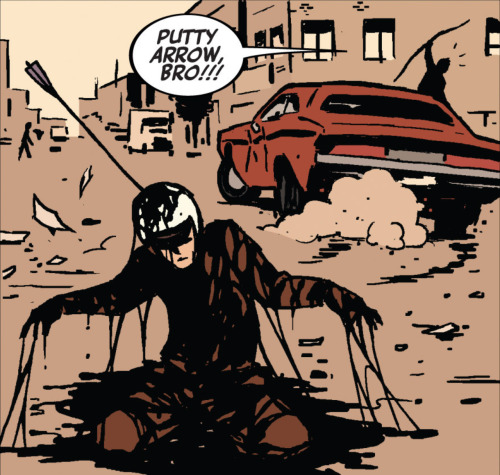
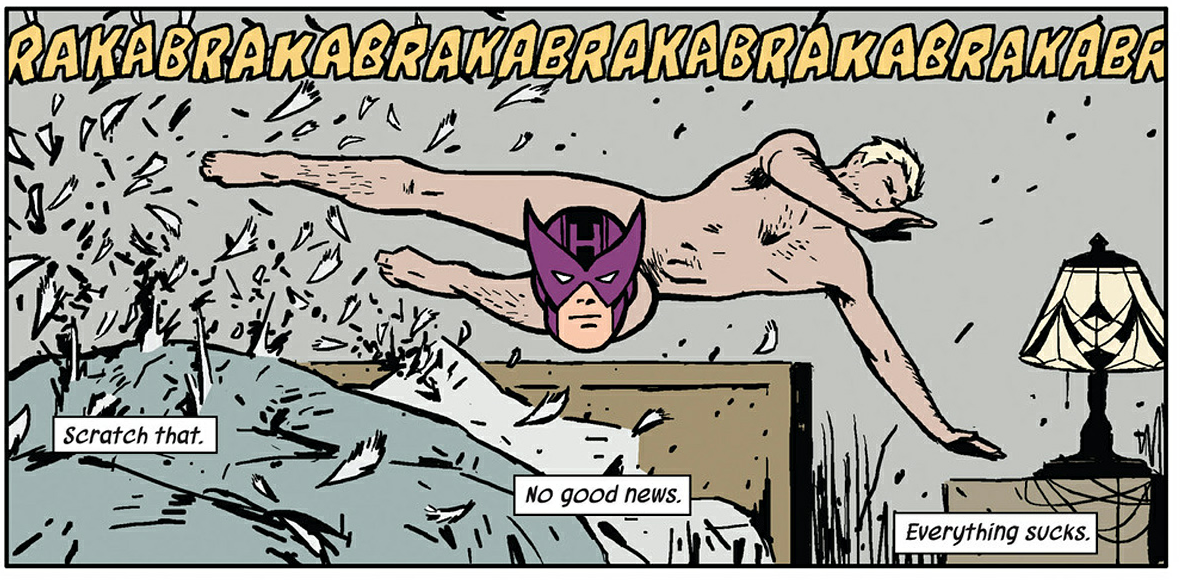
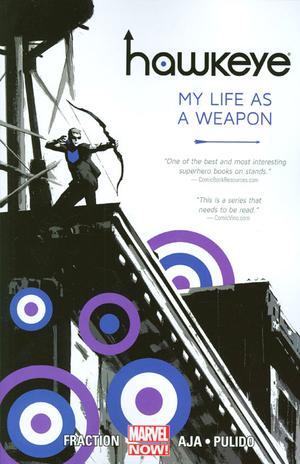
[MARVEL NOW] Hawkeye: My Life as a Weapon

So we’re well and truly into the releases of Marvel’s new NOW initiative that portends to be a relaunch rather than DC’s ill-advised reboot in this Golden Age of appealing to as many demographics, fan cultures and bank accounts as possible. It’d be rather bland of me to simply take the same route I did with the New 52 and have a look at the good ones along with a few wildcards, but since I’m not one for innovation at the moment – or, rather, not one for shifting what few innovation genes I possess away from the stories I’m currently writing – let’s go with the tried-and-true, ok?

To be honest, there’s not an awful lot in Marvel NOW that I’m sufficiently married to the concept to review for. Old-hand staples like Captain America, Iron Man and X-Men are all well and good, but at least 50% of the series on offer appeal to me in no way whatsoever. Granted, DC managed to get me into Superman and Teen Titans of all mother-loving things, so I’m definitely open to trying something I haven’t experienced before. But there isn’t much that really tickles my intrigue to get me interested in checking them out. I mean, I’d rather ingest varnish than dive into a new Fantastic Four hack-rag.

One of the few exceptions to this is the new Hawkeye series. Fans of Joss Whedon’s masterpiece movie might remember him as that one guy that Loki possessed with a fondness for arrows and Bond one-liners. In this new story he’s less a wisecracking Avenger and more a wisecracking street-level spy with a greater fondness for arrows and Bond one-liners and a distinct love of everything purple.

The story is, summarily, quite simple; in his off-hours from saving the world Clint Barton uses the Hawkeye monniker – sans superhero outfit – to take on jobs that are kind of a cross between James Bond, Jason Bourne and Jack Reacher, all the while teamed up with his sidekick-come-successor Kate Bishop and clothing himself in any form of purple he can possibly find. Seriously, there’s a scene where he’s interviewed by Captain America (who has a bright blue and red costume, mind) and the most distinctively coloured elements on the page are his royal purple Converses. Not that I’m complaining, just saying this comic would’ve been really expensive to print back in the Elizabethan era when all that purple ink was the same cost as a small island.

Within said simplicity lies a keen undertone of life on the street well apart from the perceived glamour of being an Avenger. Barton is at once an approachable and yet distinctly alienating character, with both elements juxtaposed and explored quite nicely through his relationship with newbie Hawkeye and almost like the relationship a companion has in Doctor Who, except this companion knows her way around a bow and looks good in a villain’s outfit. I also presume she doesn’t have incredibly annoying and singularly-hinted accent.

resident deadpan snarker Bishop. It’s

The point I’m trying eloquently and laboriously to get to is that the book is really well-balanced between action and character development. There’s lots of good fight sequences and stunts that wouldn’t be out of place in a Die Hard film, and the soft, gooey centre of the unguarded Barton in-between missions is enough to make women go “Awww!” and men laugh derisively at his perceived pussy status. It’s got hints of darker goings-on but never reaches anything bleak or depressing, and the lightness present throughout never reaches absurd or overly-comic-book-ish proportions. It’s like a really well-cooked meal with perfect appetizer and nice wine supplement. It’s also really prettily laid out on the plate, and now I’ve made myself really hungry.

The artwork by David Aja and Javier Pulido kicks lots of ass, and is strongly reminiscent of greats like Alex Maleev (Daredevil), Michael Lark (Daredevil) and Paolo Rivera (umm…Daredevil) in terms of minimalist yet punchy artistry. If I have an issue with the art it’s that Barton all too often doesn’t stand out on the palette when he’s not wearing purple, but I guess that’s part of the theme – Hawkeye, when not with the Avengers, is able to blend into society in a way well-known figureheads like Tony Stark and Steve Rogers can’t. If that was the intent behind the choice of Aja and Pulido, then more power to ’em. Still looks good, even if occasionally you get more pastel colours than Ned Flanders’ wardrobe.

The script is incredibly tight, like a corset fastened by a hydropress. The dialogue feels realistic and like things people would actually say, there’s some nice snark in Barton’s inner monologuing that doesn’t feel too navel-gazey or like he’s trying to rip off Sam Spade, and there’s some quite witty banter exchanged between the two Hawkeyes as they go off on missions together. Also (hope you’re reading this, Allan Heinberg), Kate Bishop is written as a much more intelligent and involving character with dialogue that doesn’t come pre-packaged with enough angst to produce a Linkin Park album. Writer Matt Fraction seems to have a bit of difficulty distinguishing the relationship between Kate and Clint at times, alternating brother-sister, mentor-student opposite-aged-love-interests, so a bit of distinction in later books would be good.

On the whole, as one of the first entrants out of the gate for Marvel NOW you could certainly do a lot worse than picking up the new Hawkeye series. It’s a wee bit short, but it’ll certainly leave you wanting more. Kind of like what the ending of each my reviews fails to do.

STORY: 4.5/5
ARTWORK: 4/5
DIALOGUE: 4/5

OVERALL: 12.5/15

BEST QUOTE: “Okay…this looks bad.” – Clint Barton

Dr. Enragelove (Or, How I Learned to Stop Worrying and Hate Glee)

I loved Glee. Its first season kicked ass, the novelty was bright and shiny, the characters were awesome and the plot was actually engaging. Then the second and third season happened, and it slowly went on a downward spiral for me. The gloss came off, the characters were wooden and the plots…weren’t worth mentioning.

Then comes Season 4, with half the cast MIA and the other half split between staying at William McKinley High School or jetting off to New York to some post-school-Glee thingy. I dunno, the premise alone made me switch off. It didn’t sound like a show that could survive for very long with such a ridiculous change in status quo.

While I’ve not been watching religiously since the middle of Season 3, I have kept relatively up to date on Wikipedia out of curiosity to see if it actually goes back to the glory days again (so far, no luck). I was intrigued by the description of a recent episode named Shooting Star that purported to be “harrowing” and one of the most dramatic hours in the history of American television. Spoilers were released prior to the episode’s transmission, informing just what kind of harrowing issue the Glee club would be facing next. I won’t go much further than that, but the spoilers were enough to make me want to watch this episode – not out of joy at the series finally returning to its sane roots without appealing to the lowest of the cultural demographics through cheesy songs and OC-levels of relationship drama, but because the premise for the episode alone was enough to make me filled with rage.

So for those who haven’t seen it, don’t worry because:

1. You’re not missing anything.

2. You don’t need your blood pressure raised, too.

3. I’ll paint a portrait of the episode as vividly as I can for you, so you can draw your own conclusions. If you’re still keen to see it after this, may God be with you.

For those of you not keen on Glee and its stupid plots, trust me when I say you’ll want to keep reading.

So the episode starts with some chaff about who New Directions will be facing at Regionals. After some un-punny names of rival glee clubs, resident airhead Britney suddenly informs everyone that a meteor (named after her obese cat) is coming to kill them all in a few days. Glee club mentor Mr Schuester then sets the class the task of telling those they love how much they mean to them in these last days before Lima, Ohio becomes the set of Deep Impact 2: The Deepening.

To be honest, I know who most of the new characters are through Wikipedia trawls, but seeing them on screen for the first time I’ve gotta say they’re really interchangeable (except for the hot brunette – not that she can act, though). So to start the week’s assessment we have Ryder, a young Bieber-wannabe who’s apparently been texting with a mystery girl named “Katie” for the past few episodes. He thinks he’s found who she really is after being sent a picture of her (a blonde with no personality but who somehow watches the news occasionally) and after an embarrassing rendition of Elton John’s “Your Song” he finds out it’s not actually her. She says he’s been Manti Te’o’d by somebody who’s stolen her picture and is screwing with him. Heartbroken, Ryder accuses his friends of being the culprits behind the Te’o’ing, but they swear they’re innocent.

While it may resemble the figurative tip of the iceberg for the grievances I have with this episode, I’ve gotta say that using Manti Te’o as a plot twist for the show seems incredibly poor (and also a couple months too late). If they’re seriously saying there’s a dude messing with Ryder while appropriating pictures from other women, is there seriously not another plot device they can use instead? I mean, hasn’t the fake-man-as-a-woman-on-the-internet thing been done to death? Isn’t that what all those creepy Swedes use for their eHarmony profiles?

Anyway, the next relationship that bears scrutiny here is between Sam and Britney, two blondes with roughly the same IQ and grooming regimens. Apparently Sam’s with Britney but hasn’t really told her how he feels, while she’s more interested in connecting with her cat (insert lesbian pussy joke here). Believe me when I say this plotline doesn’t actually go anywhere, so let’s pay it no more mind.

What is important about Britney in particular is a discussion she has with Becky, the young cheerleader suffering from Down’s Syndrome. Becky’s worried that, with Britney’s impending graduation, she’ll have to go out into the big bad world with nobody to stick with her. She begs Britney to intentionally not graduate so they can stay at school together forever. Britney gently tells her they both need to graduate, and that she’ll always be there for Becky. Remember this conversation, I’ll come back to it later.

The last story before we get to the rancid, rotting meat of the episode is a little relationship drama between Mr Schuester and football coach Beiste, the latter of whom has decided she wants to upgrade their friendship status with a Lady and the Tramp-inspired spaghetti dinner (in the locker room, of all places. Who knew high school was such a romantic location?). Now while the rest of this episode is either boring or infuriating, the scenes between actors Matthew Morrison (Schue) and Dot-Marie Jones (Beiste) are actually decent. I’ve always liked their friend chemistry, and it’s clear the actors are good friends outside of the show. So I won’t lambast their performance or plotline here, though I will return to it with a vengeance at the end of this piece.

Then comes the “emotional heart” of the episode – after telling Beiste he doesn’t feel the same way about her, Schuester brings her to a reconciliatory glee club rehearsal once it’s discovered Britney’s meteor is a dud. Just after Beiste gets into the room, gunshots ring out in the hallway.

That’s right, ladies and gentlemen – this week’s Glee is proudly brought to you by the most flagrantly disgusting of plot twists. A goddamn school shooting.

Schuester and Beiste lock the room down fast and get all the kids into hiding places that would seriously not work if a shooter came into the room, like leaning against a wall or hiding in a corner near some chairs without concealment. They barricade one of the two doors into the choir room with a piano (alright, I’ll roll with that) and leave the other door merely locked (because clearly school shooters will be impeded by a few inches of flimsily-secured wood when gunning for teenagers). The kids all start getting the shit scared out of them, and we see that a couple of them weren’t in the room when it got locked down – among them, Sam’s paramour Britney, who’s holed up in the bathroom.

One more point I’m reluctantly willing to give the writers on this one is that they avoided a potentially stupid plot development in amongst the dross they’ve already got; Sam decides to make a break for it to go save Britney (repeatedly), but is thankfully stopped by Schuester and Beiste and told to sit the hell down. For a moment I was worried we’d have a “Sam, don’t be a hero” moment with a bloodied corpse at the end, but thankfully we got something far more vehemently infuriating. But we’ll get there.

What follows is a roughly ten-minute chunk where the kids start phone-videoing goodbye messages to parents and loved ones, while SWAT bust in to give the all-clear. During this, Schuester gets into the bathroom to save Britney and two other random kids hidden in there, and not one minute after they get back inside the choir room we hear SWAT say the building’s clear. So, crisis averted, right?

Sorry, allow me a moment to prepare for the final twist by imbibing this rather large scotch – and keep in mind, at time of writing, it’s 11am. Yep, it’s that bad.

It transpires that Sue Sylvester, cheerleading coach who has until now been absent in the episode, claims responsibility for the gunshots – she brought out her gun (distastefully nicknamed Uma Thurman, just to pour some salt in the wound) for a safety check, then accidentally fired it. Under school regulations the Principal has no choice but to fire her, so Sue packs her bags and ships out after a rather ham-handed rant regarding personal safety, slippage in mental health standards and Obama trying to get back people’s guns. Bad enough, but we’re not done yet.

Remember that conversation Britney and Becky had earlier? Well, it turns out that afterwards Becky – the poor, lonely, unlucky Down’s Syndrome sufferer – decided she didn’t feel safe having to go out into the world on her own, so she stole her father’s gun and brought it to school. When she shows Sue the next day it accidentally goes off, setting off the chain of events making everyone believe there’s a shooter in the school. So Sue’s taken the fall for Becky, and gotten fired as a result.

And if that weren’t enough to make you rend your clothes in fury, you know what happens afterwards? The students, more or less, go back to their normal routine. There’s still a bit of discussion and tears about the incident, but the last ten minutes deal with Sam buying Britney a new cat and declaring he loves her, Ryder trying once more to find out who “Katie” is, and Schuester setting Beiste up with an online dating profile. Yup, Schuester is apparently so unfazed by the event that he sets up Beiste on a date like nothing at all happened. It seems they’re all too willing to sweep this little hiccup under the rug, and get back to kicking ass at AutoTuning.

So, let me boil it down for you, ladies and gentlemen – the episode makes an absolute mockery of the horror of the Sandy Hook massacre in December 2012, people with Down’s Syndrome are mentally unbalanced and apparently likely to bring guns to school, and at the end of the day the power of song and friendship is enough to make you forget you were in the middle of one of the most potentially-terrifying events a person can ever experience.

This…is disgusting. Truly and utterly disgusting. Let’s put aside for a moment the “too soon” angles of argument in relation to the Sandy Hook parallels, and instead have a look at the concept behind this episode. A school shooting. A school shooting. In an otherwise comedic and angsty series, this is as awkward a tonal shift as you can achieve without sticking a torture scene from 24 into the middle of Sesame Street. While I’ve not experienced a school shooting myself, and my heart goes out to all the parents and relatives of those who’ve lost loved ones in those tragic events, I’m fairly certain that, even if you yourself don’t get shot at, you don’t go back to normal straight away. It leaves a mark, a scar, a permanent impact. Your school life, meant to be safe and no more dangerous than the odd toilet facial or stolen lunch money, has forever been marred by the knowledge that a gun, one of the most swift and  deadly killing implements known to man, has gone off in proximity to you. Your life has been directly threatened.

You don’t come back from that five minutes later.

I feel like the show is subconsciously saying that it’s relatively easy getting over a school shooting, and granted, nobody was actually physically injured, but given how distraught and terrified every character was during the scenes that took place just from the mere thought of being harmed, I would be very surprised if most, if not all, didn’t seek counselling afterwards.

Furthermore, let’s look at the Down’s aspect – given how many school shooters have been given exposure as having mental deficiencies or imbalances, at least by media standards, the fact they used the one prominent character in this series with Down’s Syndrome (who has been lovely, heartwarming and one of my favourite characters thus far) as the shooter makes me sick. People with Down’s have enough of a hard time in society as it is without Glee coming in and basically saying “If you make them fearful enough, they’ll protect themselves with guns!” I mean, come on. Seriously. In an age where gun laws and the rights to self-defence are being constantly called into question and gone over from both sides of the argument, Glee comes out with this stupid, fetid, ridiculous and offensive twist?

I feel such heartache for the parents and victims of the Sandy Hook massacre, and I feel doubly sorry for any of them who had the misfortune to watch this trashy, poorly written and utterly hateful piece of televisual garbage that makes a mockery this event. Glee has managed to take a horrific, gut-wrenching tragedy and turn it into this episode of absolutely feckless shit.

I’ll see next week’s episode in case there’s any form of fallout from this one, but I doubt it. If the ending was any indication they’re quite keen to just put this event aside and move on. I know nobody was injured in this story, but tell me, Glee – do you think the Sandy Hook parents just moved on? Do you think they moved on at Virginia Tech, or Columbine, or Chardon? Do you think they were able to just put it past them and go on with life?

A school shooting is not something to be taken lightly, not something to be mocked, not something to be abused for the sake of an ephemeral and pointless storyline, and not something you should be proud of for having in your series. The writers, the showrunners, and every online review who wants to go ahead and call this gripping, powerful or an emotional rollercoaster of an episode should be ashamed. This is not what television, artistic endeavour or humanity in general should aspire to create.

If this is what television thinks it needs to do to have an impact anymore, then God help us going forward.

[VS REVIEW] Justice League: The Villain’s Journey VS. Avengers Assemble

In one corner: the first contemporary presence of DC’s premier superhero team in current continuity, fresh from the flashback volume establishing how the band got together.

In the other corner: a team of Avengers based entirely off those featured in Joss Whedon’s 2012 masterpiece, but still remaining within regular Marvel continuity (so no Scarlett Johansson, unfortunately).

Both feature their current main team lineups, both are intended to appeal to new and old readers, and both are written and illustrated by some of the top talent from their respective comic book companies. Also, they’re both really bad books.

But which team comes out on top, and which ends up seeming worse than Daniel Way’s Deadpool run?

STORY

The premise behind Avengers Assemble could not be more simple if it was a three-word cliff note written on a piece of toast. While sticking to the established Marvel continuity as opposed to spinning out of the film ‘verse, the team lineup from the movie get together (for reasons never clearly explained) to fight the latest incarnation of supervillain team The Zodiac. Oh, and the Guardians of the Galaxy and [SPOILER] show up. That’s about it really.

Justice League: The Villain’s Journey instead goes for a more introspective, character-driven story that fails in two elementary areas; first, the main focus at the beginning is on Wonder Woman’s lovelorn ex-BF Steve Trevor, who more and more seems to resemble DC’s attempt at a Nick Fury character. That focus tries way too hard to be deep and heartfelt, and just comes off as tacky. Since we’ve been frequently informed by DC editorial that almost everything pre-Flashpoint is effectively non-canon, that means there’s little to actually suggest any kind of deeper relationship between Wonder Woman and Steve other than what we’ve seen in the books since the reboot. That means the book’s whole angle of Steve being rejected fails in trying to garner sympathy for him. All I keep thinking is “man, glad my superhero team isn’t being led by this angsty, whiny bastard”. I think I’d hand over my costume and go into economics if Steve Trevor ran my Justice League – being an economist isn’t anywhere near as boring, repetitive and aimless.

Second, the Green Arrow chapter sucks. Seriously, it couldn’t be more slapstick if it was Sideshow Bob stepping on rakes. He tries so bloody hard to join the League and whinge that he should be with the likes of Superman and Batman, and I just cringed for that entire portion of the book. I’ve only read a little of the Green Arrow comics since the reboot, but I’m pretty sure he’s not that much of a needy bitch when Jeff Lemire writes him.

Having said that, JL wins the point in the storytelling round. I’m really not exaggerating about Avengers‘s story, it really is that basic. And while newer fans may possibly find that accessible, I just find it tedious.
ARTWORK

This is far and away the hardest section to judge conclusively – for all their faults, both books have some bloody good artwork in them.

Avengers Assemble employs old Bendis stablemate Mark Bagley, who manages to alternate really well
between high-intensity colour and washed-out pales to play with light levels. You’d think a tie-in book like this would try to resemble the film characters they’re emulating, but to Bagley’s credit he does a decent effort at keeping them consistent with their regular comics appearances rather than making Black Widow resemble Scarlett Johansson. Where problems arise is in the action scenes – the panel layouts and coloured overlaps can get very confusing and disorienting, and sometimes it seems like particular action moves (particularly during the first fight with Zodiac at the start) are just added in smaller panels for the hell of it, when other moves could’ve been expanded into larger panels that would’ve looked far more marvellous. Overall, damn solid effort.

Justice League earns points straight away for featuring Jim Lee and Scott Williams, not only from the first volume but from far too many other books for me to recount here again. Some of those points get snatched away thanks to some really basic artwork done by other dudes during the first two chapters of the book, before the actual plot gets started. The work done by Lee and Williams looks as glorious as ever, but thanks to those early un-Lee-and-Williams bits their score takes a hit. Also, newbie villain Graves looks far too much like a combination of Doomsday and the Thing from Fantastic Four, and not the least bit scary. Lee, you can do better.

In the end, Avengers takes the point.

DIALOGUE

Yet another sticking point for both books, since they feature dialogue roughly on the same level – that is, it’s terrible.
I’d be inclined to give this fail straightaway to Avengers since it feels like it was written by Michael Bay, with incredibly transparent characterisations, hollow dialogue and not one good witticism between any of the protagonists. Rocket Raccoon has some good stuff a little later on, but it’s far too little, far too late.
Justice League has the aforementioned whiny dropkick Steve Trevor on hand to provide some truly awful attempts at pulling our heartstrings, but for the most part the other JL members stay as they’ve always been…until the ending. At this point I’ll issue a SPOILER WARNING, but honestly I’m pretty sure anyone with a net connection knows what I’m about to get into.
The finale featuring the much-touted kiss between Superman and Wonder Woman tries so damn hard to be poignant and connective, but fails utterly. For one thing, as with the Trevor and Wonder Woman example above, there’s almost nothing to suggest either of the superheroes had feelings for each other than went beyond the friend zone, and yet here it’s presented as if they’ve been making eyes at each other for a little while. There’s too much tell and not enough show, ironically, so as with Trevor I have little to no emotional investment in either of them as characters or as part of a relationship like this. Hell, Alana and Marko from Saga managed to make me care about them as a couple in less time than this book took to hook Supes and WW up. Give us some background, especially since you want us to assume everything before 2011 never happened.
The dialogue in this scene almost feels like something from a Haley Joel Osment film, way too overdone and attempting to be eye-wiper material. It’s so bad that it derails the entire book for me, meaning both it and Avengers have an equal shot at winning the “which book sucks slightly less” competition presented herein. There can only be one, however, so the book that’s only marginally less horrible is:

WINNER:

Justice League: The Villain’s Journey. But it’s really not by much; the story and pacing are laughable in the worst way possible, the artwork suffers too many hits for artists of their caliber, and the dialogue swings between the poles of “decent” and “melodramatic”. Also, Steve Trevor.
Avengers Assemble is only worthy of a read if you’re extremely bored, liked the movie and can’t be bothered to read anything intelligent or thought-provoking. Or if you’re a hostage-taker needing to road-test a new torture method.
JUSTICE LEAGUE: THE VILLAIN’S JOURNEY
STORY: 2/5
ARTWORK: 3/5
DIALOGUE: 2/5

OVERALL: 7/15

BEST QUOTE: “I hate being saved by Wonder Woman.” – Green Lantern
AVENGERS ASSEMBLE
STORY: 1/5
ARTWORK: 4/5
DIALOGUE: 1.5/5

OVERALL: 6.5/15

BEST QUOTE: “I am Groot.” – Groot

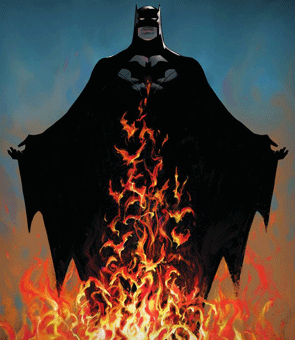
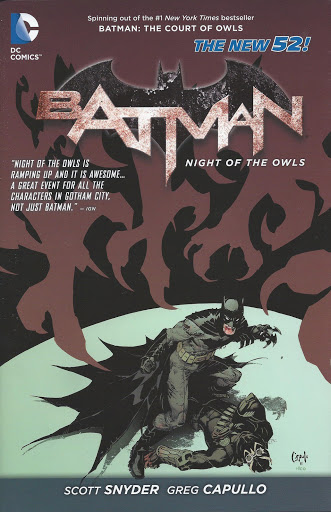
Batman: Night of the Owls

Let me start by saying that it’s about freakin’ timethat another Scott Snyder-penned Bat-epic arrived on my bedside table.
As I’ve complained about before, the long wait between volumes of truly stellar DC series whilst mediocre crap like Red Hoodand Batgirl comes out is almost intolerable. If I’d gone much longer without a Snyder fix there is a chance some bodies might suddenly appear at the bottom of my apartment building. Probably with owl-symboled knives sticking out of them somewhere.
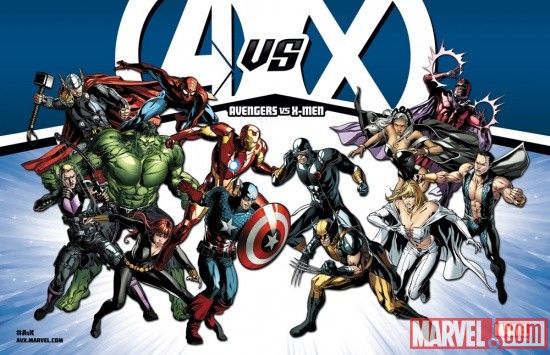
In any case, the massive multiplayer Bat-crossover event of 2012 has finally hit shelves, and the result is…well, not that simple to put in one sentence, it seems. The veritable army of writers and artists – almost on par with Avengers vs. X-Men –means it’d be a little unfair to judge the entire book in a blanket way. The different between this and AvXis that instead of telling a linear, point-A-to-point-B story with multiple authors writing the same story together, this is more like a collection of short stories all taking place within the same evening. I could give the book full marks for featuring some epic battles during the Snyder-written chapters, but it’d then get ass-monkeyed by the poor pacing and ridiculous plot of Tony Daniel’s section.
So with that in mind, each author’s portions fit into one of two categories – “Potent” and “Poor”. The former ones are awesome, the latter ones suck more lollipops than Rose McGowan’s character in any film she’s ever done.
BATMAN (Scott Snyder, art by Greg Capullo)

The central nervous system of Night of the Owlssees Bruce deal with Talon incursions within Wayne Manor itself, whilst Alfred rallies the Bat-family into action. Though brief, it’s definitely one of the better sections of the book; Capullo’s artwork nails it all flawlessly, and Snyder’s writing is still crisp and as engaging as it was during The Court of Owls. Also, “Get the hellout of my house” deserves some kind of writing award for “Best Pre-Ass-Kicking One-Liner”.
RATING: POTENT
ALL-STAR WESTERN (Jimmy Palmiotti, art by Justin Gray)
I really, for the life of me, cannot figure out what this one’s doing here. Granted, ASW is set in Gotham, but apart from that there is only the most tenuous of threads connecting this one-off to the broader Nightstoryline. It’s also fairly evident that this issue either takes place during or is at the beginning of an ASW-centric plotline, since characters refer to things that even casual readers (like me) can’t grasp without having read the preceding material. While not the worst part of the book, it is definitely the most vestigial.
RATING: POOR
NIGHTWING (Kyle Higgins, art by Eddy Barrows)
I swear Higgins could be an understudy for Scott Snyder. Or has been. Maybe. In any case, this is another standout section; tying quite heavily into both Courtand the ongoing elements of the arc Snyder introduced regarding his character, Dick Grayson has to fend off the Talon-ified corpse of his great-great-ancestor-person. In defiance of most of the following examples, there’s a strong character core going through this narrative in amongst all the balls-out action, and it works to keep Nightwing grounded during the battle and also serves to flesh out some development of the backstory of his ancestry. Pretty damn solid, and as ever Barrows delivers some of the best Nightwing artwork since Don Kramer and Rags Morales in The Great Leap.
RATING: POTENT


BATMAN AND ROBIN (Peter J. Tomasi, art by Patrick Gleason)
“Batman and Robin” is something of a misnomer here, since the story exclusively features the latter member of the duo in a rather blackly hilarious and unique little yarn whereby Robin goes off to save an army officer being targeted by the Court. While having Bruce here could only have helped the story, it still manages to hold its own by focussing solely on Damian. Plus, it shows once again why you do not ever attempt to screw with a former child of the League of Assassins.
RATING: POTENT
BATMAN: DETECTIVE COMICS (Story and art by Tony Daniel)

You can’t really be surprised, can you? It’s Faces of Deathwith a slight Court of Owlsflavour; add some incredibly awful dialogue, a perversion of one of the Bat-mythos’ greatest villains into some BS split personality disorder thing, and art that tries to be grungy a la Alex Maleev but fails spectacularlyto be anything other than formulaic and fugly. Not much else to say, except that Daniel’s later removal from the book can only help it in the long run.

RATING: POOR
BATMAN: THE DARK KNIGHT (Judd Winick, art by David Finch)
There are some comic writers who get better with age as their stories and characters mature, and there are some who remain mired in past styles of writing that end up devolving what little ability they have into random, incoherent messes. Thankfully, Winick is in the former category: it’s a reasonably strong villain protagonist story that doesn’t quite reach the dizzying heights of awesome achieved by Snyder, but is still worth reading. Also kind of unique since it’s almost exclusively told from the perspective of a Talon, which does prove to be kind of fascinating.
RATING: POTENT
BATWING (Judd Winick, art by Marcus To)
Refer to the above section; solid writing, good artwork, not quite stellar but still pretty good. Oh, and it’s not told from a villainous point of view even though Batwing’s new armour kinda makes him look like a more badass Robocop.
RATING: POTENT
CATWOMAN (Judd Winick, art by Guillem March)
Unfortunately, the polar opposite of the above two examples. The artwork is pretty stylish, but the story diverts into incoherence and Catwoman’s characterisation is so over the place that it’s kind of astonishing Winick managed to do it in only twenty-something pages of story. Also, unless she gets a boob reduction soon I’m pretty sure her flexible-back days will be over.
RATING: POOR

RED HOOD AND THE OUTLAWS (Scott Lobdell, art by Kenneth Rocafort)

Like the Tony Daniel section above, this doesn’t surprise me either. Not a single original thought in its makeup, artwork that still does it best to make Starfire look like Katie Price, and both internal and spoken dialogue that makes me cringe with every sentence and piece of half-thought-out verbiage. Also, Red Hood calling Batgirl “Barbie” made my eyes roll so hard they made convincing dice replacements.
RATING: POOR
BATGIRL (Gail Simone, art by Ardian Syaf)
I’m forced to call this one “Potent” since the intrinsic Talon storyline – regarding a WWII child gluemaker – was actually very well thought out, but points are removed for Simone’s continued treatment of Barbara Gordon as some kind of teenager crossed with an Emma Stone ripoff through bad dialogue. Maybe keeping her permanently fired from the writing staff wouldn’t have been a bad idea.
RATING: POTENT
BIRDS OF PREY (Dwayne Swierzscynski, art by Travel Foreman)

Contrary to my feelings about it pre-Flashpoint, I was kind of interested in checking out this iteration of DC’s all-girl ass-kicking squad. That is, until I read this chapter. The ideas are kinda there but it suffers from the same problem as All-Star Westernin that it feels entirely vestigial, coming in after Poison Ivy suffers some kind of horrific attack and then ending on an unspoken promise that seems to have been alluded to previously in the series. I have no doubt staunch Birdsfans will enjoy it, but it didn’t hit the mark for me. I will admit that Travel Foreman kicks asson art duty here.

RATING: POOR
BATMAN ANNUAL (Scott Snyder & James Tynion IV, art by Jason Fabok)
This one was probably the hardest for me to decide on. While the connection to the actual Night of the Owls itself is somewhat peripheral, given that it’s a combined retelling of Mr Freeze’s origin and a present-day ass-kicking contest between him and the Bat-family, it does tie into the Court’s plans on the whole and, especially after his guest appearance in Red Hood and the Outlaws, does also root Freeze heavily in the story regardless. The artwork looks great, for sure, but where I’m drawn up short is in the story department. It feels like a somewhat unique redefinition of Mr Freeze, turning him from tragic anti-villain into full-blown child psychopath, but at the same time it feels somewhat disingenuous to the character. Part of the appeal of Mr Freeze (outside Arnie’s interpretation) is that melancholic aspect of his character attempting to revive his wive, Nora, which gives him a significant Byronic slant and sets him apart from anyone else in Batman’s rogues gallery. Now he’s a freakin’ creepy stalker with a patricide and a frozen gore fetish, and the reinterpretation of his relationship with Nora is…disturbing, to put it mildly. I wouldn’t say it’s bad per se, but I wouldn’t necessarily say I like it either. As a piece of storytelling it does its job well, but…I dunno. Something about it leaves me uneasy, and not just because Freeze is fawning over a frozen chick who could have been his grandmother.
RATING: POTENT(ish)

BATMAN: THE FALL OF THE HOUSE OF WAYNE (Scott Snyder and James Tynion IV, art by Rafael Albuquerque)
As if I weren’t already, this story has gotten me reallyexcited for the release of James Tynion IV’s Talonongoing series. He and Snyder’s writings blend near-flawlessly in this backup story regarding the death of Alfred’s father at the hands of the Court and, I believe, a rather large reveal about a character Snyder’s introduced recently. I’ll let you draw your own conclusions, but it’s definitely a great finale to the Nightstoryline that gives teases towards what’ll happen in The City of Owls, following after this one. Also, Rafael Albuquerque (of American Vampirefame) is an absolutely natural fit for the artwork here, and I’d love to see him come back for more later even if he does make Alfred look like one of the AVcowboys with that horseshoe moustache.
RATING: POTENT

BATMAN: NIGHT OF THE OWLS

BEST QUOTE: “Get the hellout of my house.” – Batman

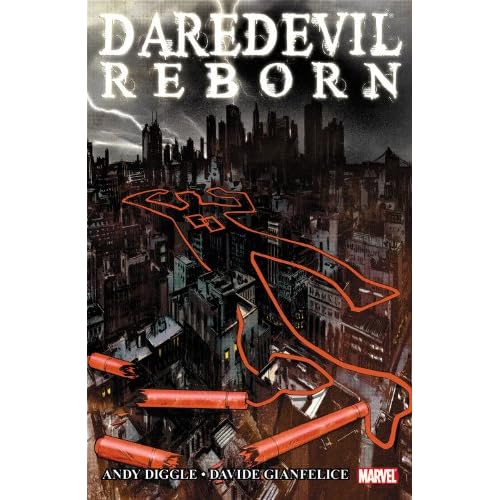
Daredevil: Reborn

I feel I owe an explanation.

Those of you with the disposable time needed to keep track of my posts no doubt noticed that there wasn’t one last Sunday. There was also no follow up from me as to why you were left devoid of any unfunny comic critiquing for a week.

The simple answer is because I was left a little jaded with new releases after I blasted DC Comics with both barrels the other day. Sure, I’ve got the next volumes of Batwoman and Animal Man ready to go, but really, the whole thing has left me with little drive to read comic books these past two weeks. That is, with one exception, which I’ll get to in a minute. Instead, I’ve dived back into the world of wordy novels. I’m currently between three at the moment – David Mitchell’s Cloud Atlas, Neil Gaiman’s American Gods, and the epic finale to The Wheel of Time – and it’s kinda refreshing to get back into stories that don’t require pictures to tell half the narrative. I tend to go through phases each year where I become stuck in one type of novel or the other, and it seems 2013’s phase for wordiness came early this time around.

So that leaves me with a problem, since I wouldn’t be worth my salt as a writer if I didn’t actually write something. That means this week you’ll be treated to a book I read recently that few of you will have heard of, even less will care about, and only one or two of you will stay with me after you read this review. Hopefully I can get everyone back onboard after the new Justice League hits shelves next week.

Daredevil has been one of Marvel’s big superheroes since 1964, though he’s something of an in-betweeny kind of character; he’s not popular enough to break into the A-list with Iron Man and Spider-Man, but he’s got a large enough presence to be considered greater than the B-list heroes like Iron Fist and Black Panther. As such, he’s nearly something of a niche interest in Marvel’s menagerie of magic men, and it’s a niche I’ve enjoyed exploring.

One thing that particularly sets Daredevil apart is how depressing his stories are. Over the course of the last decade he’s gone through enough psychological crap to make The Walking Dead look balanced by comparison. There’s no such thing as a happy ending when Daredevil’s involved, and that can either really draw you in or make you avoid it faster than a fish-scented coffee cup. As with all things, though, sooner or later something has to give, and there’s only so much mental damage a crimson-clad superhero can endure.

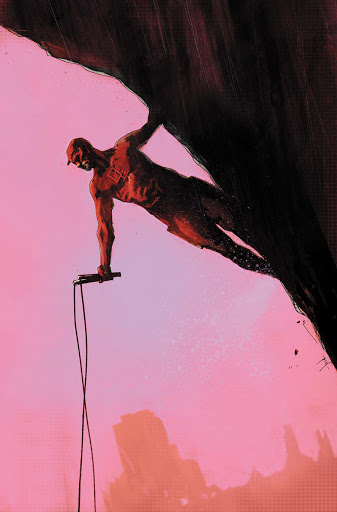
Daredevil: Reborn is exactly what it says on the tin. It’s the reformation of Daredevil and his civilian alter ego, Matt Murdock, following a complete nadir where the eponymous horny devil suffers a major enough breakdown to get possessed by a demon-thing (it makes sense in context). Murdock ends up going walkabout in America’s mid-west, getting involved in a scuffle with some arms-dealing dirty cops and acclimatising to life without the leather fetish outfit he calls a costume.

On paper, that’s really all the story is about. I’m making it sound more droll that it actually is, obviously, because it’s good enough for me to rank it against some of the best superhero scuffles I’ve ever read in spite of the fact that the titular character’s costume only makes a single appearance at the very end of the book. It feels a bit like how The Dark Knight Rises was once described – “a superhero story without a superhero”.

In my pre-enlightened days when Image Comics looked boring and I wouldn’t have touched anything that didn’t contain at least one colourful outfit you could fail at cosplaying in, I wouldn’t have gone anywhere near Daredevil: Reborn. A superhero story with no big villain, no other well-known supporting characters, no easily-recognisable emblem and no homoerotic clothing of any kind? Sounds about as good as an Attenborough documentary on paint drying.

But Reborn really does break away from that notion, and presents itself as a really character-driven piece that works really well without the costume. It allows you to become more attached to Matt Murdock as a character before he’s a proper superhero again, and the lack of any of the other regular Daredevil supporting players gives focus almost entirely on him. The dialogue by Andy Diggle also paints a realistic picture of a normal man in a bad situation in amongst the fantastic artwork by Davide Gianfelipe, and together it all meshes into a wonderful story that manages to walk a fine line between navel-gazing and action sequences.

It also works fantastically as an orientation point for new readers. Despite the fact the narrative makes references to past events that brought Murdock to where he is now, they’re not presented in a way that makes reading the previous installments a necessity. Sure it’ll flesh out the world a little, but on the whole Reborn is a really standalone story that masterfully sets up the subsequent run afterwards. It’s almost its own origin story, in a sense, except the murdered parent and psychologically-tormented childhood bits have already occurred – and some might find that to be an improvement. It does let itself down a little with a villain who only really shows up towards the end and is about as two-dimensional as a Scooby-Doo antagonist, but as with books like Born to Kill the villain isn’t the focus. The artwork also gets a little too artsy here and there, and most of the dirty cops all look the same, but these are just little complaints.

On the whole, Daredevil: Reborn is a wonderful attempt at a character relaunch without relying on heavy retcons or a complete reboot to get the job done, and also provides a great bridging chapter between sagas for veteran readers. It’s short, so it doesn’t outstay its welcome, and it gives off the impression that a lot of thought and heart has gone into it. And if you’re interested in checking out Mark Waid’s award-winning Daredevil run that’s currently kicking copious amounts of ass at the moment, Reborn acts as a really great prologue for it.

Now excuse me while I get back to some real high-brow literature.

/jks

STORY: 4.5/5
ARTWORK: 4/5
DIALOGUE: 4/5

OVERALL: 12.5/15

BEST QUOTE: “We’ve got work to do.” – Matt Murdock

Green Lantern: The Revenge of Black Hand

I have one gigantic complaint for DC’s New 52 effort that has won, lost, re-won and squandered most of the comics industry over the last two years: EMPLOY BETTER WRITERS.

Oh, wait, sorry, two complaints: MAKE TRADE RELEASES MORE FREQUENT.

It’s been nearly eight months since Volume 1 of the kinda-rebooted-but-really-not Green Lantern hit my shelf (hrm, probably too many hyphens in there), and while the underwhelming introductory book has gathered dust in my bedroom I’ve waited with bated breath while all the awesome and interesting new plot twists take effect each month in reviews and recaps. I knew I’d have to wait until January to see what happens next (which is frustrating, since Volume 2’s first issue was published around the same time Volume 1 came out) because DC seem to have this maddening new policy of not releasing any Volume 2s until all the various Volume 1s are out first.

Seriously, who the f@%k wants to wait for crap like Aquaman and Batgirl to come out while awesomeness like Batman and Swamp Thing gets pushed back more months than it needs to? It’s no sin to overlap, DC. You’re in enough trouble as it is, don’t make things worse for yourself by forcing devout readers like me wait ten months for Night of the Owls.

Ok, I think I’m done whinging now. #firstworldproblems, and all that.

So after Sinestro utterly failed as an introduction for new readers to the extensive Green Lantern mythos does The Revenge of Black Hand make steps towards reclaiming the glory Geoff Johns achieved previously during his run, or have we reached the shark-jumped era of Hal Jordan’s adventures?

Following straight on from Sinestro‘s conclusion we have kinda-more-responsible Hal Jordan being caught mid-coitus (more hyphens!) and forcibly re-inducted into Sinestro’s little GL offshoot. After threatening to blow out Carol Ferris’s brains in a way Isaac Newton would spew molten vomit at, Sinestro orders Hal to help him unravel the mysteries of the ever-prophetic Book of the Black while also contending with whatever nasty shenanigans the Guardians are cooking up on this particular week. Despite initial resistance, it isn’t long before Hal re-embraces his status as a Lantern and gets involved in some deep and dark plotting involving the Indigo Tribe, an allegedly-reformed Black Hand and something ominously titled “The Third Army”, intended as a replacement for the Green Lantern Corps.

Phew. I think that’s everything.

In contrast to Sinestro‘s Ke$ha-thin plot, Revenge moves at a not-inconsiderable pace. It links more and more back to the pre-Flashpoint GL saga, especially in regards to the events of Blackest Night, so newer fans may be slightly put off by all the references made before their supposed Volume 1 that make them scratch their head and reach for Wikipedia. Despite that, the story kicks a lot of ass all over the place – it’s punchy, gripping, with an involved-but-not-too-inane emotional core (sweet Jesus, the hyphens!) and some really fantastic payoffs from way back at the start of Johns’ run. There’s a scene in the middle that’s almost a direct parallel to a similar bit in Green Lantern: Rebirth, and any time the New 52 deigns it necessary to link back to its better, less greenback-driven days it makes me happy indeed.

Having said that, the branching out to touch on the other GL titles is done poorly. We get a few panels here and there, during the Guardians’ creation of the Third Army (who incidentally look like what I imagine most 4chan denizens resemble), where references are made to the little blue baldies also gunning for John Stewart and Guy Gardner, resident protagonists of the Green Lantern Corps series, and Kyle Rayner’s merry band of multicoloured misfits, the stars of Green Lantern: New Guardians. For someone like me, who keeps sorta up to date on all this, it’s alright, but I’m willing to bet most casual readers will be digging out the iPad and finding Wikipedia once again when that all happens.

On top of that, the Guardians’ motivations feel wonky. Long-time readers have known for yonks that they’ve secretly got it in for our Guys in Green, but there’s still almost nothing revealed here as to why. Is it because the Third Army are meant to embody that lack of emotion the Manhunters had alongside the organic competency and ability to innovate that the Lanterns possess? Or are they just bored with life and, not unlike Lindsay Lohan when she robs a jewellery store, trying to piss a load of people off when they feel there’s nothing better to do?

I have no doubt we’ll get more information on that front as time goes on, and as always I trust Geoff Johns to work it all out. He might’ve backed the movie, sure, but he also gave us Saint Walker. You can’t really fault him after that.

On that note, the artwork is the usual Doug Mahnke standard – big-lipped and full-figured, in the best way possible. There seems to be a far greater variety of colour than in previous books, and the human faces look less like Mandrakk the Vampire from Final Crisis and more realistic. I’m still not entirely sold on Carol Ferris having Usain Bolt’s abdominal muscles, but I guess she needs to have a hobby beyond screwing Hal and being Queen of a space empire.

Scripting feels a lot tighter and crisper than in Sinestro, and more of a return to form. The grudging-buddy-cop relationship between Hal and Sinestro (which has no shortage of more goddamn hyphens!) works well, and especially in moments like the halfway point – in which Hal revives Sinestro and tells him the tables have turned vis a vis their rings – it’s enough to make you out loud. Which is good, since Sinestro was about as funny as cracking your skull on a pool step.

I still feel, though, like we’re past the salad days of Geoff Johns’ Green Lantern run. We had an epic climax during Blackest Night with a lot of good buildup, the Brightest Day fallout worked marvelously as a segue into War of the Green Lanterns and the final expulsion of Hal from the Corps, and now everything after it feels a bit forced. It’s still good, don’t get me wrong, but it feels like we’re over the peak. The best has happened. I guess, especially since Blackest Night is my favourite GL story yet, it gives us unrealistic expectations that Johns will have to work hard to top the immensity of what he’s already done.

So, in the end, The Revenge of Black Hand gets a recommendation. Like Sinestro, it’s better if you’ve read the run up until now, but casual readers may still get a kick out of it. The book does act as a clear indicator that we may need to lower the bar just a bit to avoid further disappointment – unless Nekron somehow reappears and we get Blackest Night 2: Rainbow Boogaloo.

STORY: 4/5
ARTWORK: 3.5/5
DIALOGUE: 4/5

OVERALL: 11.5/15

BEST QUOTE: “A Green Lantern? And an ugly one at that!” – Natromo

Chris’s Indie Summer Circuit

Welcome back, one and all! I trust the New Year brought happiness, love and no small amount of liquor.

To dive straight back into it, I’d like to throw something at you all before we return to the monthly arrivals of superhero texts from the Big Two. I’d like to tell you all about Image Comics.

Now there’ll be a fuller-length explanation over on that other blog I write but to put it simply, Image Comics is one of the biggest and best comic book companies out there for publishing independent and creator-owned material. It provides a far greater degree of freedom in terms of content and a broader level of creativity in terms of narrative and character. I’ve spent most of the summer reading a lot of their books, partly because DC and Marvel had a bit of a nap from trade releases over Christmas, and partly because last year’s superhero offerings were, on the whole, disappointing.

This is not to say I’m swearing off superheroes and going so pretentious that I sound like I’m guffawing at the peasants every time I speak, but it does mean a larger number of Image and similar companies making appearances in my reviews every now and then. Because, seriously, they have some pretty freakin’ excellent stuff going at the moment, some of it by writers even the superhero-narrow-minded would know. Thus, here’s a brief selection of some of the best Image series I read over December and January. They won’t be given traditional scores this time around, but rest assured they are most definitely worth checking out.

Something to keep in mind as well – Image tends to be cheaper per book than most of the DC and Marvel stuff. So if you’re after “bang for your buck”, like I am, consider checking these out if only because you get vastly superior stories for comparitively economical prices.

REVIVAL, VOLUME 1: YOU’RE AMONG FRIENDS
Written by Tim Seeley, Art by Mike Norton


As many are aware by now, zombies appear to be as rooted in the modern cultural zeitgeist as flairs were in the 80’s. It seems the shambling grotesqueries of the walking dead now have a permanent place in the social constructs of the 2000s, and every man and their dog wants to get in on the action. Preferably with machetes and handguns.

In defiance of contemporary tradition, author Tim Seeley instead opts for a different take on the undead – rather than being Romero-esque walking corpses, the dead return to life in a manner similar to Torchwood‘s miniseries Miracle Day in that they stay whole, speak English and, unlike Shaun of the Dead, can’t necessarily have their head removed or brain destroyed in order to silence them.

Revival, touted as a “rural noir” about death, really feels like something a bit fresher than the zombie norm. It’s almost nothing like The Walking Dead except for the slightly Deep South setting, and the interpersonal dilemmas juxtaposed against the the resurrection of deceased loved ones – and all the political, social and religious problems that implies – are explored realistically and compellingly. It does take a little while to get going, but once you hit the climax of the first issue you’ll be hooked. God knows I was.

The artwork compliments the storytelling with fleshed-out colours, great use of colour contrasts and some wonderfully grotesque and creepy imagery that gives it extra kick. There’s an old woman with a pair of pliers that manages to do things that got to me way more than some of the goriest panels in Walking Dead. I pray I’m never going to need dentures one day.

Admittedly Revival‘s first volume is a tad short, and you’ll probably breeze through it in an hour or two, but as the start of what looks like an intriguing, unique twist on the undead genre it’s definitely worth a read.

Speaking of innovating an existing genre…


THE MANHATTAN PROJECTS, VOLUME 1: SCIENCE. BAD.
Written by Jonathan Hickman, Art by Nick Pitarra


Between movies, video games, alternate reality novels and cross-stitch patterns, World War II-era narratives have been, for all intents and purposes, done entirely to death. Yeah, we know, Hitler was a bad egg and the Japanese really need to think about who the better ally is when the next global conflict breaks out. And yeah, it’s kinda fun doing parallel universe stuff where good ol’ Adolf gets machine-gunned by Jewish-American freedom fighters while Quentin Tarantino stares at their feet.

But really, it gets a bit samey after a while – seeing the Nazis get their asses handed to them is only satisfying so many times. That is, until you get to Jonathan Hickman’s Manhattan Projects, an alternate reality take on WWII that features noted real world scientists – namely Einstein, Oppenheimer and Fermi – being brought together under the aegis of not only building the bomb that is destined to crash-tackle Hiroshima, but of creating and studying otherworldly weaponry to arm a planet that may soon find itself in the center of universal interest.

The story feels like a great mash-up of Torchwood, The X-Files and Men in Black with a dash of the science of Batman and a little bit of Doctor Who influencing it here and there. Oh, and with the violence of The Walking Dead and Game of Thrones added throughout. The artwork by Nick Pitarra is strongly reminiscent of the full-lipped, facially-lined masterworks of Frank Quitely, with quite a few unsettling visuals throughout (I seem to be into those a bit right now).

If I have one complaint it’s that there’s not much of a story per se, not until the last couple of issues (like Revival, it’s a little on the short side). It feels like one big introduction to the world, setting and characters, with a few little setups for future plotlines here and there. Don’t get me wrong, it’s still damn good and a great break off from regular alternaverse WWII fare, but don’t go into it expecting the kind of involving beginning of action and story that you get in Revival or the fast-paced plot present in…


CHEW, OMNIVORE EDITION VOLUME 1
Written by John Layman, Art by Rob Guillory


Everyone remember Invader Zim? Take the art style from that, wrap it in a blanket made of the surreal moments in Rocko’s Modern Life and the whimsical bits of Pushing Daisies, blend in a parody of the avian flu crisis from a few years ago, and include some dialogue and humour that wouldn’t be out of place in a Joss Whedon story.

In a nutshell, that’s Chew.

The world is bleak ever since chicken was outlawed as food following a viral outbreak of killer bird flu, and it’s up to men like Tony Chu – part of an agency regulating food-related crimes – to keep the peace. The only thing is Tony is a cibopath, meaning he can get mental impressions from things he eats. This can include how it was made, what pesticides were used on it and, in the case of several human bodies he needs to ingest bits of, how they were killed.

Part of me is glad I got into Chew a little later than others, because it means there’s several volumes I can pick up straight away rather than having to wait months for the next one. And thank goodness I can because the story is awesome. I haven’t laughed this much in a graphic novel since the Scott Pilgrim comics, and it’s all got this wonderfully off-kilter humour and demeanour that really sets it apart from others in the genre. The artwork has this creepy, exaggerated-proportions quality to it that doesn’t get obnoxious for me, aiding the storytelling and, in some cases, hitting you with more humour in one image than most superhero comics can give you in an entire novel. It all feels wonderfully organic (if you’ll pardon the pun), and the fact that writer John Layman has stated he has a beginning, middle and end plan for it makes me glad the humour most likely won’t go stale after several trades’ worth of gags.

Chew also provides a great contrast to the gritty seriousness present in…


FATALE, VOLUME 1: DEATH CHASES ME
Written by Ed Brubaker, Art by Sean Phillips

If you don’t know who Ed Brubaker is by now, read this first. Then come back here.

Fresh from having left Marvel in the dust and ending a Captain America run that will be remembered for decades hence, Brubaker takes a bit of a mash-up of noir crime drama and otherworldly Lovecraftian horror to create Fatale. The story follows Josephine, the apparently ageless eponymous femme fatale, who has the uncontrollable ability to ensnare men with her wiles whether she wants to or not. She’s embroiled in two worlds – the present day, where the unwitting Nicolas Lash investigates Josephine and the impossibilities or her being, and the 1930s, in an America even seedier and black-bellied than the one Brubaker wrote about during Captain America and Daredevil.

I don’t want to give away too much else of the plot (mostly because I haven’t finished it just yet, so the ending may completely suck – personally I doubt it) but this is definitely one worth investigating. Nothing is clean or simple or sparkly in this grim depiction of monsters, mad men and marvelously-proportioned madams (I really shouldn’t alliterate. Ever). Sean Phillips’ grungy artwork bears similarities to Michael Lark and Alex Maleev (both, coincidentally, former Daredevil artists), and really packs a wallop.

Admittedly, like Manhattan Projects, it takes a little while to get going. I found the first couple of chapters a little laggy, but once you get past the intro it takes off a bit better. Like Saga, Fatale is shaping up to be the kind of book I’ll wait for with bated breath when new collections are announced. Like everything else in this sampler, it just feels really unique in an industry that seems to either mostly rip each other off or stay mired in the same regurgitated plots all year long.

And at the end of the day, that’s what Image Comics’ work has really given me – unique stories. Tales I want to see more of because they’re different, not because they rely on superhero name branding or endless physical violence to solve all their problems. Don’t misunderstand me, superheroes do and always will hold a very special place in my heart, and as long as the right people are employed I’ll continue to read the good ones. But every now and then, when releases slow to a trickle or you get sick of seeing spandex-clad onomatopoeia on-screen at all times, find the Image section in your local store and pick something off the shelves.

Who knows, you might find something you like even more than Batman acting like a thirteen-year-old.

The Best and Worst 5 Graphic Novels of 2012

So 2012 has neared the end of its run, most of the major releases for Marvel and DC have all been analysed, results tabulated, checked against a spreadsheet and sorted by a complex algorithm into which were the best and the worst of the year. I decided I didn’t like the results it came up with, so I threw that all out and came up with my own Top 5 and Bottom 5 lists, just like a real critic.

Before we dive in, a couple of guiding rules. First, don’t take each book’s individual scores as an indicator of whether or not I’ll choose them – something that got 11 or 12 could very easily end up in my Bottom 5, or vice versa. This is based on the subjective amount of fun I got out of each reading, and which ones leap out at me when I look over the past twelve months of time wasted by engaging with them.

Second, the following reviews from this year are exempt from being chosen due to publication in previous years:

– The Black Mirror (and trust me, if it was eligible it’d win hands-down)
– The Walking Dead
– Flashpoint
– Final Crisis
– Batman R.I.P.
– Anything with “Facebook Review” in the title
– Any of the “Dash’s Top Five” entries
– X-Men: Schism
– Uncanny Avengers #1 (although it came out this year, it ain’t a graphic novel)
– The Sandman books
– Iron Man: Extremis

It might sound like that precludes almost the entirety of my reading list this year, but anything else posted in 2012 is a potential winner or loser. So with that in mind, let’s get to it.

BOTTOM FIVE:


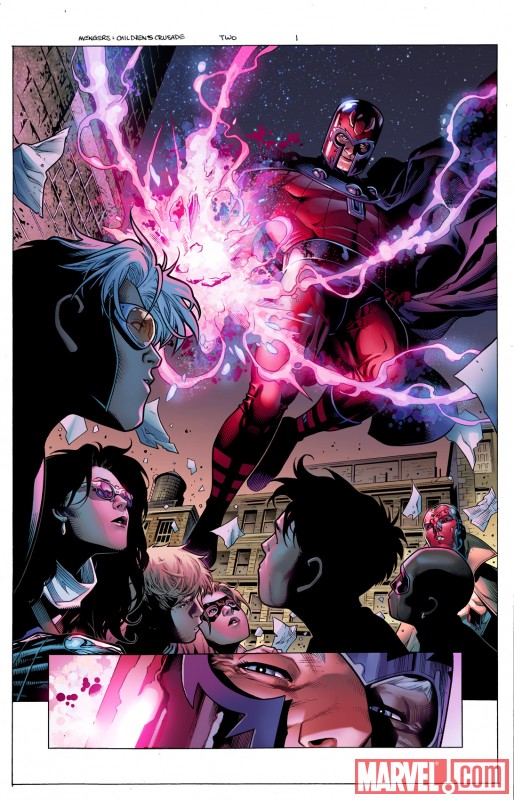
This should’ve been the groundbreaking, masterfully-written climax to almost a decade’s worth of Marvel storytelling. Instead, we got a bland, schizophrenic tale that tried – and failed – to paint both sides of combatants as equally in the right, when it was clearly a one-sided fight against the X-Men. While it has breathed some much-needed new life into Marvel’s long-lived properties, and has brought us such wonders as Uncanny Avengers to usher in 2013, Avengers vs. X-Men left me disappointed, annoyed and kinda wishing Ed Brubaker had just written the whole thing himself. Maybe then it wouldn’t feel quite so shallow.
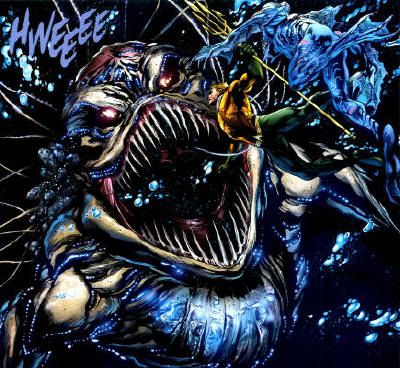
I’m all for giving things a try once, especially when it comes to comic books, and the wave of hype that brought Aquaman to my shores gave me unrealistic expectations when it came to the story. Despite the fact that scribe-extraordinaire Geoff Johns wrote it, The Trench feels like it was lacking coherency, decent characterisation and dialogue that doesn’t belong in an episode of Days of our Lives. The fact that DC’s big crossover for next year, Throne of Atlantis, means all my favourite characters will be interacting with his series – and thus, means I’ll have to buy the bloody thing – makes me sorely wish for the pre-Crisis days where crossovers were few and far-between.
The rebirth of Barbara Gordon being a sub-par story didn’t come as a surprise to me (not least of all because Gail Simone wrote it) but the combination of a cop-out recovery, incredibly schizophrenic dialogue and the perversion and retconning of the previous Batgirl run – which I praised to high heaven – left me annoyed and irritated at what I had in front of me. While I will admit that Ardian Syaf’s artwork rocks my socks off, the story and dialogue can go dive under a train. On reflection, it feels more like an earnest attempt by DC to stick a middle finger up at all the disabled people who viewed Gordon’s time as paralyzed heroine Oracle as inspirational, marvelous and a great change from the norm. Call me when they bring Stephanie Brown back so I can start giving a toss again, or when DC’s PR team decide that segregating the physically impaired isn’t a good way to write stories.

Superheroes do not belong in The O.C. That’s the overwhelming message I must convey after reading this piece of trash. An epic, eighteen-month tale meant to bridge the gap between House of M and AvX turned into a trite, soapy rag of dross with minimal characterisation besides “everyone angst all the time”, some severe character derailment for Captain America, a lacklustre finale and the impression that the story was mostly written out of sufferance on behalf of Allan Heinberg. The artwork by Jim Cheung is absolutely, fantastically, orgasmically gorgeous (and in fact one of the few areas where AvX excelled) but the story and dialogue are just very badly constructed. I could’ve maybe given it more points if Emma Frost had gone all Mrs Robinson on Speed or Wiccan, but alas, it was not to be.
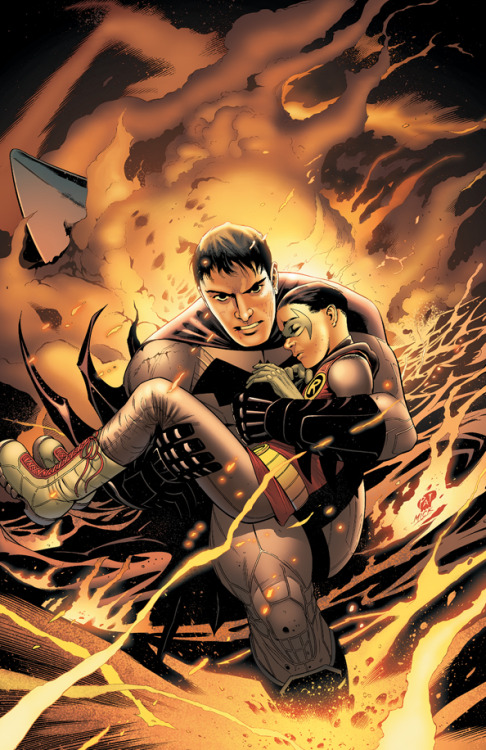
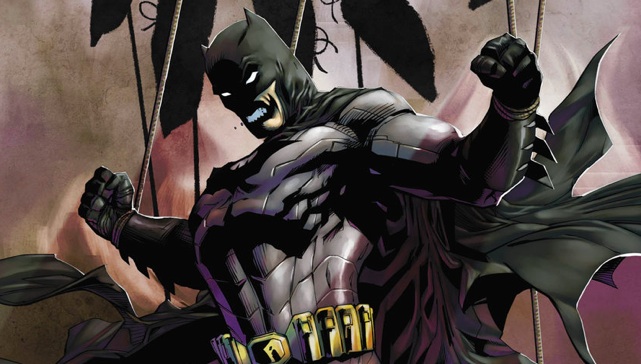
It’ll probably come as no surprise to people that this is Number 1, as I’ve taken every opportunity since reading it to openly rag on it, but it really is a stupid, putrescent piece of comic book garbage. I got so angry at time of reading at how overtly-masculine and self-aggrandizing it was, and subsequent glances over it whenever I feel like getting myself annoyed only serve to highlight how utterly asinine the entire experience is. Batman is characterized like a thirteen-year-old, the characters have two-dimensional personalities so bland they make January Jones look deep by comparison, the plot (such as it is) is messed up six ways to Sunday with all the aimless BS it has to keep balanced, the artwork is fairly sub-par and definitely not Tony Daniel’s best work, and the ending is a complete disappointment (which is kind of like saying “this bowl of dog vomit is so bad because it’s garnished with armpit hair”). I may sound like I’m going over the top by blowing my stack over this, but it really is an incredibly poor offering. And the worst part? IT’S A FRIGGING BATMAN STORY. Seriously, do you know how terrible I feel giving my “Worst Graphic Novel of the Year” award to a BATMAN STORY??? What has the world come to?

TOP FIVE


Despite my outburst above, there were actually some good Bat-titles this year. While it’d be quite easy for me to fill out the entire Top 5 list with these titles alone, I figure a couple of them need to be judged outside the spectrum a little.
Incorporated gets a mention since I’m more than a little biased about Grant Morrison, and it’d be somewhat unfair for most of the other choices in this category to compete with my unadulterated, creepy man-love for his stories. It’s a damn solid work, better for those who’ve read his previous stuff but still good, I think, for those who haven’t.
Born to Kill gets one since it’s the most heartfelt, cerebral Batman story I’ve read this year. You’d think that’d put it somewhere within the list proper, but on the whole I don’t want to judge it against the others because it feels to me like a different kind of story. Peter Tomasi and Patrick Gleason made a really involving, emotional tale that didn’t sound like it was ripped from a Hallmark movie’s plot, and had a denouement that gave closure to the story without resorting to fisticuffs or a deus ex machina
Both mentions left me solidly satisfied, like eating a deliciously flavoured sundae full of good story and chopped nuts, and are definitely among the more intelligent stories I’ve read this year.

I’m always a big fan of something new when it comes to superheroes, and Jeff Lemire’s first outing on Animal Man certainly gave me that. Having a superhero with a proper family and realistic family-related drama alongside all the supernatural shenanigans that goes on gave Buddy Baker greater depth, more emotional engagement with his problems and a story that really felt organic and unforced. The artwork by Travel Foreman added masterfully to the creepy tone set by the narrative’s pacing, and the dialogue did not evoke the very worst familial and angsty stereotypes inherent in American fiction these days (probably because they were Canadian). It makes me really glad DC are actually making good moves with their supernatural “The Dark” line, and titles like this and Swamp Thing really invigorate the company by giving it titles that can compliment the bog-standard superhero ones. Plus, Animal Man’s crossover in Rotworld next year means Scott Snyder gets to write part of it.
I was actually hard-pressed to find Marvel titles I enjoyed this year, since most of it was either ongoing volumes of series I haven’t reviewed yet (like Mark Waid’s Daredevil, which is awesome despite me not having reviewed it) or just plain crap. Kinda makes me a bit gladder their new wave of Marvel NOW! titles are coming out soon. Anyway, Jason Aaron’s work on the heels of X-Men: Schism incorporates great pacing, involving characters, one of the few actually-decent representations of Wolverine I’ve read and a nicely-quirky twist on both the standard high school plot device and the past experiences the X-Men had as members of that school. The artwork might not be up to scratch, at least at the start, but it’s still a well-written, well-executed work.
I’m not usually big on non-canon Elseworlds-style stories, but Earth One left a very good taste in my mouth after reading it. Great characters that strike a balance between being different yet still recognisable to long-term and new fans, a plot that feels organic and has more than one hero’s journey going on in tandem, artwork that knocks it out of the park and feels fully fleshed-out, and dialogue that, while at times a tad glurgy, works overall. As I said in the review the only big negative I can give is the possibility that we’ll have to possibly wait two years for the next one (like Superman: Earth One did) but I hold out hope that when it does arrive, it’ll be as engrossing and have as much an original flavour as its predecessor does. 

Yeah, I know it’s not a superhero comic, but I cannot praise this enough. It’s one of those rare stories where no part of it felt boring for me, every character’s arc felt well-structured and marvelously executed, the artwork captures realistic facial textures beautifully, the overarching plot is engrossing and involving (I’m using those words a lot, aren’t I?), and the end result left me hungry for more. It might seem a bit incongruous that I’m giving second-place to what is effectively an indy comic (or, at least, a non-superhero title) but Saga stood out to me not just for the above reasons, but also because it galvanized me into a new action for next year. Saga proved to me that there is more out there than just superhero stuff, which may seem a bit narrow-minded of me to not have thought of it until now, and it means next year you’re going to see more of an even split between superhero and non-superhero, rather than superhero and the odd non-superhero here and there, like a trio of doo-wop singers walking through post-war Baghdad. If you haven’t already, read Saga. It is most definitely worth your time.

1 – JUSTICE LEAGUE: ORIGIN

It was the first trade released in DC’s New 52 this year. It was the beginning of a reboot that, through triumphs and utter failures, reshaped the DC Universe forever. And it was, without hyperbole, the best superhero team-book I’ve ever read.

Origin, despite the many failings DC’s reboot presented this year, managed to strike a balance between characterisation, action and interpersonal moments without getting too bogged down in any one area. The story was basic, granted, but if you get down to it, so was The Avengers movie’s – not that that’s a bad thing at all, if it’s done properly. Joss Whedon’s film and Origin both managed to execute a masterstroke of superhero teaming up without being too overly-indulgent or two-dimensional, and that’s what made them both memorable. The Justice League’s new artwork looks fantastic, the script was nuanced and crisp, and I never felt like the story lagged anywhere. It was just a brilliant, kickass superhero beat-em-up that was elevated above other attempts at its well-worn narrative by having a writer and artists who treated the universe and the characters with respect – no matter how screwed up the universe may have gotten after that point.

So that’s the best and worst for 2012, folks. It’s been quite a year, particular for DC, and if the NOW! reboot gives any indication it’s that Marvel will have an equally-massive year in 2013. But hey, if Marvel end up taking the Best Graphic Novel of 2013 crown next year, that wouldn’t be a bad thing – might make me believe they’re not solely running off the financial steam The Avengers provided.


Everyone at Sunday in the Comics with Christopher (and by everyone we mean that one guy) wish all readers a happy and safe holiday, a kickass New Year (with minimal hangover) and we’ll see you all in January 2013!

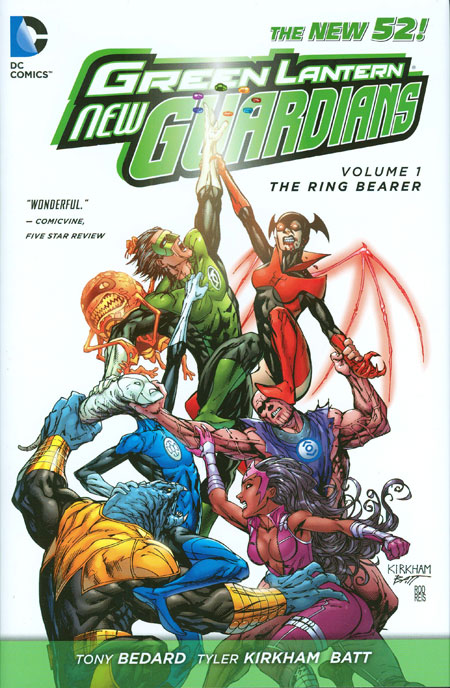
[THE NEW 52] Green Lantern – New Guardians: The Ring Bearer

Readers who were with me back in May know that I was left somewhat disappointed by the latest installment of Geoff Johns’ multi-year epic Green Lantern saga, and that it utterly failed as an introductory first volume for the New 52 comic book virgins wanting to have their emerald cherry popped. I was heartened by the presence of a new spin-off in DC’s ever-expanding line of merchandise-driven superhero punch-ups titled Green Lantern – New Guardians, which purported to carry themes and characters first introduced in Johns’ run but instead utilising underdog Lantern Kyle Rayner in place of wisecracking douche-hero Hal Jordan.

On paper it sounded awesome, and a great way to introduce newcomers to the mythos, but in practice does it live up to what it advertises?

The story kicks off in the wake of War of the Green Lanterns, with Kyle Rayner acting as one of the last Lanterns attached to Earth and saving people all over the place. His mission is curtailed when a variety of coloured Lantern rings suddenly appear and try to attach themselves to him like clingy ex-girlfriends, causing the rings’ original owners – one from each Corps – to appear on Earth and rather grumpily demand an explanation for why their superpowered bling has suddenly been drawn to him. After establishing a very haphazard alliance, if one can call it that, Kyle and co. head off to discover who is behind the rings detaching from their owners and what they could possibly want with the young Green Lantern in particular.

As if the title The Ring Bearer didn’t already make it obvious, the story carries a bit of a Lord of the Rings vibe to it, and not just because of the specific ring MacGuffins the protagonists are chasing. There’s a strong sense of fellowship – albeit a disjointed one – that runs throughout the narrative, each of the characters seems to inherit a trait from the original Tolkien party of nine – for example, Saint Walker doing a rather uncanny Gandalf at times – and the end goal looks like it’s shaping up to be everyone battling a particularly massive foe who threatens galactic stability, a la Sauron. I say “looks like”, since this volume seems to be the first act in a several-act story and, thus, ends without a real resolution.

That’s not to say it’s bad, because it isn’t; there’s some good characterisation here and there, even for crazy and psychotic nutters like resident Sinestro Corps party member Arkillo, and in the end everyone ends up with a personality beyond a two-dimensional representation of the emotional elements their respective Corps’ embody. That said, the story doesn’t jump out at me the way others in the New 52 have. It feels like it’s missing something; what that something is I don’t know, but it needs a spark to really bring it to life and elevate it above other attempts at team-books. Maybe it’ll get a bit better when Volume 2 comes out.

The artwork by Tyler Kirkham and Batt works really well, and really pops the way the art in Geoff Johns’ Green Lantern: Brightest Day did. The colours all mesh together fantastically, and there’s some great action sequences where neon Lantern trails cover the page in a way that make double-page spreads look awesome. It does have moments where the multitude of hues can get a bit disorienting here and there, but on the whole looks great.

Dialogue is fairly standard, which is a little disappointing; scribe Tony Bedard wrote part of War of the Green Lanterns and it went down pretty well, but here it just seems a little pedestrian in comparison. By the end he seems to have found his feet and given the character dialogue some greater depth, but it’s still nothing terribly engaging. Again, not bad, just a bit ordinary.

I’d recommend The Ring Bearer since it acts as a pretty good introduction to the contemporary Green Lantern mythos mostly through having all the important Corps present and having a little bit of exposition that establishes where everybody is and, roughly, how they got there. Don’t read it expecting anything as universe-altering or groundbreaking as Johns’ run, but just a bit of fun with some nice colour and action in it. It kicks the ass out of the movie, at any rate.

STORY: 3.5/5
ARTWORK: 4/5
DIALOGUE: 2.5/5

OVERALL: 10/15

BEST QUOTE: “Oh, this can’t be good.” – Kyle Rayner