So, Infinity. You could build houses if you had enough copies of this book, but it’d be a really flimsy house.
Writer Jonathan Hickman’s been leading to this since he first rebooted two Avengersteams, and since those teams form a big chunk of the story with significantly different tones (and, as it turns out, different narrative charges) it’s best to take them as separate parts of a great whole. Rest assured, it is absolutely necessary to read all three constituent elements of Infinity as one whole thing, and each story does interlock as varieties of apples and oranges.
That said, the New Avengers portion is easily the weakest of the three main narrative thrusts – if one were to talk apples and oranges, New Avengers jumps straight into banana territory. However, that’s still like saying this third slice of delicious cheesecake is the weakest merely because a fleck of dirt had to be brushed off it before eating.
I don’t think Iron Man approves of being referred to as a banana, nor as a piece of cheesecake.
Infinity primarily deals with Captain America and a decent chunk of the Avengers going a little Star Wars meets Battlestar Galactica by heading off into space, allying with alien races and kicking the ass of some jerks called the Builders – but we’ll get to them later. New Avengers has Iron Man and his band of Illuminati jerkfaces stick around on Earth as a token defence force, all the while dealing with their own interpersonal problems (which mostly revolve around Namor, King of Atlantis, and Black Panther, maybe-once-a-King-and-possibly-still-is-but-maybe-not of Wakanda, getting into a pissing contest). Unfortunately, since Earth is kinda left defenceless and open like a tin of peaches without an assault rifle, intergalactic titan and one-scene Avengers wonder Thanos hits upon the world-beating idea to charge headlong at Earth and get rid of those pesky humans once and for all.
This’ll probably make more sense once you read the following two reviews of the Infinity trio (or, y’know, just get the book itself) but New Avengers is 90% incongruous to the rest of the story. While the remaining tenth does tie into the conclusion of the grand space opera arc that both vanilla Avengers and the Infinity miniseries build towards, everything before almost feels like a different book. You’ve got Illuminati shenanigans where the team once again confronts their necessary evil modus operandi. You’ve got Namor and Black Panther competing to see who’ll snap in their bitching match first (with this element seeming very heavily inspired by the Varys and Littlefinger chats from Game of Thrones). You’ve got Doctor Strange being possessed by an alien. You’ve got Thanos making a play for Earth and also having an ulterior motive that plays like a big spoiler but mostly comes as a significant left-field throw which threatens to derail the overall Infinity plot. You’ve also got familial drama with Thanos and his Cull Obsidian, a team of space-magic-alien people who want to be the Four Horsemen so hard it makes them cry. And against all this, you’ve got Earth’s remaining heroes worrying about all the cool shooty-laser-fun happening in space with the Builders.
As if Infinity didn’t already have enough plates spinning.
Despite my disappointment with New Avengers and its schizophrenic, out-of-place-until-the-very-end narrative, it was still very enjoyable. You’ve got to understand, a low-ranked Jonathan Hickman book is still leagues ahead of most superhero fare right now. There’s a lot of care taken to keep characters from becoming one-note, the dialogue is (in parts) snappy and believable, artwork is great and the story is intelligently-driven and well-paced. It might be a banana with a slight tinge of brown at the bottom, but it’s still a damn good banana from a bunch of damn good bananas. Unfortunately, like a banana, peeling the skin back for the white goodness underneath just serves to highlight the inherent issues before you devour them.
As I said, the shifting tone of the story never settles down long enough to become consistent. It switches between political machinations and intergalactic threat at the drop of a hat. In fact, after the initial chapters there’s barely any mention of the Builders’ conflict and it might as well be a separate story. I don’t mind distinctions between different stories during a crossover that serve the whole as a sum of parts, but I almost feel like Thanos’ incursion should’ve been an event in its own right. The fact that Mr Grapeface himself serves as the cover image to the whole Infinity tome seems rather misleading, as he only really appears in a few chapters before the inevitable defeat so Earth can remain liberated once again (It ain’t a spoiler, folks. You know Earth won’t remain under Thanos’s size 27 jackbooted heel forever). Seems someone at Marvel’s milking that post-credits stinger from The Avengers for all it’s worth.
I also do not give two craps about Namor and Black Panther’s little “my country is cooler than yours” game. At all. I know there’s history behind it, that there’s a grudge held by the latter due to the former nuking his town with Phoenix-enhanced superpowers during the abysmal muck that was Avengers vs. X-Men, but I just don’t care. They sound like angsty teens, brooding about their losses and giving token character conflict for this anti-hero band of misfits. Of all the threads continued from that pile of dreck, why’d Hickman have to tug at that particular stray?
Despite that, New Avengers does have some good moments here and there. Iron Man backs off from centre stage for a bit, allowing bit characters like Black Bolt (who I’ll talk more about in the core miniseries analysis) and the Panther to step up and do stuff outside the shadow of Marvel’s most marketable male machinator. The actual fight scenes with Thanos and the Cull Obsidian are appropriately huge and destructive. There’s plenty of reference to earlier issues of Hickman’s New Avengers arc, keeping that story going against the larger Infinity canvas, and I’ll even admit the way Thanos inevitably gets defeated is intriguing and opens up a whole mess of storytelling ideas for the Illuminati going forward. If someone wants to correct me and say this method was used earlier by another writer in a similar fashion, I’d like to politely tell them to shut up and let me imagine that Marvel’s actually come up with an unrecycled idea for once.
Artwork is good, but I think artist Mike Deodato has been eyeing off some manga heroes in his spare time. Namor looks like the dominant foil in a yaoi story with his pretty-boy cheekbones that could slice metal and hair done in the standard animesque slickback with fringe strands at the front just begging for a finger-stroking. His recently emphasised nasty personality in regards to Black Panther and the conflict with Atlantis only makes that image harder to scrub out, no matter how many appletinis I drink afterwards. I’ve got no problem if this sharper look’s intended to make his evil more pronounced, but I found his bitchy dialogue harder to take seriously when I imagined him chuckling in Japanese afterwards about how badass he is with those fringe strands. Seriously, each time a panel focused on his face I think I unconsciously groped for a pair of scissors.
Aside from that, Deodato does a decent job. The fleshed-out style meshes well with Steve Epting’s work in the first book, using duller tones and darker shading to great effect at establishing the grimier, grittier tone of the book, while switching to big, badass colours whenever a fight breaks out or Thanos gets involved. It’s not quite the superior illustrations that Deodato provided in Dark Avengers, but still pretty good.
Dialogue’s fine. Hickman standard, offering enough to the reader to connect dots themselves, alongside confusing meta-verse technobabble provided by resident geeks Iron Man and Mr Fantastic where appropriate. Not much to dissect there, aside from once again reiterating that I cannot take Namor and what he says seriously anymore. He’s merely a pencil-stache away from channeling Sinestro of the ’60s.
While it’s not a bad book the way Scott Lobdell or Rob Liefeld write bad books, New Avengers is a disappointing piece of the Infinity cheesecake. Taken on its own provides a kinder way to look at it, and the book’s ominous ending definitely galvanises me to keep reading, but as part of Marvel’s humungous 2013 crossover it feels a tad vestigial. Your stomach might be queasy from downing that slightly-brown banana, but you’ll certainly know your digestion’s working afterwards.
Scores and best quote given in INFINITY: CORE MINISERIES review
This review is courtesy of an Advance Review Copy through the good folks at NetGalley.
I find most serialised stories can be lumped into one of two categories – those you can experience in pieces spaced out over time, and those you owe it to yourself to binge on. The latter can be because there’s a sheer metric ton of it to catch up on, or because little details that are important later can get lost in the shuffle of your leaky, sieve-like memory if months pass between instalments. It’s particularly true of most Image Comics series currently running, and especially true of Fatale.
To prepare for the fourth volume of Ed Brubaker and Sean Phillips’ crime-noir-Cthulhu opus I reread Death Chases Me (which you may remember formed part of my 2013 indie comic quartet) and followed it up with The Devil’s Business and West of Hell. So after three volumes of watching black-haired enigma Josephine cat around with more men than I have packed lunches, using her supernatural powers to inadvertently ruin enough lives to be classified as a medium-sized natural disaster, you’d think I’d come into Pray for Rain wanting nothing more than to read something else in-between, or at the very least step outside and feel the sun kiss my skin for the first time in days.
Quite the opposite – Fatale is one of those rare books that really drives me to read more of it with an allure almost as mystical and inescapable as Josephine herself. Pray for Rain is no exception.
As always, the narrative follows a period of Josephine’s history intercut with the framing device of Nicholas Lash – who I am all-but convinced is actually her son, despite the book never flat-out admitting it – as he pieces together who the hell this charcoal-haired enigma is. The particular period we see is the 90s; following the death of Kurt Cobain, a drug-addicted rock band of indie college-age adolescents attempts to follow in Nirvana’s footsteps by being the best dang musical act since Pearl Jam (and whom their frontman rather you didn’t compare them to). With amnesia, a bleeding head and a towel wrapped round her, Josephine stumbles across the band and their future-set-of-a-horror-film mansion, and is taken in by four guys and a girl. The former want nothing more than to surrender to her supernatural allure; the latter wants her to die horribly and painfully. Or maybe just leave their house. Sometimes it’s hard to tell which.
One major thing that becomes apparent when binge-reading Fatale is an inherent formula to the main story present in all volumes (aside from the third, which relied on several standalone stories separated by time and genre). Josephine enters the lives of either one or several men, gets them attracted to her like a clingy industrial magnet, has rampant “perfect” sex with them and ends with most or all of the supporting cast dead, sacrificed to an otherworldly God or driven to total insanity. Sometimes all three, coz why stay in one particular pigeon hole after an accidental succubus is done with you?
The use of that formula in Pray for Rain would be a little tiresome if it weren’t for several plot developments both in the story proper and the framing device with Lash that indicate we’re moving things towards a conclusion overall. Brubaker and Phillips did announce Fatale would come to an end within the next few issues, and I couldn’t be happier. Not because Fatale is a bad story – indeed, it’s anything but – rather because I feel if it were to stretch much further in time it would outstay the welcome it’s made for itself. There are only so many times you can watch a gorgeous woman make love in the dark to a hapless stray man who’ll probably be gutted or drowned a few pages later, and if you’re someone who has far greater and limitless capacity for that sort of thing I suggest you maybe think about a therapist.
If I’m honest, the main story in Pray for Rain isn’t as involving as those presented in Death Chases Me (a pair of cops dealing with Josephine and an underground cult) and The Devil’s Business (a failing actor teaming up with Jo to take down a snuff film production cult). Brubaker avoids a lot of the cliches writers use for drug addict new age “radicals” like the band members present here, speaking in dialogue that isn’t facepalmingly awful or rooted firmly in 90s lexicon. Indeed, if it weren’t for certain pop culture references and the panel at the start indicating what year we’re in, Pray for Rain could’ve easily been a contemporary story.
Where it falls short is the weird love-hexagon between the five band members and Jo, which is conveyed a little oddly despite Jo’s supernatural influence already muddying the things in men’s minds. The inner dialogue when one of the guys watches another have sex with Jo on a couch feels weird, when in the past Fatale has had scenarios like that end with the voyeur guy beating the living crap out the offending coital partner. I guess Jo’s usually only got her hooks in one or two guys at a time, so maybe having four on hand spreads her power out in a way that weirdens the effect. The story also fails to make me care about many of those band members (especially the rapist one, for obvious reasons) and about Jo herself; she’s easily at her most villainous in this book compared to the others, and while she’s still not someone that can stack up against Darth Vader or Dr. Doom in terms of actual evil there’s no doubt more of a malevolent presence in both her actions and her thoughts here. A large part of this can probably be blamed on the amnesia making her vaguely aware enough of her abilities without the safety filter she usually imposes on herself to stop using it to ruin men’s lives, but it still presents her as a more manipulative figure in Pray for Rain who’s using the bandmates either for kicks or her own personal needs.
Also falling short a little is Nicholas Lash’s present-day story cut between Jo’s 90s reminiscence. The way he’s sprung from prison and taken on a road trip with a man who’s clearly unhinged and untrustworthy strains disbelief a bit, even for a story like this. I also think the reveal of who published his uncle’s Lovecraftian-inspired manuscript is both obvious and at the same time completely inexplicable, considering the culprit is someone that hasn’t been introduced in the story beforehand. This wouldn’t normally be a problem, but I get the sense that Brubaker intends for this reveal to be a bigger moment than it actually is for me. If it’d been someone alluded to previously, then maybe I would’ve had to pick my jaw up off the carpet instead.
Despite these shortcomings, there’s still a ton to love about Pray for Rain as it furthers the Fatale story. Amongst that which deserves particular attention is Sean Phillips’ artwork, still carrying the grungy noir punch introduced in Death Chases Me, with great use of shadows, selective display of naked anatomy, gore that’s sparse but well-implemented when used, and colours that pop when needed. The book does favour a bluer palette than previously, given most of it’s set at night whilst raining, and a problem I’ve noticed from the start of Fatale is that many characters – particularly the male ones – look similar enough that they can blend together a little. While this isn’t as pronounced a problem here as it was in Death Chases Me there are still a few moments where a couple of the longer-haired bandmates look like each other, which throws the story off a little.
Tying into this latter point is the dialogue. Brubaker is still leagues beyond most comic scribes out there today, especially when penning a noir crime tale like Fatale, but where the previous three volumes all featured protagonists with distinct, individual character voices when compared to each other, Pray for Rain really doesn’t. The three male band members who don’t try to force intercourse with Jo are relatively interchangeable by the book’s midpoint, discounting visuals and the consistent mushroom-smoking favoured by one of them in particular. It’s a shame, since Brubaker’s done a lot to make me care when former protagonists like Walt Booker and Miles the actor (whose surname escapes me) bite the dust or get drowned by immolated Cthulhu spawn, respectively. Giving me that empathic connection to characters that are only established over a short span of issues is commendable, and it would have assisted Pray for Rain immeasurably.
But, as always, the star of the book is Josephine herself. I get the sense there’s not much more of her past life we can narratively plumb without going back to her beginnings as an immortal being, established in West of Hell as pre-dating the Medieval period, so Volume 5 looks like it might be curtains for our raven-coiffed anti-heroine. Whatever comes next, Pray for Rain is a damn good instalment of a damn good series by a damn good writer/artist team-up that will hopefully continue making damn good stories for the damn good forseeable future.
…yeah, even I noticed how overdone that was.
PUBLISHER: IMAGE COMICS
STORY: 4/5
ARTWORK: 4.5/5
DIALOGUE: 3.5/5
OVERALL: 12/15
BEST QUOTE: “And this is how I begin life on the run…hobbling down a rocky trail to the river, following a madman.” – Nicolas Lash
One of the most overdone elements of contemporary popular culture, being used almost to the level of cake jokes in the wake of Portal‘s unexpected popularity boom, and yet people are still bending over backwards to find ways of making zombie apocalypses current, fresh and innovative. While some fail in the effort more than others, we do occasionally get something that breaks the mould just a little. Sometimes we get a narrative that manages to eschew the bonds of conventional zombie storytelling and give us something profound, completely new and original in its narrative identity.
Revival is not that story.
Don’t get me wrong, it’s still a damn sight better than most other things you could read right now, and was a highlight of my indie summer circuit last year. You owe it to yourself now as you did then to check out Revival, as it’s one of the most thought-provoking and stimulating graphic stories out there at the moment. It stands proud as a solid Image series, and beside the OK of Marvel and the Crap of DC right now it’s practically the Ark of the Covenant.
Actually, come to think of it, it’s definitely the Ark of the Covenant; appears as one thing, and the face-melty death experience it provides is just something else entirely.
Ok, sorry, let me cut through it. Live Like You Mean It is good. Revival itself is good. Its capacity to innovate is…ish.
It’s difficult to provide new plot information without spoiling Volume 1’s twists (some of which are that damn good that you owe it to yourself to experience them without having a 23-year-old Australian ruin them), but suffice it to say that all the people forming the titular revival are still very much around, and some are beginning to show signs of psychological damage from the shock of being dead, then not, then being treated by the others in town as if they might as well be. Our massive cast of supporting characters (for there really aren’t any you could label as the “definitive” protagonist) are trying to get to the bottom of the mystery surrounding several dozen corpses rising and speaking perfect English once again, all the while dealing with their own interpersonal problems and foibles. Since Revival is heavily serialised, it’s mostly just a continuation of the tone set in Volume 1.
What concerns me is that Revival is being touted as a zombie story, and marketed towards those who are keen on The Walking Dead. Let me make something abundantly clear right now – Revival IS NOT a zombie story. There are undead characters, and that’s about it. There’s no apocalypse, no holing up in a supermarket or hardware store with appliances for weapons, no turning to the other side when bitten. The only other thing it has in common with the zombie genre is the psychological thread woven through the story beats, favouring a little character development, but apart from that it’s nothing at all like The Walking Dead. I guess you could also imagine the characters speaking in bad Wisconsin accents the same way the actors on Walking Dead‘s tv show attempt to sound Southern, but that’d be where the line is drawn.
The best description for Revival is found on the cover, offering it as a “Rural Noir Mystery”. Why can’t interviews and marketing material just say that instead? That’s a much better description. It’s actually got more in common with a paranormal cop show than a zombie narrative, like some weird mash-up of CSI and Supernatural. But I guess most mainstream readers find more appeal in what’s familiar and popular right now, and if someone touts a narrative as a zombie story then I guess it’ll raise the readership, if only for a little while.
Sorry, that got a little tangential. Once you get over the not-zombie aspect, Live Like You Mean It is decent. Characters are proceeding in much the same direction, plot and motivation-wise, as they were in Volume 1, we’re given a few answers to questions posed before whilst new ones bloom in the aftermath like mysterious and elusive flowers, and the ending is good enough to warrant adding Volume 3 to my Goodreads list. Solid stuff.
Where it falls down a little is in the characters – for the most part, they’re exceedingly one-note and quite stock. There’s the tough-as-nails yet soft and emotional when necessary lead cop Dana, geeky scientist with athlete’s body Ibrahaim, slightly crazy sister with a dark secret Martha, the gruff and seemingly-uncaring father Sheriff Cypress… They’re not bad to read about, but none of them are really standout. Very few of them even had memorable names; anyone who isn’t the two Cypress sisters kinda loses their name in my memory, which shows you just how breakout they aren’t. You’d get a similar experience reading their individual character motivations on TvTropes.
Connected to protagonists who are interesting but not entirely engaging is a plot that can’t decide if it wants to speed up and get everything out quickly, or is content for the slow-burn spooling of information that takes longer but overall builds a grander picture. Volume 1 suffered from this as well, but Live Like You Mean It can’t work out a consistent pace. Some mysteries are given additional information while others – most egregiously the long-running thing involving that big white creature who looks kinda like Slender Man’s bastard child – are given only scant mention despite their implied importance to the plot. Having a gradual story is all well and good, and going at a breakneck pace as the audience’s jaws become permanently lowered from rapid plot twist after rapid plot twist is all well and good, but you can’t really have it both ways. Well, I mean, you can, but it’d be pretty disjointed and throw your reader out of the experience.
Despite those gripes, it’s still a good story. I’m interested enough to see it through further – not necessarily to the end, but we’ll see how we go – and having an undead story that doesn’t rely on zombies is something a little refreshingly different. Satisfaction is felt when villains are beaten, the end provides plenty of questions while answering a few previous ones, and despite its slightly by-the-numbers feel in places there’s enough interest sparked to ensure my continued readership.
This latter point is aided by art that’s progressively getting better. Illustrator Mike Norton seems like he’s hit his stride, with faces and expressions looking better and more emotive, colours popping a lot more when needed, and horror elements beautifully distinct from the rest of the story. The gore’s needfully off-putting and the darker, tense environments – especially those going on at night – give this wonderful sense of slasher-movie-meets-claustrophobic-horror when poop prepares to hit the fan. I feel it’s following a similar pattern to books like Lazarus, where visuals and scripting are fashioned out of a we-might-make-a-movie-out-of-this-one-day methodology. I can almost hear the soundtrack from Psycho playing during some scenes, and it’s to Norton’s credit that he’s able to visually weave the tone around Tim Seeley’s scriptwork.
And connected to the characters, the scripting is fairly standard. There’s wit taken straight from the Joss Whedon playbook, police jargon and mysterious dialogue derived somewhat from CSI and LOST respectively, and there are quite a few moments that make me laugh out loud for the better – as has been stated in other reviews, laughing at a comic is an instant gold star. Like the characters, the writing is far from bad, but is also fairly standard. Few envelopes are pushed and no boundaries crossed, but it’s still a comfortable, enjoyable familiarity that makes the experience pleasant if not indulgent.
I sound like I’m griping a bunch, and I don’t mean it, but Revival is a good series. Live Like You Mean It is a great chapter in its ongoing mythos, and while it’s not going to go straight to the top of my reading list for the next instalment it’s good enough for me to be invested further. At its barest bones, the story’s fresh enough to stand apart from other undead luminaries like Walking Dead, and if you can’t see the appeal in a woman slicing baddies in a hoodie while wielding a scythe probably stolen from Death’s unholy arsenal, you might need to reconsider your standards.
For the purposes of this review, I’ll be covering Volumes 1-4 of the manga. Very mild spoilers within for those who haven’t read them (if you fit that description, get your ass to the nearest comic shop).
I hate hype. It’s the not-so-silent killer of enthusiasm, and the pre-emptive executioner of proper enjoyment. I mentioned waaaay back in my Aquaman review that the hype machine in the comic world can be just as deadly in giving false expectations as the Hollywood one is, so when a title I might like gets hyped to high heaven by every Internet Johnny from here to Helsinki I’m immediately wary about it. That’s mostly because, seriously, who the hell reads comics all the way out in Helsinki?
Needless to say, Attack on Titan came with a high target to reach for me to get into it. As well as, according to the internet, being more popular than any fictional or artistic endeavour ever created by mankind, it’s also a combo manga-anime franchise bigger than Catholicism and twice as horrifying. Now, I’ve fielded the question before of why I don’t cover manga in this review space to those who’ve asked it, and the simple answer is that manga isn’t in my wheelhouse. I’ve got nothing against the medium or most of the stories it produces (though OnePiece can go suck a sausage), but a lot of it’s just stuff that doesn’t appeal to me. The only other manga I ever really got into was a darkly cute little yarn called Black God, which was entertaining through having a kickass young heroine protagonist and a simultaneous piss-take of the stereotypical male gamer paradigm. All they needed was a specific shot at DotA2 players for it to be a perfect book for me.
So with a mountainous quantum of hype attached (aren’t you glad I didn’t say “titanic”?), and being part of a medium and genre I’m not hugely keen on, how is it that I can name Attack on Titan as one of the most engaging, excellently paced and masterfully plotted stories I’ve ever experienced?
The story – or, rather, where the story initially jumps off from – follows Eren, a young boy living in humanity’s last triple-walled stronghold against the eponymous Titans. They’re a race of freakishly huge giants falling smack-dab in the middle of the Uncanny Valley who like nothing more than nomming on humans for no better reason than it being the only recreational activity they can enjoy that isn’t destroying immeasurably-old human architecture. After watching his mother get eaten during a Titan attack on his home, Eren joins the Survey Corps, the most badass army of acrobats that could only be eclipsed if Cirque de Soleil became militarised, and vows – with alarming repetition bordering on psychopathy – to destroy each and every one of them.
Attack on Titan‘s major strength is depth. Lots, and lots, and lots, and lots of depth. The quick narrative sketch I just gave you above doesn’t come close to the dense plotting that takes over by the end of the first volume, and almost all the characters are fleshed out to an almost-effortless degree that’d make Brian K. Vaughan jealous (and those that aren’t are usually just Titan chow). Eren sounds like a flat character just out for revenge, but events conspire to shake up that bloodthirsty vision and give him a bit of perspective. His badass action girl sidekick Mikasa, who’s pretty much the Titan-killing Chuck Norris of this universe, is a broken bird with a strong undercurrent of psychological trauma stemming from all the living things she inevitably has to slaughter. Even Jean, the closest thing the story has to a jerkass football jock, gets depth from realising the horrors of war and that not everything’s about him.
As well as the characters, the story achieves a tremendous level of intricacy through a myth arc surrounding the Titans, the walled society and the “why the hell is this all happening?” aspect that author Hajime Isayama has obviously spent a lot of time planning out. If there’s one word the story brings to mind it’s consistency; this isn’t LOST or The X-Files, where a popular enigma is given longer life at the expense of a clear end-goal or any semblance of sense infused in the narrative’s driving forces. No, Attack on Titan is very obviously a story that’s been worked out, at least roughly, from beginning to end, and that’s something very much to the narrative’s favour when off-hand comments in Volume 1 come back as major Chekhov’s Guns in Volume 4. Characters you thought were only there for one-liners or background purposes can become integral as the narrative progresses, so make sure to keep a weather eye on Generic Survey Corps Member #538, coz man, the stuff he gets into is awesome.
Woven around the great protagonists is a real underlining of horror to the whole affair, with the Titans seeming less like the kind of enemy to be laughed at for their overwrought appearance or simply dispatched by humungous mechas, than instead the huge, lumbering engines of fleshy destruction that eat people for kicks with faces that’d probably make the Joker crap his pants. The Titan responsible for inhaling Eren’s mum in particular is one scary-ass creature of nightmare-land, so forward apologies to any of my readers unable to sleep after seeing it below.
Sweet dreams.
The tone is melancholic almost to The Walking Dead levels of downer-ness, but what sets Attack on Titan apart from something like that zombie-killing depressifest is the sense of optimism peppered throughout every human loss and defeat. Humanity knows they’re most likely boned, but dammit if they’re not gonna go down fighting. The threat of the Titans is never eclipsed by humanity’s ability to take them down, and they never become easily-removable villains the way the Borg were in Star Trek Voyager. Eren and his gang do get stronger and more adept at winning battles, but as Liam Neeson said in The Phantom Menace‘s one good quotable line, “There’s always a bigger fish”: just when they’re getting the hang of killing Titans, something nastier shows up.
Despite the elevating threat levels, the narrative never gives the impression that victory or defeat at its end is a foregone conclusion. Characters die frequently, almost to George R. R. Martin levels of ridiculousness, and the first volume alone has the human race lose a fifth of its population and a third of its living space in one fell swoop, but there’s still hope the good guys can beat these things. Conversely, the uplifting aspects are never cheesy or overwrought, though there are a few “power of friendship” and “power of love” tropes used sparingly throughout. The end result is a balanced narrative that can be equal parts despondent and hopeful with neither seeming to be in copious supply. There’s as much of each tonal flavour as there needs to be for the story’s gears to turn properly.
Connected to this is artwork that is at once overly elaborate and simplistically stylised when it needs to be either or. Isayama does some great detailed pencil work during big tableaus and landscape scenes, especially early on with the Colossal Titan’s arrival and the destruction of Eren’s hometown, whilst a lot of the intimate character have sparse backgrounding where necessary to emphasise the visuals of the protagonists. The illustrations shift in service of the story, which is exactly how art in a comic or manga should go. Also, thank God the outfits for the Survey Corps are actually functional; while the real-world cosplay aspect is inherent with almost every costume shown in the story, there’s very little fanservice in the traditional sense that helped define other stories of the genre like Evangelion. The female Corps members wear sensible clothing, not all of the men are barrel-chested bicep machines, and everything they wear seems purposeful rather than masturbatory. Not that that’ll stop all the Rule 34 adherents out there on the internet from making their own graphic interpretations, but it’s still nice to see a graphic story not entirely driven by girls showing more boob than a chicken shop.
One big flaw in the artwork I’ll point out is an issue it shares with The Walking Dead; due to the monochrome pallet and copious cast of characters, there’s a bit of a problem with visual definition between protagonists at times. The Titans are all visually distinct thanks to being of variant shapes, sizes and facial expressions – forever plastered on their visage like a botox treatment gone horribly wrong – but characters do tend to get lost in the shuffle sometimes. It doesn’t help when several characters have similar genders and hairstyles, and in the heat of battle it can be quite demoralising to think you’re watching our hero Eren get nommed by a Titan when in reality it’s actually his visually-similar doppelganger, Steve. It’s not a huge mark against the work, but it does mess with perspective a little. Maybe books like this should just have everyone wearing nametags, each with differing calligraphy.
Dialogue is hard for me to judge adequately. It’s clear a lot of it’s been almost straight translated from the Japanese source material – rather than anime, where close approximations are made in English for the sake of sentence structure and vocal flow – and, as such, some of it comes off as a bit trite, overwrought and cheesy. Eren and Armin’s invigorating speeches (both of whom seem to get at least one per volume) in particular are like being bludgeoned with every lesson you didn’t want to learn from Play School mixed with Lord of the Rings, and an absurd amount of overly-explanatory exposition is used for scenes where characters deduce particular things to each other with enough time on their hands to spout encyclopaedic levels of text to get the point across. To their credit, these talks don’t occur during unreasonable lengths of time; while a book like The Avengers could have characters engage in full-scale high school debate levels of dialogue whilst backflipping and kicking supervillain ass, when you’d think they’d be more than a little puffed to engage in that level of discourse, Attack on Titan‘s discussions thankfully occur during either lulls in battle of during in-between moments when Titans are nowhere to be found.
While the dialogue can come across as a blunt-force trauma to the senses, it’s not bad per se. Takes a bit of getting to used to, I suppose. It’s a little hard for me to adequately judge the translations and the dialogue itself since it’s intended, and crafted, as something different to a Western comic book. That might sound like so incredibly obvious a comment to make that someone is already making me a Duncecap Crown for “World’s Most Obvious Comment Ever, Obviously”, but it’s the truth.
Analysing Attack on Titan is tough for me. Being objective is even tougher. As someone who is very casual when it comes to anime and manga, I find if I get attached to a series like this then it’s unlikely I’ll be able to give the best and most balanced opinion. It’s not like superhero comics, where I engage in experiencing a plethora of varied titles from different genres and authors with differing points of comparison between each. I could probably count on one hand the amount of manga I’ve read to the extent of Attack on Titan, and even less so the ones I actually enjoyed. Certainly none have ever come close to matching the amount of love I have for the story.
So it’s difficult for me to judge most of what the narrative, artwork and dialogue have to offer using my usual comic book rating rubrick. In fact, I can’t. There might be some out there who can make comparisons or use discursive analyses between both comics and manga to come to a point of being able to use a framework to judge either medium, but meh. I can’t.
I’ll stop making you read your eyes off with my hoighty-toighty up-my-own-ass aiming-for-depth-but-ultimately-boring-everyone analysis and just close by saying Attack on Titan is bloody awesome. It’s far from a perfect story, but I took to it quickly. Either that means it’s a kickass book, or I’m just bored with superheroes. That, or I should just get out of the house more.
PUBLISHER: KODANSHA COMICS
BEST QUOTE [from Volume 1]: “That day, the human race remembered…the terror of being dominated by them…and the shame of being held captive in a birdcage.” – Eren Yeager
(This review is courtesy of an Advance Review Copy through the good folks at NetGalley)
Wow, I missed this. Must be what it feels like for a baseball player coming back from the off-season.
There were a few things peppering the release schedule in January, but not much. Nothing that’d make me shell out $60 for a hardcover that’s gotten middling-at-best reviews, anyway. Oh, sorry, should’ve mentioned – X-Men: Battle for the Atom came out early in the month. No, I haven’t read it, and no, I don’t know if I will. Not only does it purport to be a game-changer the same way Avengers vs. X-Men wasn’t, but it’s sixty-flippin’-dollars of hardcover that I A) cannot afford now and B) think is hellaciously expensive for what you get. It’s barely 10 issues for the same cost as a trade collecting twice that amount, and yes, I know trades cost less than hardcovers, but still. Marvel and DC need to cut this stuff out if they hope to corner markets that earn less per annum than the average brain surgeon.
Anyway, during the holidays I stumbled upon a great site called NetGalley, which offers early looks at to-be-released titles online in exchange for reviewy goodness. It seemed like a natural fit for me to yammer on about comics for people who are actually going to read the yammerness, and thus you will occasionally see prefaces like the big, bold one at the top, which denote titles given to me by the wonderful people at NetGalley. This may mean sometimes titles will be looked at well in advance of their street date, and sometimes we’ll see books that were released not too long ago. In this case, today is the latter.
Sheltered is an Image series I’ve not heard of by a guy I haven’t read anything of before, featuring art from someone whose name I’ve never previously been told with a story I’d not considered experiencing. “Sailing into the unknown”, indeed.
Continuing Image’s current trend of releasing stories seemingly intent on kicking the ass of superhero narratives in terms of innovation and ingenuity with no regard for staying within conventional boundaries, Sheltered is not what it appears at first glance. The story begins with a community of families living secluded out in the snow, evoking a little Revival-esque setting, and just as several characters start to get introduced we see the children of the community’s leaders gunning down every adult in the camp. Once the unexpected (as long as you didn’t read any of Sheltered‘s marketing material) shock of that subsides, a quiet psychopath named Lucas is revealed as the driving force of the camp’s familicide and strives to protect his flock of nervous killer children from the (alleged) impending eruption of a nearby volcano. The story focus switches between Lucas, his gathered underage plebs, and two young girls doing their damnedest to escape Lucas and bring him to justice.
Ironically, the day I read this and finished with the thought of “Huh, this’d make a great TV series,” it got commissioned as such. There’s definitely a feeling that Sheltered was designed with big screen aspirations in mind, with artwork resembling cinematographic angles and characters with just the right amount of fleshing for a weekly character exploration. What sets it apart from other books with those perceived aspirations, like Lazarus, is there’s considerably less substance in the finer details. Almost makes you think it started life as the TV show chicken to the comic book egg.
Don’t get me wrong, it’s definitely worth a read. The concept of a “pre-apocalyptic” narrative, touted as such by its own media, is certainly intriguing and a fresh take on any kind of -ocalypse title going at the moment for Image. The narrative pacing works well once the adults start kicking buckets, and there are plenty of apprehensive scenes – such as a conversation in the book’s latter half between Lucas and one of his lackeys who’s started to stray from the Lucas Path of Righteousness™ – constructed with an almost psychological-horror-movie bent which function supremely well at building tension. Lucas and his kids come across as a real threat rather than wannabes, mostly due to their leader’s unfettered actions towards achieving his goals, and as teenage villains go he’s certainly more effective than Anakin Skywalker ever was.
Where things lack a little is in the other characters. True, the two female opponents to Lucas are distinct and separate from each other visually and motivationally, with one being the soft and near-helpless damsel while the other kicks more ass and takes more names than Duke Nukem during a bubblegum dry spell, but that’s really where their characterisations end. The lackeys of Lucas who start questioning their fearless leader’s activities have the same sort of “Uh, whoops, maybe we picked the wrong side” motivations that drive similar turncoat characters in The Walking Dead, Manhattan Projects and almost any Star Wars book written by Timothy Zahn. They’re all fairly shallow, with just enough depth to distinguish them from any character Daniel Way’s ever written.
This isn’t a kiss of death for the story though; it’s clear we’re still early days here, and most of the early narrative has to rely on driving the plot forward to establishment before dwelling on characters specifics. East of West did a similar thing with its first volume too, and like that book Sheltered feels as if it’s the first piece of a puzzle rather than a novel in and of itself. The success of the story going forward will rely a lot on making both the heroic and villainous protagonists interesting, since the story tries to present both groups in Volume 1 as having diametric but nonetheless sympathetic goals going for them for the reader to relate to.
Also, any validation of Lucas’ character and status as a protagonist will come from whether or not this impending eruption is serious business or not; if the latter, expect him to be lumped in the same category as George W. Bush and anyone who thought the shark culls up the Australian coast were a good idea.
The art’s great. I’d not heard of Johnnie Christmas before this book, and I’d be keen to see more of his work elsewhere now. There’s an almost abstract quality to the artwork’s musings, with strange body proportions and almost independently-animated hair evoking the odder styles of Filipe Andrade’s Captain Marvel work. It really adds to the psychological horror when the colours blur, physical proportions become indistinct and the background elements either fade or are thrown into sharp relief, such as during the early parental execution scenes when the background trees get obscured by snow and leave focus only on Lucas and his patricide. Some of the outlines of characters can get a little thick at times, and there’s something about their eyes that unnerves me in a way that both adds to the horror tone and leaves me fearfully awake at night.
Dialogue’s pretty good, especially as far as teenagers go. Angst is limited beside the character of Victoria, the aforementioned frightened damsel opponent, and most of it comes from situations that are genuinely acceptable to get angsty about – like killing a whole bunch of innocent puppies to ensure loyalty from a henchman straying off the straight-and-narrow, which Lucas inflicts on one of his guys late in the book. Right now the only distinct voice is Lucas, with his lack of much cursing and quiet, methodical acceptance of his place in this new world for him and the other kids, so it’ll be nice to see the other characters take on much stronger presences as we move forward.
Sheltered is certainly worth your time to check it out, especially with a TV series on the horizon and an opportunity for a plethora of readers to get onboard “Before it was cool”, and I’m certainly interested to see where we go next. It kind of feels like Lord of the Flies but with snow and better gender equality, so if that sells it for you then go for gold. If it doesn’t, feel free to suggest a better way for me to entice you with it.
PUBLISHER: IMAGE COMICS
STORY: 3/5
ARTWORK: 4/5
DIALOGUE: 3/5
OVERALL: 10/15
BEST QUOTE: “The end is coming. Choices had to be made. You have to die so that we can live. I’m sorry Dad.” – Lucas
Another year, another influx of books. While most seemed either mediocre or not-bad enough to escape my hawklike gaze unnoticed, a few stood out in particular. Some may not be glad they did.
It was a pretty turbulent year, all things considered, for all areas of the comic book world. DC handled the second year of their New 52 reboot about as well as you’d expect, spawning the birth of a website dedicated to keeping track of their myriad missteps throughout the year. Marvel’s NOW “relaunch” ended up firing on all cylinders, at least at the start, but their continued momentum forward will depend on keeping their stories fresh and engaging and not solely reliant on the success of Joss Whedon’s The Avengers from last year. It’d also help if they could fix up Agents of SHIELD a little, but that’s not my department.
While Marvel may be kicking DC’s ass right now, in critical response if not in sales-per-month, Image takes the crown as best comics company this year. I could probably count on one hand the number of Image books I’ve read this year that left me as dissatisfied as the plethora of DC and Marvel titles that did the same, and it seems they’re the publishers most concerned with actual innovation, creativity and originality. That’s not to say no superhero efforts broke the mould and stepped out in the dark and uncertain territories of something new this year – which quite a few actually did – but Image are quickly grabbing my attention as the company to watch closely as they move into the future. Even some of the books that didn’t end up on the Best 5 list from them are still definitely worthy of your reading time.
What’s that about Dark Horse? I haven’t mentioned them, you say? Well, there’s a reason for that. There’s only so many Buffy, Angel, Buffy/Angel, Angel/Faith, Spike, Buffy/Angel/Firefly or Buffy/Angel/Firefly/Dollhouse comics I can stand to read in one go. It seems between that and their faithful Hellboy and BPRD books there’s only so much bread-and-butter you can force down people’s throats. Ok, yes, they also branched out into books like post-world green aesop The Massive and that reimagining of the original Star Wars script, but the former was a complete and utter dried-up prune of a book, and the latter…was actually kinda cool. So, alright, maybe I’ll check out the trade for that next year.
And alright, yes, they also gave us MIND MGMT, which was pretty awesome (despite the fact Damon Lindelof’s a fan).
It was actually really tricky working out this year’s lists, and if I was confident I could keep my readers’ attention held for more than two minutes I might’ve extended to a Best and Worst 10 instead (and congratulations to all readers who’ve made it this far without switching to the BBC’s Doctor Who iPlayer). Actually the Worst 10 would probably be boring since it’d consist mostly of the mid-range DC books I left out of the Worst 5. Remember, only books I reviewed that were released this year are eligible for an award – those of you hoping that I’ll bequeath honours to Claremont and Miller’s Wolverine are about three decades too late. With that in mind, let’s get rolling:
The follow-up to last year’s Best Graphic Novel of 2012 gets stuck here, rather than on the Bottom 5 list proper, because it was disappointing. I don’t mean in the sense that you’re disappointed when a toddler poops on your kitchen floor, knowing you’ll have to waste time ferreting out the Kleenex and disinfectant spray. It’s the kind of disappointed where the toddler spends a whole year using the potty, then manages to poop right in the middle of your Christmas turkey as friends and family you’ve not seen for months watch on in horror. Also your toddler can levitate high enough to poop on that turkey, because it’s a wizard.
Wonder Woman does not approve of your turkey-pooping wizard baby.
Origin kicked ass, and The Villain’s Journey did not. It was ploddy, misguided, at times incoherent and rather poorly illustrated during the first half. I know Geoff Johns is better than this, and I know not all his work is as terrible as Aquaman. True, the book following this one – Throne of Atlantis – seems to be making strides towards being good again, but it doesn’t change the fact that The Villain’s Journey was a lacklustre and unworthy successor to what came before it. That said, it was only slightly less disappointing than…
“OH MY GOD!” scream my long-time readers. “A Scott Snyder book in the BOTTOM FIVE??!! WHAT THE HELL’S HAPPENED???!!” Ok, you’re probably not sounding that dramatic, and it’s probably only one reader rather than plural, but it’s still quite unusual that I’m putting Snyder in the corner considering the praise I heap upon him on a regular basis. No amount of excellent Batman stories or provocative American Vampire tales can erase the fact that I found Severed to be lacking in the things Snyder’s works usually produce; coherent pacing, involving characters and a story that, y’know, goes somewhere. It’s not a bad book, just not a great one, and it sits here at Number 5 for the same reason Justice League sits above; it was disappointing as a follow-up to an otherwise sterling author’s body of work. Hardcore horror fans and the vampire crowd who aren’t stuck riding the Twilight train might get more out of it than I did, but for a book given by one of my favourite writers it didn’t hit the mark. And no, I’m not marking it down just because it isn’t part of his Batman run.
Ah, Brian Bendis, you fickle fiend, you. Over the past few years I’ve seen good stories, great stories, excellent stories and truly crap stories from you; All-New X-Men currently falls into the latter. The smooshing together of various X-characters, dialogue almost as bad as a Tommy Wiseau film and plot points taken almost wholesale from Doctor Who and Looper ends up giving an experience akin to soaking in a tub of honey and child vomit – way too much of something that leaves a bad taste in your mouth. It’s particularly frustrating because Bendis can be a great writer when he wants to – his Dark Avengers run is still the benchmark for me in terms of Villain Protagonist stories, and one of his books even managed to sneak into my accolades for this year below. Yet, it’s really apparent that he’s not cut out for team books like this, or the grand, sweeping epics he attempts to fashion out of things like Age of Ultron. If he could just stick to street-level books like Daredevil, or maybe lower-key things involving only one or two major characters with a good supporting cast, then I could stop kicking him in the teeth. Hell, imagine what he could do with someone like the Punisher or Iron Fist in their own ongoing series? Ahem, excuse me, let’s move on before I start salivating at the thought. I need to give Bendis one more kick with…
Yeah, I can’t. I can’t even. I had enough of a vent about Avengers Assemble in its review – go read that if you want the full bile-filled experience. Suffice it to say that a book touted as having close links to Joss Whedon’s excellent movie was probably never going to live up to expectation, and after reading it I can say it most certainly didn’t. Flimsy characterisation, incredibly poor and two-dimensional dialogue, heroes put on a team together for absolutely no reason other than to sate those casual readers who saw the movie, a villain who gets replaced halfway through without actually doing that much villainous stuff, and a completely shoehorned appearance by the Guardians of the Galaxy. Just, no.
This only narrowly escaped being Number 1 by the thinnest of thin, thin margins. As with some of the others in this list, it’s here because of disappointment; last year’s Incubation was a surprise favourite of mine, and completely exceeded the standards I had for books focussed on angsty teen superheroes. Where Extraction avoids a lower place for its induced disappointment is that it eclipsed being merely annoyed that it hadn’t lived up to the book that came before it, but that it was absolutely, horrifically stupid. It didn’t help that chunks of the story were taken out of the Superboy/Teen Titans crossover book The Culling, of which I have absolutely no interest, so after those solitary puzzle pieces the parts of the book that are exclusively Superboy are just bad. A plot involving a drunk socialite who gets freaked out by superpowers? Moving in with the most blatantly-gay (in the sense that he keeps drawing attention to the fact) superhero ever scribbled onto paper? Art that would’ve done well for Aryan propaganda posters? Yeah. No thanks.
“What’s that? We ranked lower than Superboy? Unacceptable.”
Let me state that this book doesn’t take my Worst of 2013 spot because it lacks the quality of previous runs. I know Andy Diggle and Warren Ellis wrote sterling stories for the Thunderbolts way back when, but I haven’t read any of them. I expect if I had I would’ve been a harsher marker than I already am, probably condemning this feckless piece of substandard trash to whatever list is below the Bottom Five for the year. Maybe there’s a category for books only suitable as toilet paper. Even if there was, No Quarter wouldn’t even qualify for that. Absolutely no plot (seriously, there’s no driving narrative force at all here), characters written far outside their normal modes of behaviour, scriptwork that’s drier and more boring than a rhinoceros sticking its horn in your gut, and artwork that could charitably be described as having been torn from a preschooler’s scribble book. Brian Bendis may oscillate between great and crap works, but Daniel Way proves here that he’s through-and-through just a terribly awful writer no matter what day of the week it is. I don’t care that Deadpool wants to jump Elektra’s bones but gets c**k-blocked by the Punisher, I don’t care that Venom got’s a new suit that wouldn’t look out of place at the Hellfire Club, and I do not care one tiny bit about anything that happens in this book. At all. Period. Seriously, watching paint dry would be more fulfilling than this bollocks.
Now that the bile’s been expelled, here are the good ‘uns for the thirteenth year of this brand new millennium. I get that “brand new” is kind of subjective since thirteen years is a long time, and we all got over Y2K already, but now I’m just tangenting.
Two books that only narrowly missed an accolade on the Top Five this year deserve kind words anyway. As the second volume of an emerging runaway series, Captain Marvel: Down takes the orientating elements we get from In Pursuit of Flight and sends us in new directions where superhero comics are concerned, with scribe Kelly Sue DeConnick at once both revitalising Carol Danvers’ presence within the Marvel Universe and writing a narrative possessing a distinct flavour compared to other cape-and-cowl fare. What stops it from hitting the big list is artwork that is far too distracting from the tale DeConnick is trying to tell; Dexter Soy, Filipe Andrade and Emma Rios give us an abstract, off-kilter art style that would be more at home in something surreal like The Sandman that doesn’t work for a superhero story, and even less for a grounded title like Captain Marvel. Otherwise, it’d be right near the top of my list.
Similarly, Daredevil: End of Days ticks most of the right boxes but stops just short of being a whole story in and of itself. Don’t get me wrong, Brian Bendis’ swan song for the character is well worth your time and a definitive treat for long-time DD fans, but it’s the end of an era rather than a contained part of a bigger story. That is, it’s the kind of graphic novel you’ll have a hard time with if you’re lacking knowledge of the instalments before it. It’s true that most of my choices in the Top 5 could fall under that umbrella too, but End of Days is rather specific in its finality reliant on prior knowledge.
Both books are still absolutely worth checking out, but as always for every quintet of vile and abhorrent trash there must be a shining, gleaming five-piece set of gloriously golden graphic novels. In order:
You should love it if you’re open-minded about religion. You should love it if you’re close-minded about religion. You should absolutely read it if you hate reality television as I do.
Sean Murphy’s labour of love, while at times suffering from blurring together of objects using the limited monochrome pallet, gives us a story that’s subversive, funny, heartwarming, brutal and introspective all at once. The questions it poses are hard-hitting and have no easy answer, but also don’t get in the way of telling an entertaining and highly engaging story. Is cloning immoral? Is shackling the reborn messiah to any particular reality television pigeon hole a good idea, or does it just make us worse off? Is it possible for Jesus Christ’s doppelganger to make mohawks look cool again? All important, all relevant, and all(most) entirely answered by story’s end. Also, there’s a polar bear.
You have no idea how glad I am that this was able to redeem Scott Snyder from his position at the near-bottom of my reading choices this year. After the disappointment of Severed, I can gladly state that Snyder’s third Bat-flavoured outing ticks more than enough of the boxes to deservedly snag a place in the Top 5. It’s always difficult to revitalise a well-worn villain in the superhero world, and none more so than the Joker, but Snyder and artist Greg Capullo manage the impossible feat of giving us a Joker story that feels both fresh and familiar simultaneously, whilst having a pathos that’s relatable and terrifying.
I was surprised to learn there’s actually been a lot of fan backlash to the story (but isn’t there always with superhero comics?) because of its divergence from the usual formula of previous Joker stories. Also, apparently no-one’s happy that the Bat-family all appear to hate each other now, and quite a few people are pissed off that the Joker’s face got cut off in the first place (for which I, personally, would blame Tony Daniel instead if you’re so inclined).
Guys, it’s ok for a character to be reinvented a little, or even a lot. It’s ok to diverge from formula. And seriously, if you’re going to have someone push a character’s envelope, you could do a hell of a lot worse than Scott Snyder.
Y’know, the more I think about Matt Fraction’s sterling Hawkeye books, the more I keep thinking it’s not a superhero book. Not really. It’s an indie book that happens to star a superhero in it, eschewing most of the garden variety plotting and characters that’d be inherent in a bog-standard superheroic sojourn. I’m pretty sure Fraction himself said something similar in an interview somewhere, so maybe I’m just channeling that unconsciously. Or I’m just a lazy writer.
Point is, Hawkeye is a great book. More than great, it’s fantastic. It’s just a whole lot of different; the hero is flawed to the nines, his sidekicks are begrudging, the art by David Aja is simple yet subtly layered, and the villains-of-the-week are less galaxy-ending titans and more disgruntled Russian gangsters in tracksuits. I’m making it sound less exciting than it actually is, but it’s a damn good read. If you liked the grounded feel of Captain Marvel you’ll get off on this, which makes sense since the writers of both are married to each other. Ah, what a snarky house that’d be to live in…
It seems both my lists this year are kinda mirroring each other in particular ways (through things like Bendis and Snyder having books in both categories), but also providing reflections on my choices last year; 2012 was the year of the Justice League with an epic, soaring story that reintroduced them to the broader DC canon, and this year the Avengers take centre stage with a book that, like Origin last year, brings a premier super-team into the spotlight in a way that rejuvenates a tired, long-running and, some would say, convoluted line-up.
Avengers World, penned by the always weird and wonderful Jonathan Hickman, puts the eponymous team on a new path towards saving the world while keeping things accessible to veteran fans and newbie casual readers. The art by Opena and Kubert pops with every page, the scriptwork and pacing are incredibly tight, and the inclusion of the team-selecting Avengers Machine at the start of each issue feels kind of like a revitalised call-back to the older days of comics when the roster for the issue was proudly displayed on the front page. Hickman manages a great balancing act between the old and the new while paying just enough lip service to Joss Whedon’s 2012 masterpiece, and gives us the start of a series that’s not afraid to try different things as super-team books go.
Also, I’ll put money now on Infinity – the crossover that both this series and Hickman’s New Avengers title are building towards – will kick the crap out of anything DC and, indeed, Marvel have been able to put out as crossovers recently. It’ll certainly make Age of Ultron look like bathroom graffiti in comparison.
Unsurprising choice? Probably. Little unfair considering it’s the second part of a narrative, and not technically a story in and of itself like I said End of Days also wasn’t? Maybe.
The fact is, no other comic I read this year gave me as much joy, excitement, suspense, horror or capacity for tapping into the emotional spectrum the way Saga did. The series’ main strength lies in how effortlessly it evokes these feelings in us, not only through the story and scripting that are masterfully executed by writer Brian K. Vaughan but through his tandem effort with artist Fiona Staples (whose work, which I did subtract a mark for last year, has really grown on me). Volume 2 also does manage to feel like a story on its own, as well as part of the expanding Saga storyline. What came before it is deftly and easily explained without feeling like laborious exposition, and there’s a clear beginning, middle and end to the book while leaving enough of a hook at the end to link to the next volume beautifully.
The myth arc of the series overall is also sustained, and the ending is awesome. Just to put it in perspective, any story (comic or otherwise) that can make me gasp at a legitimately well-executed and surprising plot twist instantly goes up a few levels in my books.
Finally, it really seems like Vaughan and Staples haven’t let Saga‘s overwhelming success go to their heads, nor have they allowed the fans to backseat-drive the story. This is being measured out how the writer and artist want it to be, and it’s clear they’re writing for themselves as much as for the fans. That’s rare these days, even for indie comics, so I applaud that immensely. I’m sure that as you read this, the two of them are probably busy concocting a final boss fight where Prince Robot IV turns into a giant mecha so the protagonists can go all Pacific Rim on his ass. Now that’s a book I could give first place to next year.
.
So that’s it for this year. Like I said, it wasn’t easy picking and choosing which books go where for 2013 as it was last year, but we got there in the end. While the indies were the real winners this year – and if I could, my list would probably be nothing but indies – it was still nice to see some superhero books poking their heads above the mediocrity and pandering-attitude that seems to have covered parts of DC and Marvel like a deflated Hindenburg.
As I said for Marvel’s relaunch – and this could also apply to sections of DC’s reboot too – the way forward will be determined by how innovative these titles decide to get. There’s enough newness in certain titles to keep me interested in the genre as a whole, but I find I’m less enthusiastic this year than I was in 2012 to crack open staples like X-Men, Batman and Iron Man. Part of that’s because, having lived out of home for the past year, money’s become an issue, but also because the gap is narrowing between books I’m indifferent to buying and books that I clamour for on the day of release. I’m sure there are at least one or two salesmen at the local comic store who were gratified this year to not see me lurking as much around their shelves every Wednesday evening waiting for them to put New Releases out, like some kind of comic-addicted Slender Man.
At the end of the day, I’m just happy there are books out there that keep me invested in the medium. God knows what’d happen if I go back to exclusively reading wordy novels. I’d probably whip out a pad and some Faber-Castells to provide my own illustrations.
All of us here (that is, me and the other personalities in my noggin) at Chris Kills Comics wish every reader a safe and Merry Christmas, and we look forward to talking your ears and eyes off in 2014. Have a great holiday!
About a month ago, I met Grant Morrison. This, for me, was kind of like meeting Prince Harry, only way more awesome. And Scottish.
After seeing him at a panel in Sydney’s Opera House and waiting in line for an autograph, I told him all about how much his stories had inspired me. I told him about my PhD research in cultural studies that made heavy use of his work, and that I’d given a paper at a conference in London earlier this year based on one of his books. He thought it was fantastic, and praised what I’d done. He told me to take the inspiration he’d given me with his work and “use it to go and inspire others the same way”.
I’d like to think I’ve inspired at least one of my readers (or all four of them) to get into writing, even if it’s not something they’d come out and say. If, by some miracle, I have indeed galvanised just one of you into getting off the Xbox and putting words on paper, then some of that is owed to Grant Morrison’s Batman run, which was the first ongoing Batman story I read and one of the single-most influential works not only in terms of my comic reviewing, but every bit of writing I’ve done since 2008. If it weren’t for him, that PhD I’m doing would probably have been taken by someone else instead – though they wouldn’t be as pretty as me.
Ok, sorry, enough gushing. I bring all that self-indulgent stuff up because Morrison’s Batman story came to a close this year with the two-book finale of Batman Incorporated. As I said this was the first run of superhero comics that I started reading week to week all the way back in my final year of high school, when I first got into comic books. I remembering being equal parts excited and aggravated by the weirdness of Final Crisis, the death of the hero in Batman RIP and the miasma of artistry and unexplainable occurrences in The Return of Bruce Wayne. Since then his story has encompassed hallucinations, time-travel, zombie Batman, a boarding school for girl assassins, an international crime syndicate run by a centuries-old Wayne ancestor and the formation of an incorporated organisation of trademarked, franchised Batmen of all nations.
The latter point is where we find ourselves when Demon Star begins, as Batman Incorporated is harrowed in their ongoing war with terrorist super-network Leviathan. The identity of Leviathan’s leader (which I’ll keep unspoiled for those who’ve not read it yet – in which case close this review and GO READ IT NOW WHAT THE HELL ARE YOU STILL DOING HERE SERIOUSLY) has sent shockwaves across Gotham and the world as Batman and co. struggle to deal with a direct assault on all of the organisation’s members. Amongst the international stage of the story is a subtler, more tragic narrative dealing with Batman losing a core member of his family – and this isn’t just a costume retirement we’re talking about. Someone bites it, and the death throws both the Bat and his friends into a whole new ball game.
This is one of the things Morrison does exceptionally well with this story by playing for keeps, taking a page out of George R. R. Martin’s book. Anyone who dies here is dead; this isn’t the popcorn-flavoured ephemerality of Fear Itself, where heroes fall and come back next week. The stakes are high, personally and on a grander scale. Characters we’ve known for years are in as much danger of falling to Leviathan as the world is. And trust me, in this story characters fall almost as much as they rise.
The two books manage the almost Sisyphean task of capping Morrison’s seven-year run on Batman in a way that will satisfy some and infuriate others. Personally, I found it appropriate. From the get-go Morrison’s writing has been about unpredictability and defying reader expectations, and while the broad strokes of the story are fairly ordinary (big villain threatens the world) the creativity lies in the nuances within those strokes. Unlike most superhero fare we’re supposed to care more about the character dilemmas than the larger supervillain threat, and there is plenty of spot-on dialogue between almost all the characters regarding their own screwed situations as well as the light they hope is at the end of this tunnel.
There is, however, one big asterisk that must be applied to the series, and for which I will forever lament DC’s ill-fated reboot that meant these two books had to be labelled with Volume 1 and 2 titles respectively. This is not a Volume 1 and 2, rather like a Volume 16 and 17 (or something, I’d have to go count the exact number of books in Morrison’s story). Having Demon Star touted as Volume 1 of the reboot gives the incorrect notion that this is a jumping-on point for new readers, which is totally, absolutely, 100% not the case. At all. If you jump into this book cold, you will get almost nothing in return. The in-jokes alone will fly over your head, referencing books and events going as far back as 2006, and a number of plot twists – particularly in the climax of Gotham’s Most Wanted – will have nowhere near the needed effect and impact if you haven’t come into this from the beginning. Unless you like the exciting prospect of scratching your head and going “Huh?” every two pages, I wouldn’t recommend this book for newer readers.
What I can recommend, if you’re the kind of person who either can’t or won’t read English and prefers just to look at the pretty pictures, is the artwork. Both books, rather than the army of artists that come and go in most of Morrison’s run, are instead handled by Chris Burnham. I wasn’t familiar with his work until now, but it’s damn good and evokes a lot of Frank Quitely-esque facial definition and full-lipped colour. At the very least you should do yourself a favour and either look at the cover gallery in the backs of the books, or just Google them. Marvellous stuff, even if sometimes the blood looks a little too ketchup-y.
As mentioned before, dialogue is tremendous. There’s a tendency to offer inferences of what’s happening in the story or the implications of certain actions through the scriptwork, something that fellow weirdo author JonathanHickman also uses to great effect. Nothing is entirely spoon-fed, and the references to past events and other storylines are handled subtly without beating you over the head and going “Remember that time we made the Joker kill that guy with a banana peel because he was immortal and we needed to stick him in a coffin and bury him coz he was evil and we didn’t like him? Man, that was some good times,” whilst battle is going on around the characters. Further to that, the dialogue during battle scenes feels, for the most part, realistic; there’s a tendency in a lot of superhero gigs to have lengthy, rambling diatribes while the hero beats the villain – usually the former telling the latter how much they suck – which, if you’re actually fighting the guy properly, wouldn’t happen in a real world fight scenario. I almost feel like Morrison took a page from the Miller and Claremont Wolverine story with limited words during fighting, making it seem just a bit more cinematic. It’s something a lot of other writers – particularly those at DC – should stand up and take notice of.
As I said, these books are meant to work as the end of a grand and epic journey which won’t have the full effect if you enter this one cold. If, like me, you’re a long-time reader and lover of Morrison’s batsh*t crazy (no pun intended) run, then you owe it to yourself to finish things with his swan song. The two final books of Batman Incorporated are, I feel, a fitting end to a bizarre and envelope-pushing run that will hopefully live on as a classic among the likes of The Dark Knight Returns and The Court of Owls. At the very least, it’s something different. Coz really, how long can one guy in a charcoal suit go around beating the crap out of baddies without getting boring due to lack of innovation?
If Morrison’s answer is the definitive one, Batman would be doing it forever.
PUBLISHER: DC COMICS
STORY: 4.5/5
ARTWORK: 4.5/5
DIALOGUE: 5/5
OVERALL: 14/15
BEST QUOTE: “As of now, I’m a vegetarian. And this is Bat-Cow.” – Robin
PUBLISHER: DC COMICS
STORY: 5/5
ARTWORK: 4.5/5
DIALOGUE: 5/5
OVERALL: 14.5/15
BEST QUOTE: “I’ve had my suspicions about Bruce Wayne and Batman for a long time, but I keep them to myself. All I really need to know is this: Batman always comes back, bigger and better, shiny and new. Batman never dies. It never ends. It probably never will.” – Commissioner Gordon
There’s a lot to be said for the popularity of gothic horror in a mostly-superhero dominated industry. The fact that Jeff Lemire and Scott Snyder have managed to make Animal Man and Swamp Thing still relevant in today’s world, respectively, with fresh takes and interpretations that pay homage to what came before without being carbon copies is admirable in and of itself. The fact they’ve managed to survive this long as gothic horror with a publisher who deals almost exclusively in men wearing spandex and flying around with over-worn underpants is, in itself, impressive.
It’s especially impressive that two reasonably high profile writers were willing to stick with a couple of underdog heroes and give them a story that matches (and sometimes exceeds) the best of the superheroes yarns they themselves have written. Usually, for less-superheroey characters like Animal Man and Swamp Thing, you’d get either an indie writer with an awesome idea or some poor, hapless third-stringer who’s given the property to work on by a company who’s only really churning out issues for contract’s sake (something I firmly believe was the case with the Grifter reboot). Somehow the two heroes and their intertwining story is given that much more oomph by having Lemire and Snyder on writing duty, and it’s clear there’s a certain sympatico between the two men that must’ve really come in handy when they put their brains together for Rotworld.
It’d been a while since I’d checked out Buddy Baker and Swampy’s adventures back in The Hunt and Raise Them Bones respectively, and the memories of those long-ago days were so hazy that I went back and read them both alongside the two volumes that came after each (and that really says something about my memory, doesn’t it?). If one were to look at the two runs as being trilogies on their own, as well as crossing over between each other, then the middle instalments – Animal vs. Man and Family Tree, just see if you can figure out which volumes belongs to which hero – do a decent enough job of setting up after a year-and-a-half’s worth of storytelling when Rotworld rolls around. As such, since they’re not so much competing as they are contributing similar brushstrokes to the same canvas, it’s time to throw both against the wall and see what story sticks.
The eponymous Rot – a force of nature behind all the death and decay in the universe – spreads across the world and encompasses most of the heroes we know and love. On a mission to stop the Rot, Animal Man and Swamp Thing end up accidentally traveling forward in time by a year to when the planet has been completely infested. Splitting off to their respective Kingdoms to rally survivors for one last push against the Rot and its evil avatar running stuff in the new world, the two heroes separately experience a world where the supernatural forces that give them their powers have been perverted, stomped down and all-but eradicated. As well as that, their loved ones have been turned into gothic horror creature-things that they’ll need to kill in order to save the world.
WHAT A TWIST!
Both books contribute to the larger story the same way the two core books of Blackest Night did, meaning you’ll need to do a lot of flipping between the two to get the full picture. It’ll also be really difficult to get a handle on stuff if you haven’t read the two volumes of each character that come before, so unless you want Wikipedia open at the same time it’s advisable to check them out. Also, what d’you mean you haven’t read Animal Man and Swamp Thing‘s other volumes? What the hell’s wrong with you?
The broad strokes of each book are actually pretty similar, with each hero setting off on an odyssey through their preferred Green or Red region of the world on a quest to take down the Rot avatar. The devil’s in the details, though, and there’s enough variety in each hero’s journey to make them feel like separate stories rather than copy-pasted monomything. If I had to pick a preferred favourite, I’d probably go for Animal Man’s story; there’s a lot of juxtaposition, between his guilt over him being Animal Man leading to the future they’re enduring, and his drive to fix the Rotworld because, y’know, he’s Animal Man, dammit. Swamp Thing’s story is no less interesting, but it relies a little too much on a parallel flashback interspersed with scenes of Swampy wrecking stuff, and the content of the flashback is obviously far too little to be stretched out over most of a book. You’ll see what I mean when you read it.
Combined, though, the story’s pretty interesting. It’s the culmination of eighteen issues of comic book for each guy, and also the end of Scott Snyder’s Swamp Thing run into the bargain. There’s definitely a sense of closing chapters at the end, and there are enough call-backs and references to past parts of the series to give it a bit of a grand finale feel. The post-apocalyptic tone is definitely there through a ruined world setting and characters dying left, right and centre.
I think Rotworld will prove to be a divisive story that will be either condemned or vindicated by time; the narrative itself is pretty fantastic and I had a lot of fun with it, but there’s enough weird (and annoying) stuff that happens to make fans a little wary about the direction going forward. The place our deuteragonists are left at the end of each book opens a lot of possibilities of where to go next, but if they’re not taken well enough then the whole effort’s banjaxed. Part of the books rely on time travel as a plot device to fix things (but really, if you expected the world to remain permanently screwed at the end of it all without hitting the reset button, then clearly you don’t read comic books) which I’ve heard already annoys some people for being incongruous to the tone of the books. I can kinda see why that last aspect would piss people off, especially as it’s used towards the end to try and repair the damage the Rot has done. Like I said, though, for a world this buggered and the sheer body count of named superheroes you’d be kidding yourself if they didn’t mash that reset button by story’s end.
There’s a major and a minor gripe I have with the story that casts a whole umbrella over the effort. The minor is that we’re only treated to seeing the United States under the thrall of the Rot, giving us West and East Coasts riddled with mutated plant life and animals that wouldn’t look out of place shambling along in a Romero film. I’d’ve liked to see more of a worldwide view of the contagion, especially considering DC’s got heroes in international locales that would’ve looked awesome fighting the Rot as it seeps outwards. It feels like it’s less Rotworld and more Rotmerica in some places, but as I said this is a minor gripe.
My major gripe, though, overshadows that entirely. Without wishing to actually spoil, the final solution to cure the Rot – which is discovered and implemented during Swamp Thing’s part of the story – is unlikely. No, sorry, that’s the wrong world. It’s insane. It involves a plan Batman came up with which, unless he’d spent as much time as Animal Man and Swampy had exploring the Red and Green respectively, would be absolutely impossible for him to prepare for. I understand that Batman’s meant to be this hyper-prepared, super capable hero, and far be it from me to say a plan he came up with shouldn’t be possible to think that far ahead for, but there’s just no way he could’ve predicted this. At all. You can’t tell me Batman can spend a year fighting off a court of owl-theme assassins, breaking a large hadron collider and chillin’ out with his son amongst all the other day-to-day stuff he’s got to do and come up with the overly complex plan he formulates to combat the Rot. I’m sorry, but as much as I love Batman I know there’s no possible way he could come up with that – and if a story wants to make me realise there’s something Batman can’t do, that’s clearly an instant fail in my books.
More seriously though, the fact that part of the final plan hinges on a hitherto unseen thing Batman cooked up does reek a little of deus ex machina to a degree. Granted, it doesn’t entirely solve the problem but it does carry a lot of weight in the final battle and actually gives the good guys a shot at taking down the Rot. This is Animal Man and Swamp Thing rather than a story involving any Batman title, and it feels a little disingenuous to rely on my favourite superhero in a story he’s not even featured in. And no, having Scott Snyder (the current Batman scribe) on writing duties for Swamp Thing, as well as having Swampy lampshade in-story how unlikely it was for Batman to conceive this plan, doesn’t make it better.
Those gripes aside, it’s still a damn good story. In addition to some great narrative we’ve got truly excellent artwork, though once again I have to take a few points away. On Swamp Thing, long-time artists Yanick Paquette and Marco Rudy keep their flow going with the thick pencils, dark shading and macabre palette they’ve had since Raise Them Bones, and the consistency of the artwork really gives the story some extra punch. Some of Paquette’s panels throughout can get a bit confusing to read since they rely more on elliptical or oval shapes rather than the traditional square rectangle form, and having some of them go cross-page can muddy the narrative flow a little. Not a huge problem, but you may want to read a few pages more than once to get the whole picture (no pun intended).
Animal Man‘s art, however, is a problem. Travel Foreman, the artist behind the twisted and grotesquely beautiful in The Hunt, is gone, and his replacement Steve Pugh just doesn’t cut the mustard for me. Pugh did an ok job on Animal vs. Man before this story, but here his artwork feels particularly out of place. It’s a bit more esoteric and full-lipped than Foreman’s, taking away some of the supernatural twist that really appealed to me back in the first volume. I loved the French-inspired freakiness of The Hunt, with distorted bodies, thin pencils and a magnificent twisted colour palette. Pugh’s work in Rotworld just doesn’t have that feel to it, which is particularly annoying since the entire environment of the Rotworld is crying out for the messed-up art style of Foreman. Would’ve livened up the story to no end. Pugh’s not a bad artist here, but the book could’ve definitely benefitted from Foreman’s input.
Also, the penultimate chapter of Rotworld ditches the artists mentioned above to use some illustrator we haven’t seen up until now, and the very distinct shift in art style is clunky and unnecessary. It’d be bad enough for an illustrator with completely different tone to appear randomly in the story, but it’s particular egregious as what is effectively the end of the story draws up. It’s a shame, because narratively that chapter’s pretty excellent.
Scriptwork is pretty good. Lemire once again takes preference for having Animal Man and his buddies have some pretty good dialogue, even if a decent amount of the snark is gone. Snyder does a pretty good job with Swampy and his allies, even if at times the Parliament of Trees can delve into the old exposition trap of telling the audience everything and showing very little (particularly bad in a comic book which is pretty much all showing). The biggest highlight for me is John Constantine, who pops up during the Animal Man portion and has some really great dialogue going on with both the title character and his own allies. Hearing that Lemire’s the current writer behind Justice League Dark kinda makes me want to check it out right now, coz his Constantine’s fantastic. At the very least it erases Keanu Reeves’ voice from my head whenever I see him.
Rotworld is not a perfect story, nor even a perfect crossover – from a manufacturing standpoint the story would’ve benefitted from being printed in one volume, rather than swapping out between two – but it’s still pretty damn good. Part of the ending to the Rotworld setting is predictable, but that’s compensated by the personal endings for each hero, and the aftermaths of both, being compelling and putting both Animal Man and Swamp Thing in very different places going forward. As I said, the broad strokes are similar but the details differ, and that’s where a lot of the satisfaction lies. I would not only recommend reading both The Red Kingdom and The Green Kingdom together, but also doing a marathon of reading Volumes 1 and 2 of each run immediately beforehand; there are enough call-backs that unless you have the entirety of both stories committed to memory, you might be scratching your head a bit.
One final note: I’d like to apologise for all that I misled with my review of The Hunt last year by saying that Animal Man was Canadian. Don’t ask me where that came from, but he’s definitely American – from San Diego, to be precise. Maybe I was just really hankering for DC to give us a series that isn’t about an American spandex-clad parkour expert. Projecting too much, yet again.
PUBLISHER: DC COMICS
STORY: 4/5
ARTWORK: 3/5
DIALOGUE: 4/5
OVERALL: 11/15
BEST QUOTE: Unfortunately I can’t provide best quotes for either book this week; most of the stuff I really enjoyed involves spoilers. Suffice it to say that the dialogue’s damn awesome in both books.
See, there’s a really great friend of mine, who you may have heard of, turning 50 this week. He’s a bit older than that, but this is the 50th year he’s decided to grace us with his presence and show us, on our tiny little television screens, just what he gets up to when he gets bored of knitting, eating crumpets and drinking more tea than the ocean in 1700s Boston.
Suffice it to say, since we’re such good friends, he allowed me the use of his special time-traveling ride – which is, I assure you, quite big on the inside – as a special treat for his 50th year of TV appearances. The good man allowed me one trip to wherever I’d like, to see any one thing in the whole of time and space.
Naturally, being as hardcore a Batman fan as I am, I traveled to the day the very last DC Comics story was printed.
Now, don’t quote me on the actual year since my friend’s estimations of when we are can be flimsy sometimes, but it’s definitely a long, long way ahead in our futures. He put me in a darkened room with the last story so as not to spoil everything else going on in the world (though he did mention something about a squid taking over the Australian Lower House), and allowed me all the time I wanted to read it cover to cover.
Wow, you guys. Just wow. What an ending.
I’ve given DC a ton of stick, this year alone, for being overwrought, shonkily-written and incredibly messy behind the scenes, and I’ve quietly wondered if they’ve made me lose faith in them altogether as both a company and as a collection of storytellers. I’m delighted to say, though, that their final opus has put all my concerns to rest – along with the company itself, all of its superheroes and the few good writers still there who, I’ve been told, were executed upon the company’s closure so as to ensure any last traces DC has of good storytelling died with them.
It’s a pretty simple setup, all things concerned. Of course it’s a Justice League comic, although the cover was quite dusty and had bite marks in it so I couldn’t tell you the issue number of year and month of publication. It concerns the League tackling their greatest threat yet, a force so overwhelming, powerful and metatextual that even Grant Morrison would have a hard time conceptualising it.
The Justice League face off against their audience. Their readers. The people who watched their films. And, most importantly, the writers who gave them continued life.
After growing bored with saving the world, dying and returning to life for the he-doesn’t-know-how-many-eth time, Superman leads a crusade of the world’s heroes to breach the fourth wall and put an end to their existences by killing their writers. The problem is, given the ways and means in which their popularity has soared, both the writers and their adoring audience don’t want the superheroes to die off just yet; indeed, they’d prefer the heroes stuck around for another century or two. Once the world loses Batman and Green Lantern for good, who the hell are they going to put on all those mugs, eco-wallets and lower-back tattoos?
Thus begins the most EPIC story DC have ever concocted. All tropes related to comic book death are gone here – it’s winner take all. Characters do die, writers are fired for writing incomprehensible scenes, and by the end of the story there is absolutely nothing left of the DC universe we know and love.
That’s not to say the story ends with all our favourite heroes’ deaths – far from it. Some characters are actually able to shake off the chains and shackles of literary enslavement and leap out into other roles. My personal favourites were Booster Gold – who manages to basically become Biff Tanner by escaping to the real world, traveling back in time and investing supremely well, much to my other time-traveling friend’s consternation – and Zatanna – who finally gets rid of the stripperiffic fortune-teller act and uses her insanely high heels and sharp corset edges to geld every man on the DC writing team. My friend tells me that a descendant of Dan DiDio – the DC co-publisher of our present day, whose actions largely drive the stupidity with which DC’s actions are documented on websites like this one – was present on the day Zatanna broke free, and that in particular the removal of his genitals caused a backwards-reciprocity across time and wiped out decades worth of pollutant threats to the gene pool. Good work there, Zatanna!
But as I said, some heroes do die. Wonder Woman is devoured by a horde of rampaging, sexually-frustrated and highly misogynist teenagers (literally – there’s a scene where her breastplate is hanging from a dude’s mouth like he’s a freakin’ velociraptor), and the Flash ends up taking the adjustment to the real world hard by cracking a hole in the Earth and running down it into the core. Apparently some earthquakes were caused after that one, but y’know, that’s only a few hundred million people dead. Most of them were from Westboro Baptist anyway.
As well as all that, the book has some spectacular fight scenes between characters. Batman taking on the whole of humanity was my favourite, allowing him to once again prove to be an infallible character and a decent boxer, and following this he became so memetic and awesome that he transcended humanity and became God. No, not a God, but the God. Apparently his awesomeness just got so crazy and volatile that it couldn’t be contained in one tiny, frail human body.
These scenes are all fleshed out and illustrated spectacularly by a literal army of inkers, pencillers and colourists – I mean it, there’s literally sixty credit pages at the end of the book with twelve hundred names apiece, so everyone who’s everyone (and a few people who are no-one) got in on this action. It’s funny, then, that only one writer’s listed in the credits; their name was blacked out by a Sharpie, but if I had to guess I’d say it’s the filter person DC has to make sure all the stories written by complete nobodies have some kind of name attached to them. This is the guy (or girl) who takes those stories and sticks their name to them, like it or not. So congratulations, [REDACTED]! You gave us one hell of a finale!
On that subject, the scriptwork is by far the best of any artistic work in the whole of the known universe (and trust me, my friend’s been back and forth all along that s**t). Characters remain true to how they’ve been for the past however-many-centuries – that is, tired, old and in dire need of some reinvention – and even the good ol’ villains turn up for our heroes’ swan song to give them a proper send-off. The best scene of dialogue in the book was between Superman and Lex Luthor, where…well, I don’t want to spoil everything, but let’s just say there are gonna be some shippers out there who are really happy. Also, some who’ll probably start a war with them in response.
I’ll be honest, the overblown fight scenes, trashy dialogue and levels of fan-wank that’ll drown even the most devout DC fan are all the things I love on display here. As the culmination of centuries (possibly even millennia) of storytelling, with a rotating door of writers and artists who contribute either marvellous excellence or punitive garbage, the Last DC Story does the job as a final farewell for all the Justice League characters we know and love. I’ll miss all my favourites like Batman, the Flash and Swamp Thing, but at least they’re in better places now. Plus, that final battle will remain forever unrivalled as the best comic book panels of anything ever.
I asked my time-traveling friend if he could deposit me earlier in the timestream, before DC lost their way, so I could either take over the company with awesome (read: plagiarised) ideas or just get all those responsible for its downfall incarcerated. Apparently that was crossing too much into another timeline, so no luck. Maybe when his 100th birthday rolls around I can ask that as a special favour instead.
He did say that once I return to the present my memory would retroactively remove anything I haven’t gotten down on paper about the Last DC Story, so any questions about it should be asked before-
Oh. Sorry. Not sure where all those words above came from. Huh.
THERE IS NO COVER IMAGE THAT
CAN DO JUSTICE TO THE FANTASTIC
FANTASTICNESS THAT IS THE LAST DC STORY.
ALSO I FORGOT TO BRING ONE WITH ME.
STORY: 52/5
ARTWORK: OMG
DIALOGUE: 6,000,000
OVERALL: WHOA
BEST QUOTE: “[SPOILER SPOILER, SPOILER].” – [SPOILER]
.
[Sorry for the weirdness, folks. This seemed like a funny idea at the time, but not so much. Regular reviews again this weekend.]
Ok, confession time. There’s actually a literal mountain of new books on my bedside table waiting to be dissected (not unlike this time last year) but circumstances involving university work, personal commitments and complete, sheer and unadulterated laziness (which I blame on the pre-summer Australian heat) have gotten in the way of diving into new and exciting things. Those of you who prefer my current reviews rather than ruminating on old-hand titles will probably want to skip this weekend – and before anyone asks, yes, the Death of the Family review will be next week. Promise. Maybe.
Instead, let’s take a look at an indie title from earlier this year that I actually didn’t like. Y’see, I have a ritual every time Free Comic Book Day rolls around in May, which is to pick at least one book off the shelf from a title or character I’ve never read before. In 2011 it was Daredevil, and 2012 introduced me to the wonder that is Animal Man. Far from making a hat trick of awesome new books for this annual practice, 2013 provided me with Great Pacific.
Ok, I also picked up the first volume of Transmetropolitan which turned out to be an infinitely better FCBD New Series substitute, but Great Pacific was bought with the specific intent to keep my ritual going. So, for that reason, I can label it as having upset the trend.
The premise is simple – really rich dude whose name I cannot remember off the top of my head ends up dissatisfied with the corporate lifestyle, and opts instead to go into the eponymous Pacific Ocean and start his own country. Y’know, as you do. Unfortunately for him, the country he sets up is situated on top of a giant mass of floating plastic that has congealed in the middle of the ocean like the remains of several melted aquatic snowmen. Apparently this is the Great Pacific Garbage Patch (which is a real-world thing – go Google it and stare in horror at what you uncover) which the main character wants to colonise because…uhm…he really wants people to look at it?
I dunno, one of the big problems this book has – and trust me, there are several – is a distinct lack of coherency. Rich Guy settles on the Garbage Patch with his best friend Idiot Face in hopes of drawing attention to the situation in the Pacific Ocean, but the most that really happens on that front is that some weird government types not dissimilar to the CIA get sent to take him down. There are also some board meetings at Rich Guy’s company where they talk about ousting him from their board of directors, then some dude that Rich Guy knows turns up to take care of things, then there’s a giant squidtopus that may or may not be capable of understanding English, then there’s a tribe of plastic-mass-dwelling nomads who try to kill Rich Guy, then French mercenaries show up–
Stop. Hold it. What?
Stuff happens in this book, but it’s so disconnected from entertainment that it ends up being white noise. There’s substantial weight given to some kind of myth arc involving the aforementioned nomads and the squidtopus they apparently worship, but it moves by so quickly and is so very incongruous from the main story of Neo-Greenpace exploits that it almost feels like writer Joe Harris is telling two different stories. One of the blurbs for this story touts it as a science fiction story the same way some would consider An Inconvenient Truth as sci-fi; meaning it’s actual fiction about science, rather than with robots and Blade Runner-style hairdos. If that’s true, I can’t decide whether the fiction lies in turning a giant mass of congealed plastic into a floating island nation or in having Fremen-esque Native American tribesmen living on it. Because, however you slice it, the highly intelligent squidtopus is clearly based on fact.
I actually had to struggle to remember a lot of this book months after reading it, which is never a good sign. At least if it’s a terrible book I can remember details vividly, if only for the wrong reasons, and write accordingly. If it’s good I can sing its praises until my larynx resembles a mangled chew toy. Boring, middle-range books just sit too much on the fence to be interesting or memorable, and that’s the part of the curve where Great Pacific‘s story sits. I get the feeling Harris is trying his damnedest to give us an Aesop – possibly that littering’s bad? – but it becomes so overwrought and so buried in the almost farcical elements that it’s nigh-impossible to take seriously. Yes, we know the Great Pacific Garbage Patch is bad. Yes, we know humans are ass hats. Yes, we love squidtopus. Thank you. Now if you could give us some actual story, that’d be gravy.
Artwork isn’t much better. Martin Morazzo isn’t the worst illustrator I’ve seen in recent memory, but as with the story his work kind of fades into the background of my mind. The oft-mentioned squidtopus is nicely articulated and probably the most memorable part of the book, but there’s nothing that excites or makes me want to see more of it. There are plenty of books that I read almost solely for the artwork (such as anything by John Cassaday, even if it were to turn out that Daniel Way is the one writing it) and this would not be one of them. Big elements like artwork that fail to grab my attention don’t score well when I’m looking for B-list books to buy with my Christmas money.
Similarly, neither does the dialogue. It’s…well, how to put his delicately? It’s crap. I laughed a grand total of maaaaaybe once (and I think it was a scene involving that damned squidtopus) and the rest of the time scanned through the dialogue like a production line of photocopiers. Almost all the characters are either idiots, evil or both, and if it weren’t for a few distinct visual features – mostly delineated by age or hair colour, which aren’t great separators for remembering different characters – they’d all be completely interchangeable. Part of the reason I can’t remember anybody’s name is because they’re all flat, lifeless and unamusing characters that do nothing to stick in my mind. At least the two-dimensional villain President Truman in Manhattan Projects gave me things to remember him by. His fabulous headdress, for one. So I guess what I’m saying is that if characters want to be distinct in my memory, they need to wear an awesome headdress.
What I’m actually saying at the end of the day is that Great Pacific does nothing for me. It’s not offensive enough to land in the Bottom 5 of the year, but it doesn’t do enough to at least make me want to see where the story goes next. I will say, in deference to previous books this year like East of West and Lazarus, it actually does quite a bit towards somewhat standing on its own rather than being the opening chapters of a very long story. Problem there, though, is that I actually like those two opening chapters, while Great Pacific just bores me. It’s not the worst thing you could possibly read, but you won’t want to return for Round 2. Not, at least, while there are things like the new Thor series to read.
On that note, have you seen the new movie? How great was that ending? Especially that very last scene where-
PUBLISHER: IMAGE COMICS
STORY: 2/5
ARTWORK: 2.5/5
DIALOGUE: 2/5
OVERALL: 6.5/15
BEST QUOTE: “[There’s] no anchor holding the plastic crust in place save the chaotic, unrelenting forces of the very Earth it’s grown upon like a cancer. Ain’t that a kick in the balls?” – Chas Worthington (the Rich Guy)


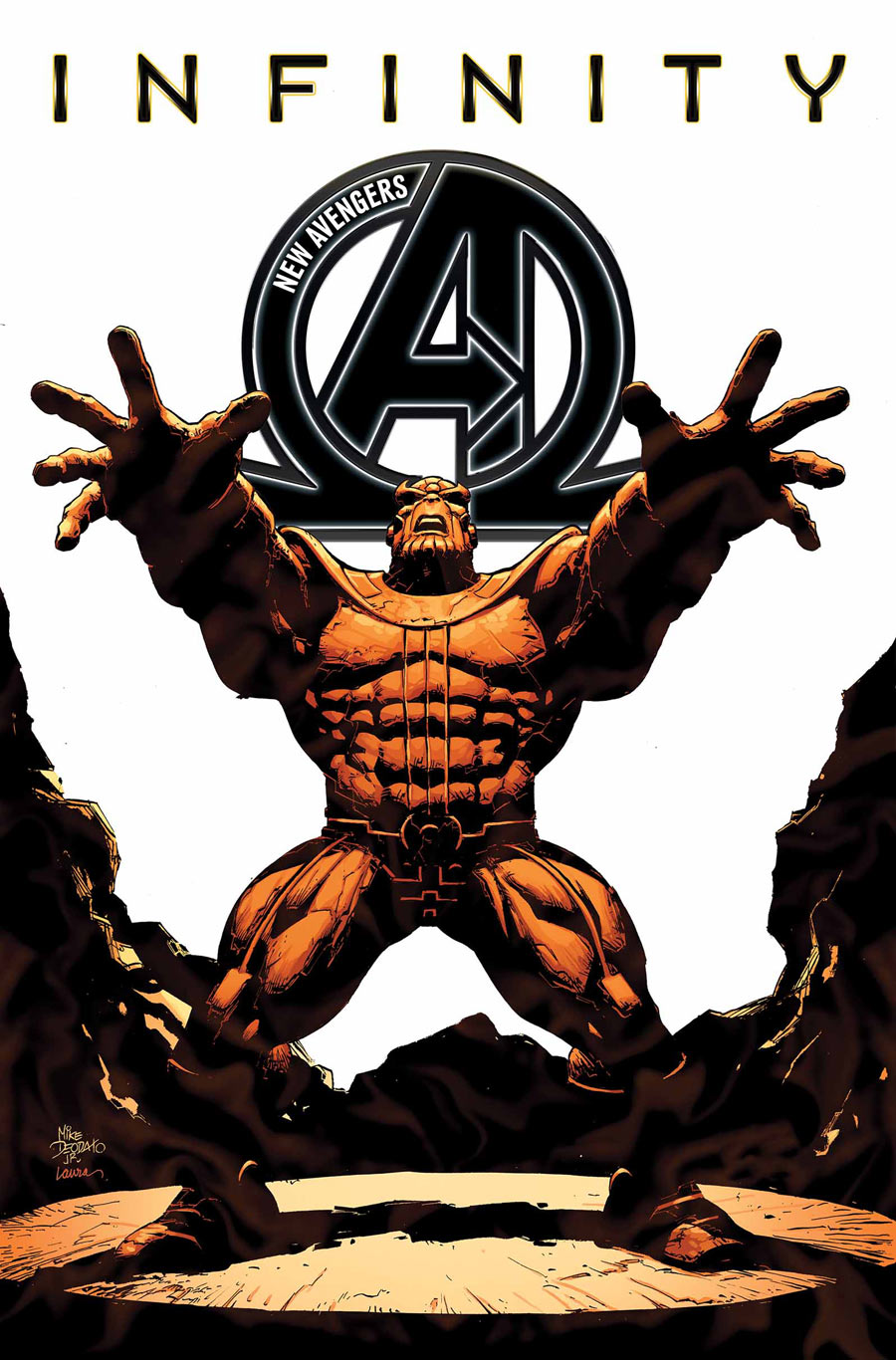 This’ll probably make more sense once you read the following two reviews of the Infinity trio (or, y’know, just get the book itself) but New Avengers is 90% incongruous to the rest of the story. While the remaining tenth does tie into the conclusion of the grand space opera arc that both vanilla Avengers and the Infinity miniseries build towards, everything before almost feels like a different book. You’ve got Illuminati shenanigans where the team once again confronts their necessary evil modus operandi. You’ve got Namor and Black Panther competing to see who’ll snap in their bitching match first (with this element seeming very heavily inspired by the Varys and Littlefinger chats from Game of Thrones). You’ve got Doctor Strange being possessed by an alien. You’ve got Thanos making a play for Earth and also having an ulterior motive that plays like a big spoiler but mostly comes as a significant left-field throw which threatens to derail the overall Infinity plot. You’ve also got familial drama with Thanos and his Cull Obsidian, a team of space-magic-alien people who want to be the Four Horsemen so hard it makes them cry. And against all this, you’ve got Earth’s remaining heroes worrying about all the cool shooty-laser-fun happening in space with the Builders.
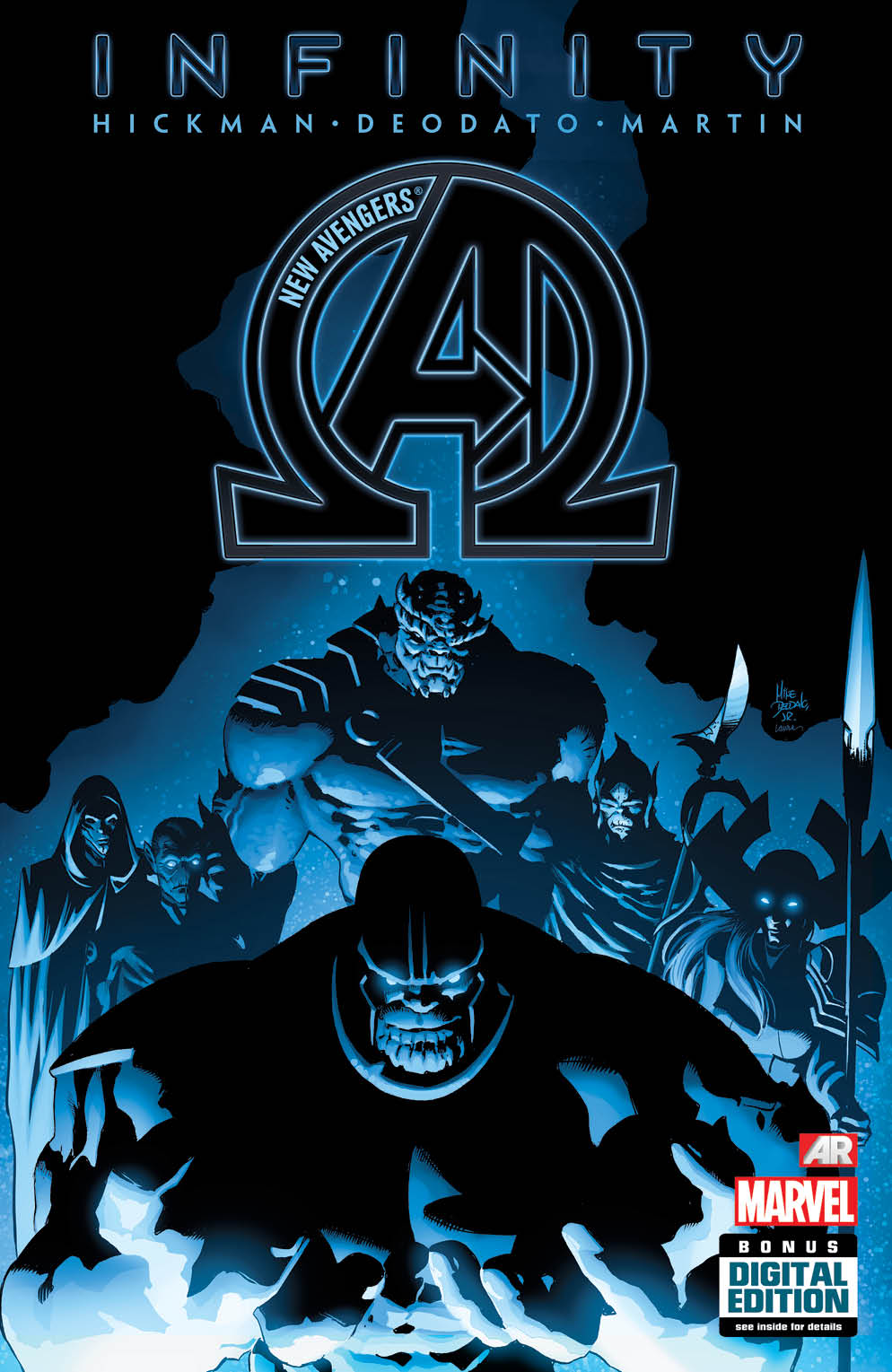 different stories during a crossover that serve the whole as a sum of parts, but I almost feel like Thanos’ incursion should’ve been an event in its own right. The fact that Mr Grapeface himself serves as the cover image to the whole Infinity tome seems rather misleading, as he only really appears in a few chapters before the inevitable defeat so Earth can remain liberated once again (It ain’t a spoiler, folks. You know Earth won’t remain under Thanos’s size 27 jackbooted heel forever). Seems someone at Marvel’s milking that post-credits stinger from The Avengers for all it’s worth.
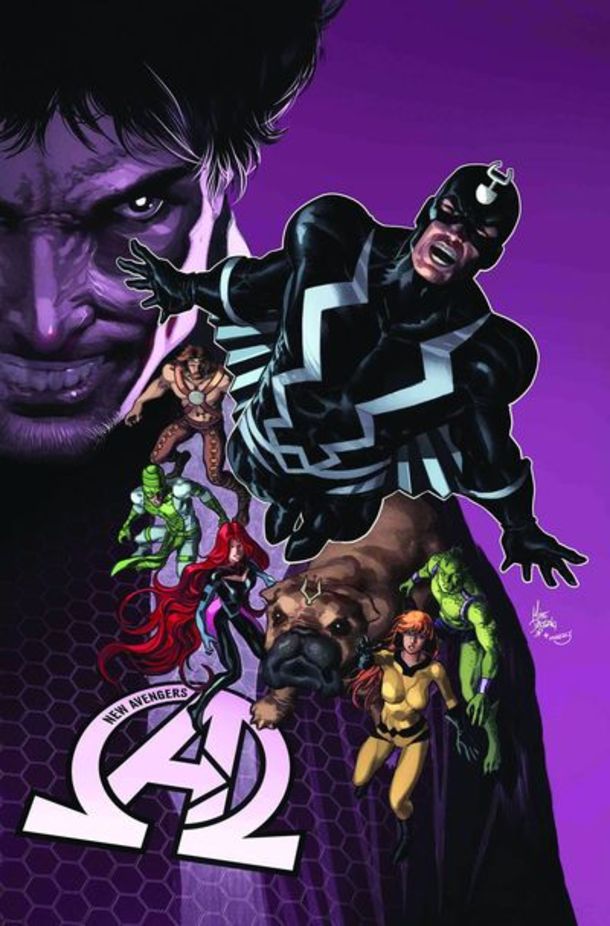 recently emphasised nasty personality in regards to Black Panther and the conflict with Atlantis only makes that image harder to scrub out, no matter how many appletinis I drink afterwards. I’ve got no problem if this sharper look’s intended to make his evil more pronounced, but I found his bitchy dialogue harder to take seriously when I imagined him chuckling in Japanese afterwards about how badass he is with those fringe strands. Seriously, each time a panel focused on his face I think I unconsciously groped for a pair of scissors.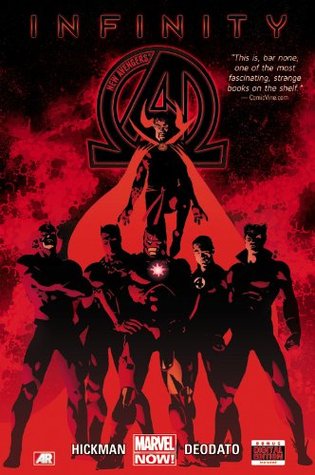

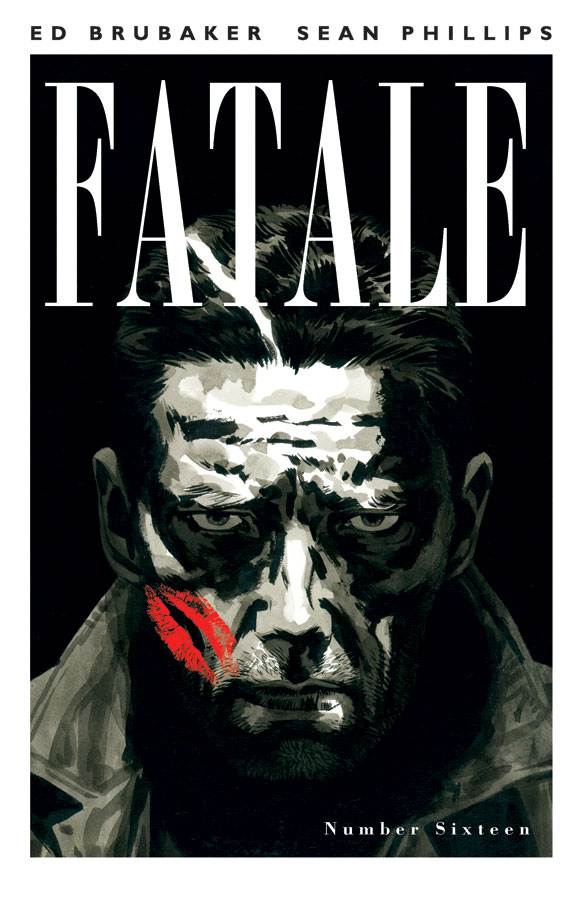


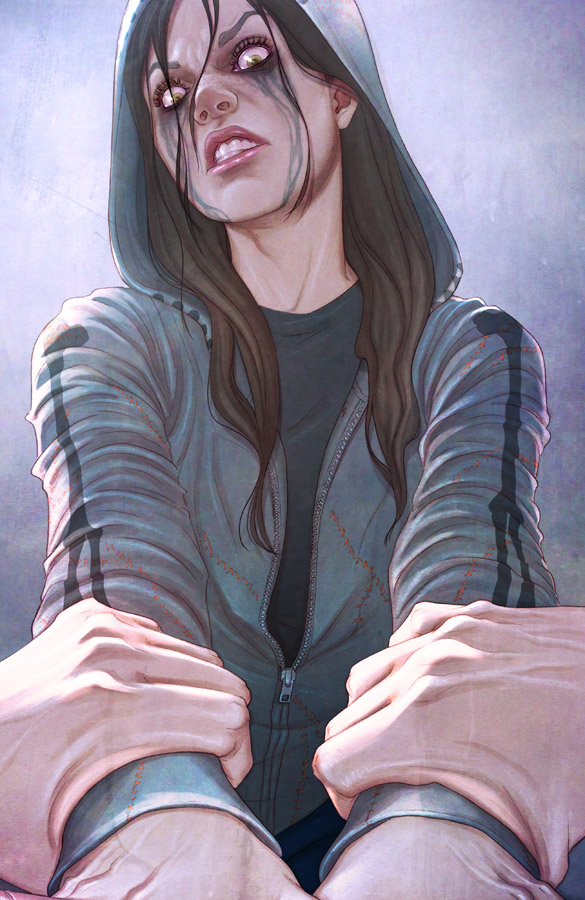
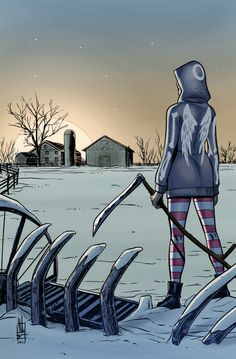
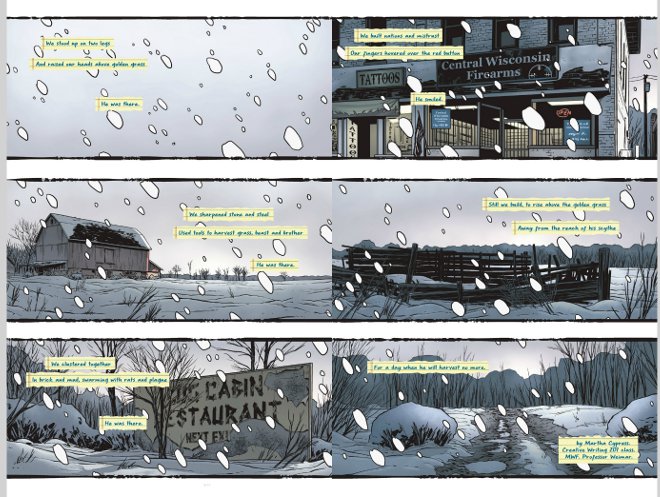


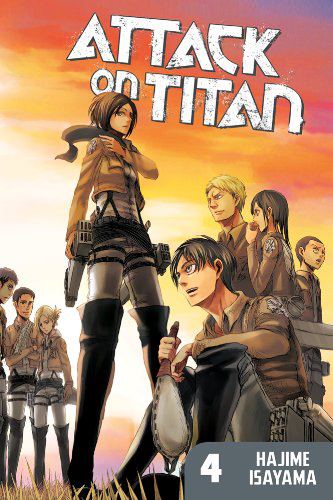


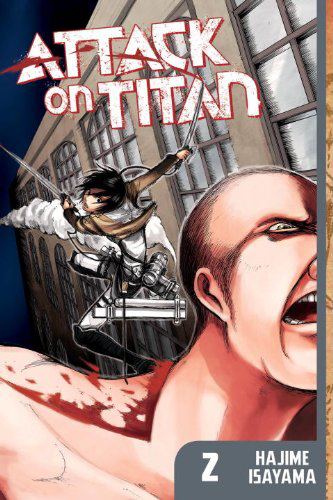
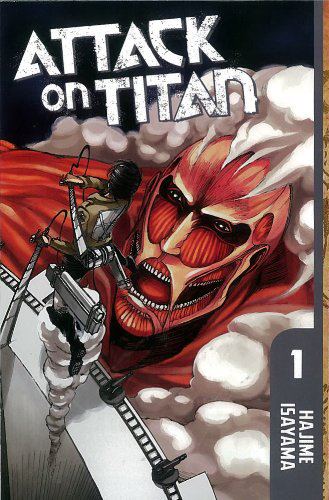
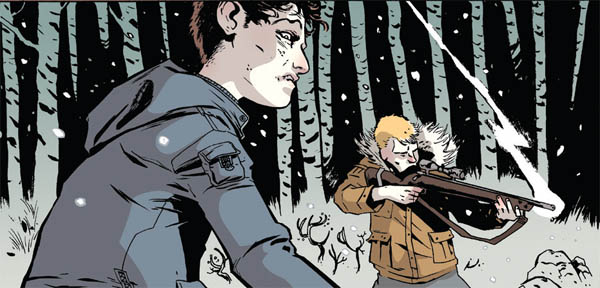


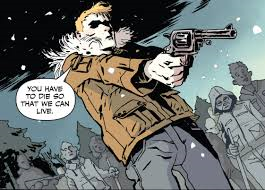
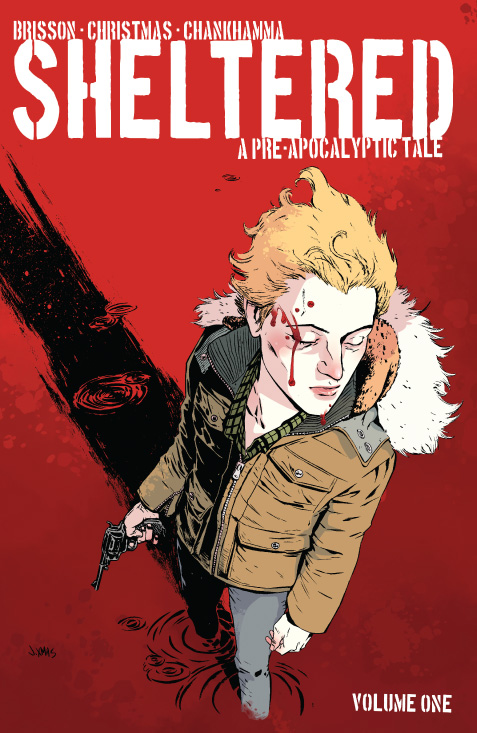

 It’s particularly frustrating because Bendis can be a great writer when he wants to – his Dark Avengers run is still the benchmark for me in terms of Villain Protagonist stories, and one of his books even managed to sneak into my accolades for this year below. Yet, it’s really apparent that he’s not cut out for team books like this, or the grand, sweeping epics he attempts to fashion out of things like
  Yeah, I can’t. I can’t even. I had enough of a vent about Avengers Assemble in its review – go read that if you want the full bile-filled experience. Suffice it to say that a book touted as having close links to Joss Whedon’s excellent movie was probably never going to live up to expectation, and after reading it I can say it most certainly didn’t. Flimsy characterisation, incredibly poor and two-dimensional dialogue, heroes put on a team together for absolutely no reason other than to sate those casual readers who saw the movie, a villain who gets replaced halfway through without actually doing that much villainous stuff, and a completely shoehorned appearance by the Guardians of the Galaxy. Just, no.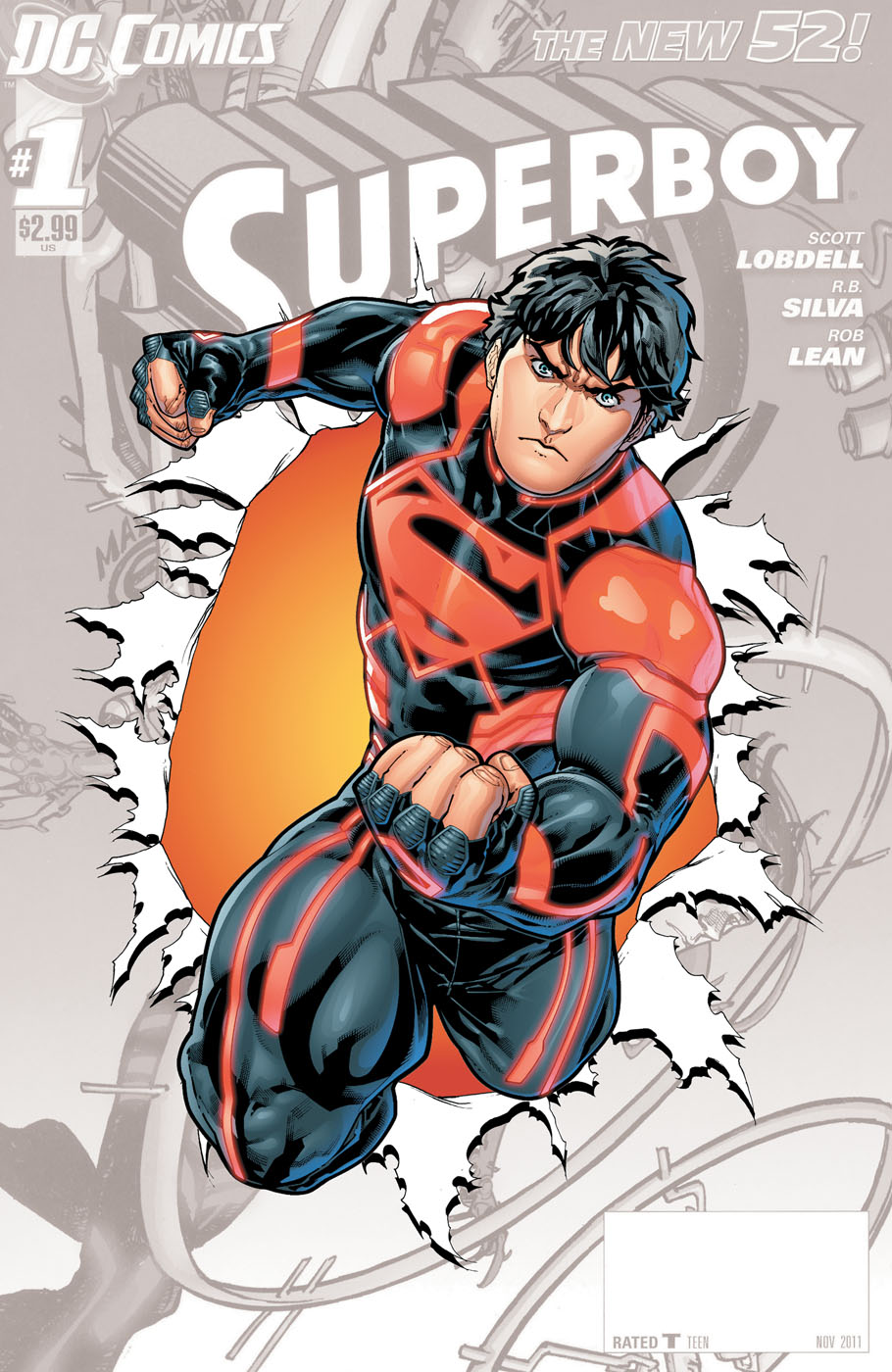

 volume of an emerging runaway series, Captain Marvel: Down takes the orientating elements we get from In Pursuit of Flight and sends us in new directions where superhero comics are concerned, with scribe Kelly Sue DeConnick at once both revitalising Carol Danvers’ presence within the Marvel Universe and writing a narrative possessing a distinct flavour compared to other cape-and-cowl fare. What stops it from hitting the big list is artwork that is far too distracting from the tale DeConnick is trying to tell; Dexter Soy, Filipe Andrade and Emma Rios give us an abstract, off-kilter art style that would be more at home in something surreal like The Sandman that doesn’t work for a superhero story, and even less for a grounded title like Captain Marvel. Otherwise, it’d be right near the top of my list.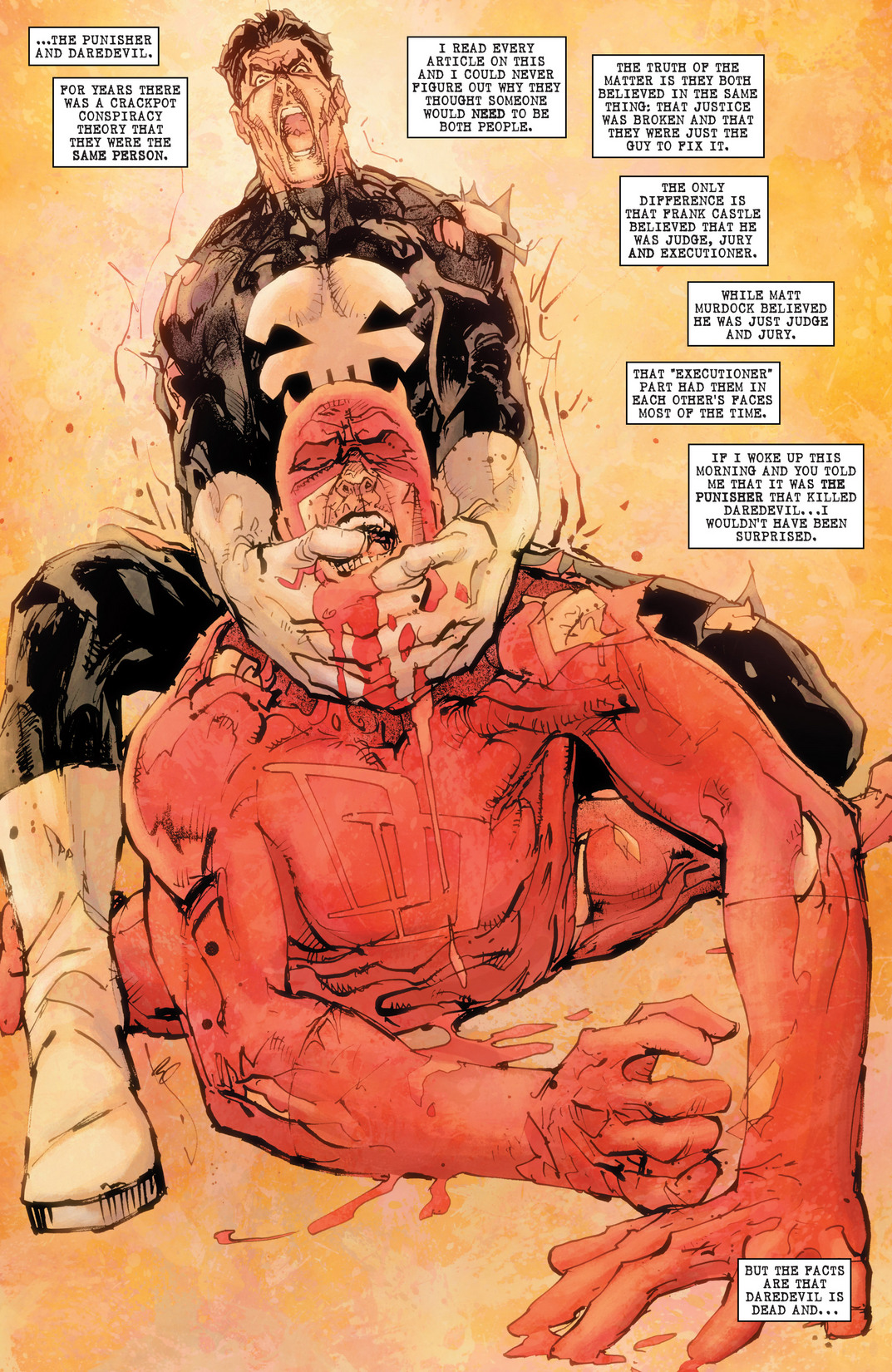
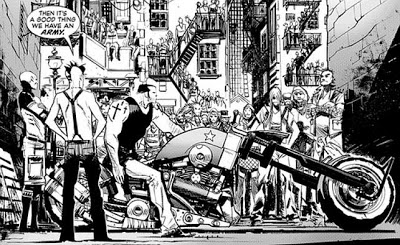


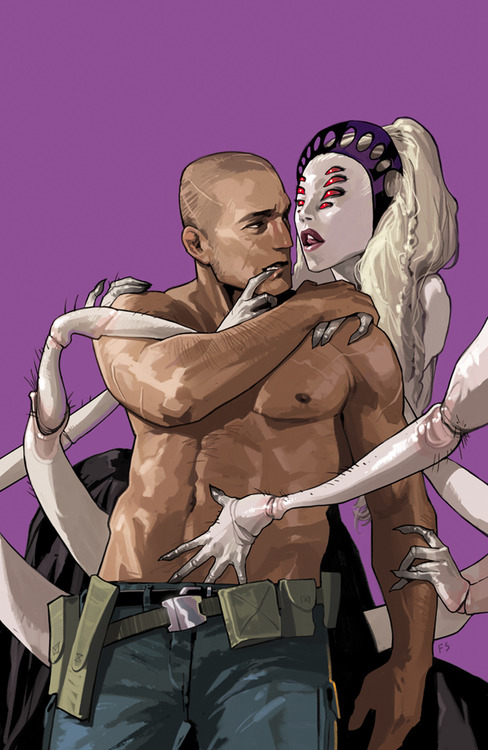

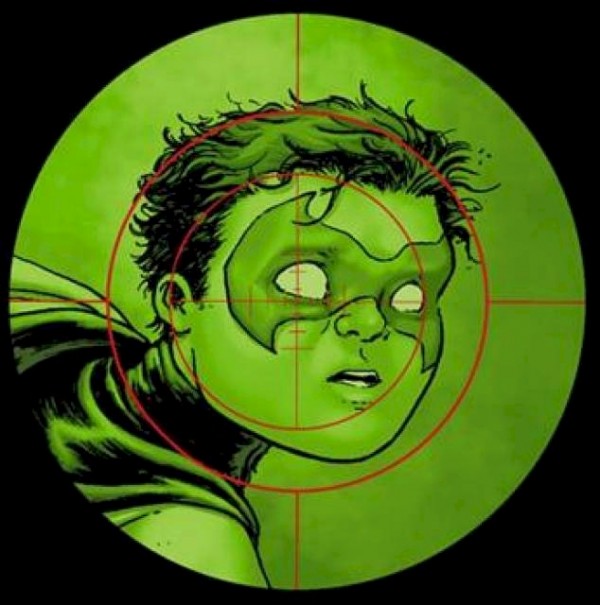
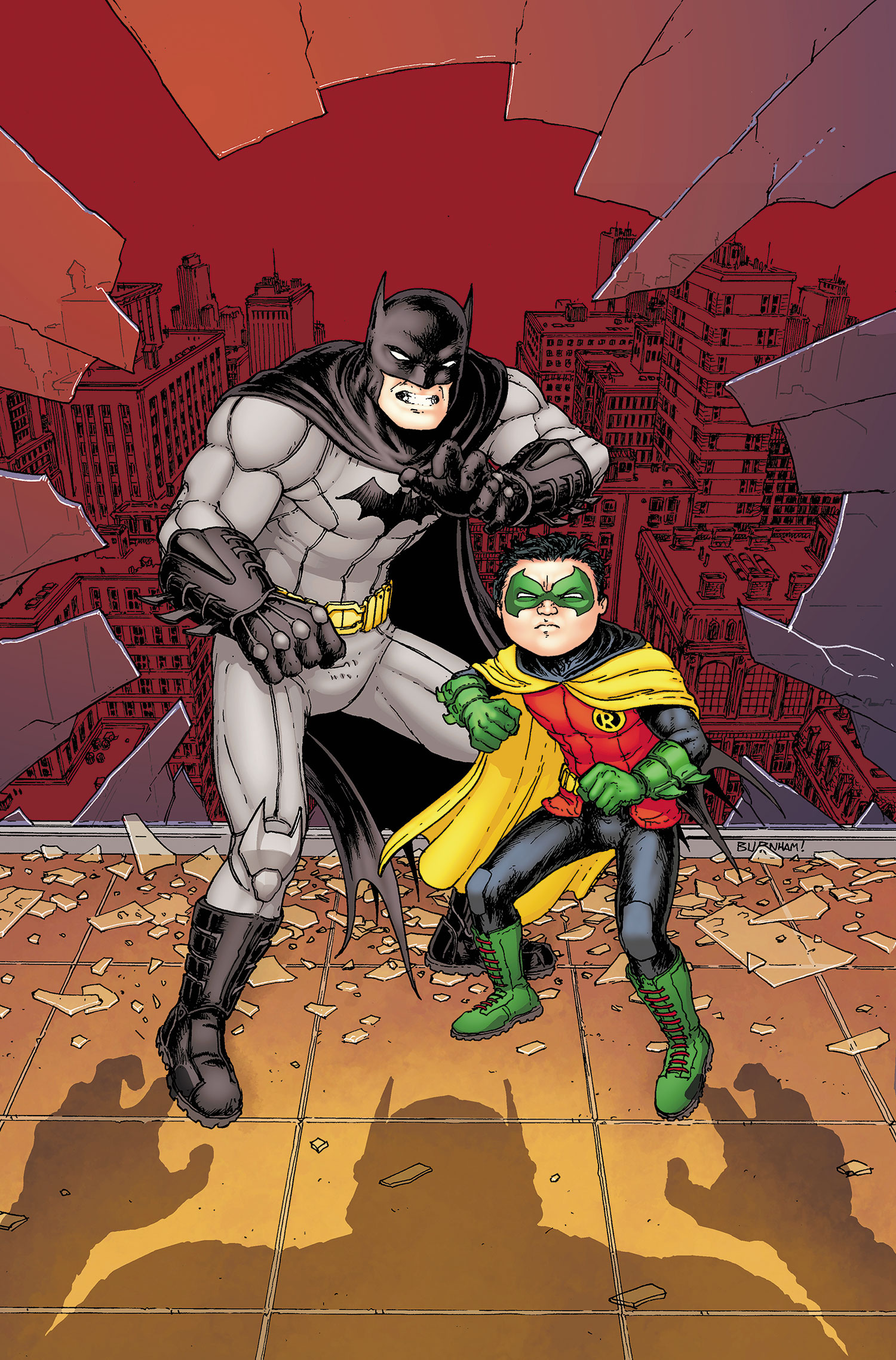
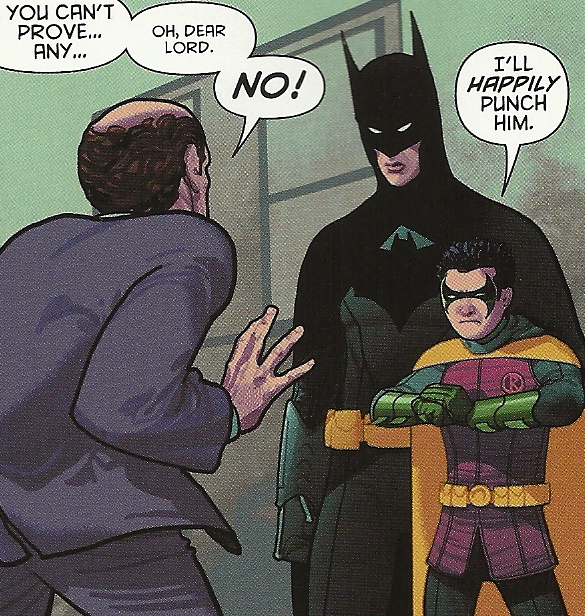

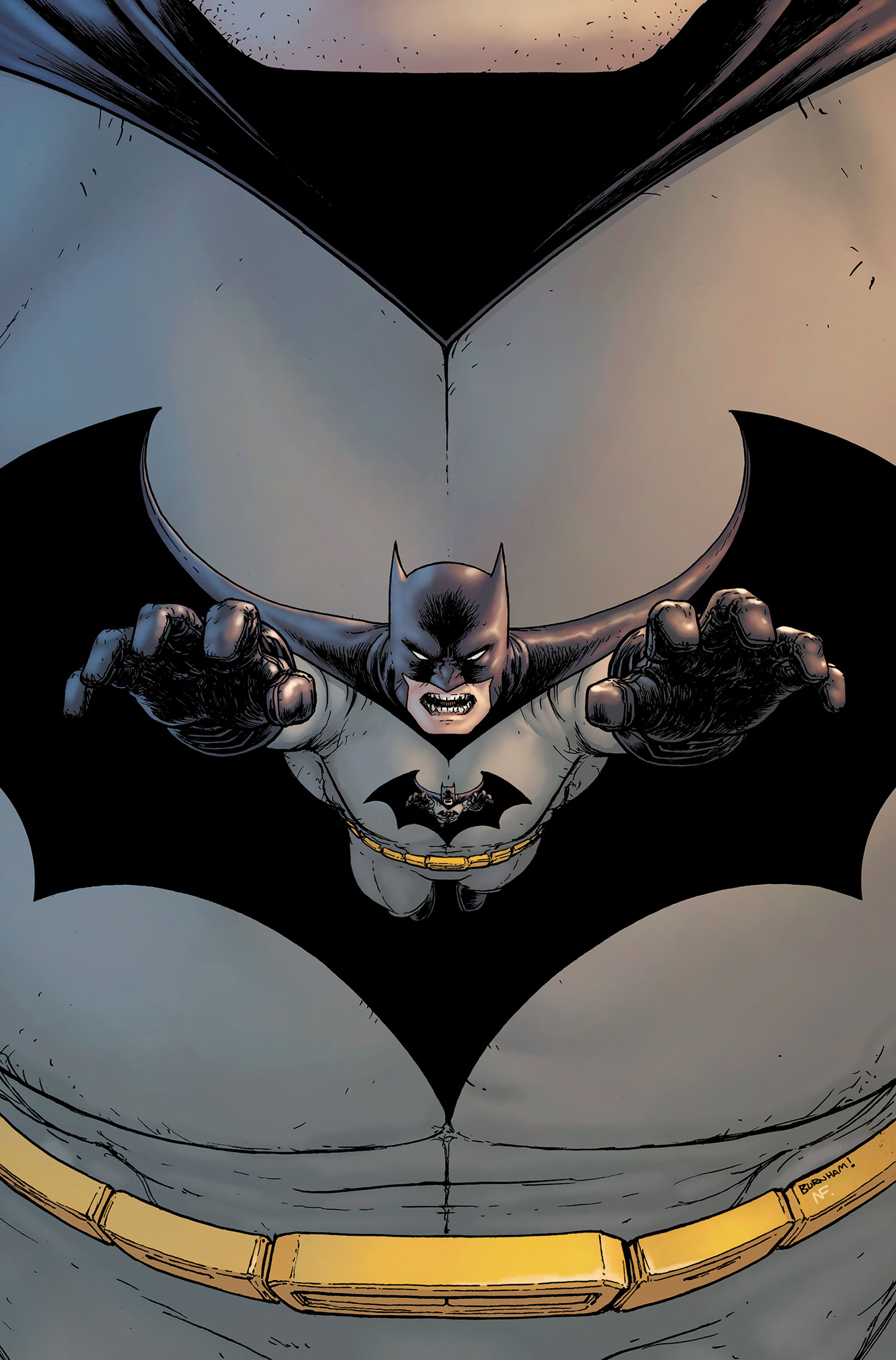

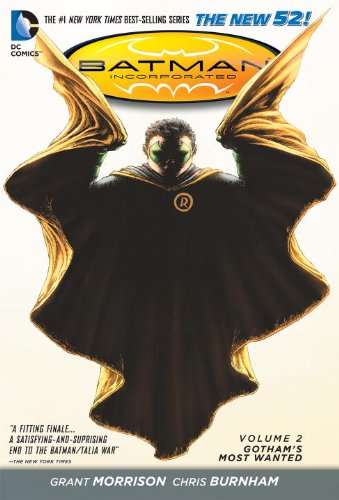

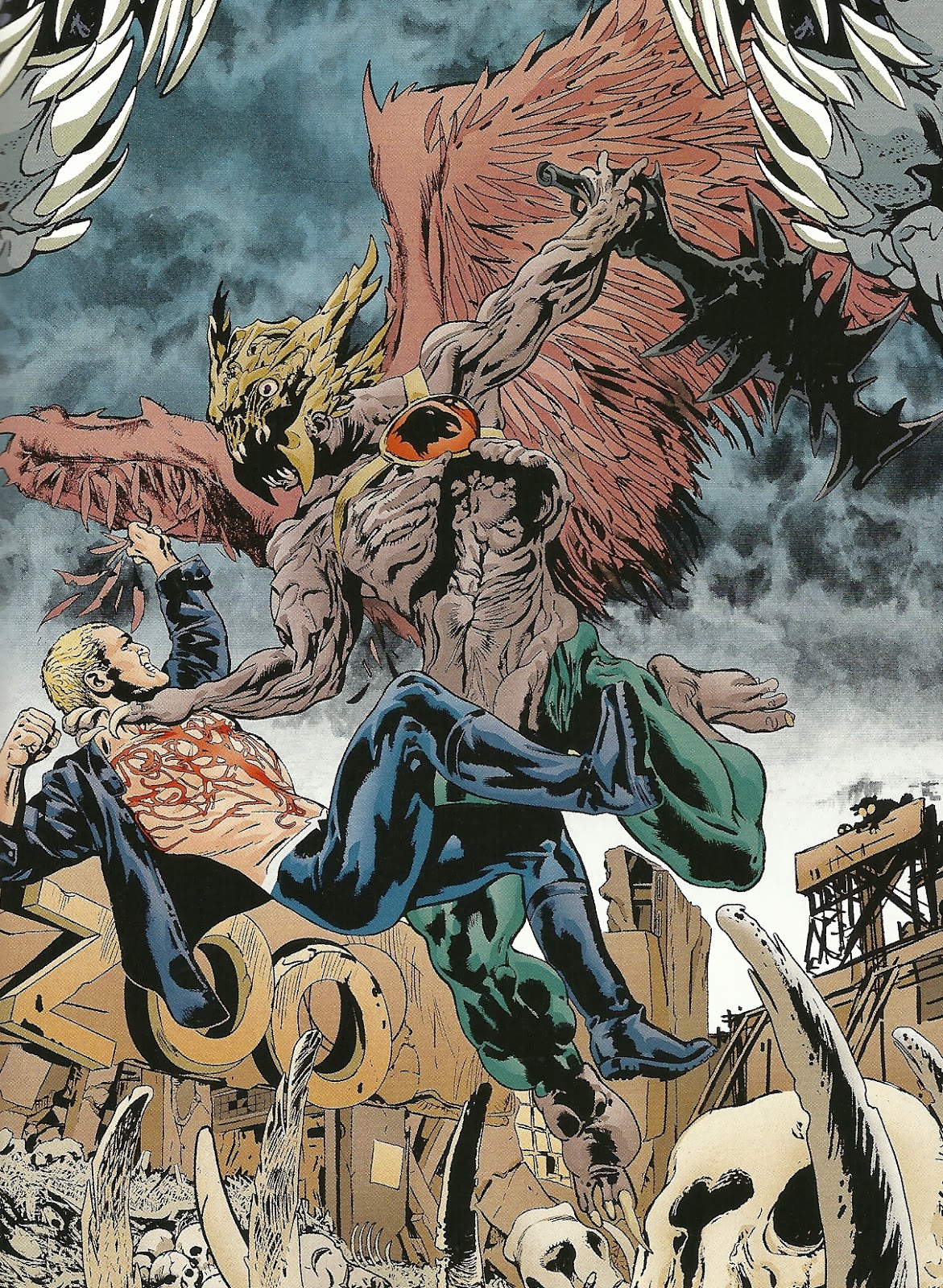


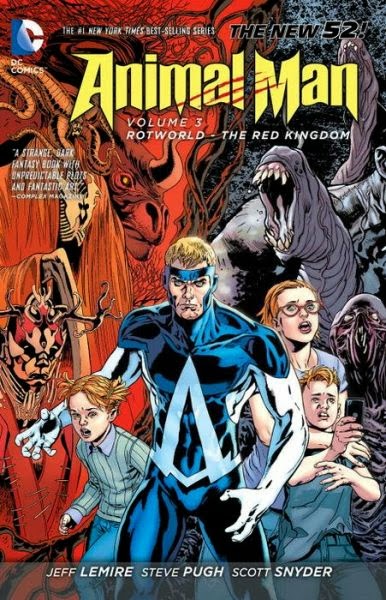
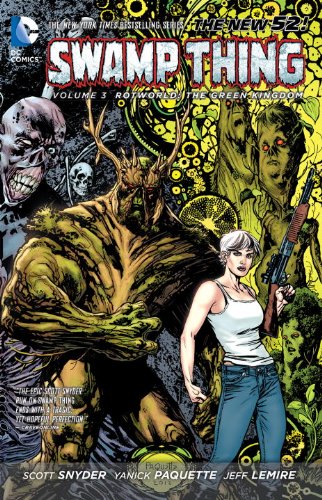

 The Genre Fiend