Avengers Triple Play – “A.I.M.Pire”, “Ragnarok Now” and “The Forgeries of Jealousy”

The success of Joss Whedon’s Avengers film is something of a double-edged sword. On one hand, it single-handedly changed the face of modern cape-and-cowl filmmaking both from a nuts-and-bolts and marketing perspective, seemingly giving license to superhero films to go bigger, bolder and more badass. On the other, it’s made the titular comic book supergroup have something of an overexposure problem.

Well, perhaps ‘problem’ is too strong a word. Fact is, there are more Avengers comic books out on the market than there are CSI spin-offs, and it all kinda contributes to one giant, Avengers-flavoured overload. You can’t turn a corner round the shelves at Kinokuniya without stumbling across Avengers, New Avengers, Secret Avengers, Avengers A.I. or Avengers Re-enact the Battle of Gettysburg (though on reflection, I’d totally buy that last one).
uncanny ragnarok 2Obviously, a good chunk of the reason why Marvel’s premier team are everywhere at the moment is because of Whedon’s film. It’s unsurprising that Marvel would capitalise on the movie’s success and its incitement of audience members to go find the books afterwards. This is what I’ve kinda termed “the Batman Effect”; a breakout character or franchise proves so popular in one form or another, they dominate books and storylines to the point you almost forget the publisher releases anything that doesn’t feature a Bat-symbol somewhere in it. (a similar phenomenon is also termed by TvTropes as “Wolverine Publicity“)

Now, this doesn’t necessarily have to be a bad thing. Having a dozen books with Batman in them could be awesome if there’s variance between them. It could be a great opportunity to show a character in different scenarios with different sets of problems, or have him be part of a bigger ensemble where normally he’d not be a part at all. While books like Batman and Robin and Scott Snyder’s epic Batman core run are most definitely very different flavours of texts, the truth – and the most common complaint levelled at Bat-books these days – is that quite a few titles featuring Batman are just punching things and growling a lot, with the only real differences being who gets punched and growled at.

So consider for a moment what a compliment it is for me to say that the overflow of Avengers books produces enough variety that, until I started writing this review, I didn’t actually consider lumping them all together as “Avengers books” but rather as texts in avengers jealousies 1their own right. I mean, yeah, they’re still Avengers titles, but they’re not all the same chocolate with different wrappers. If there’s one thing Marvel’s editorial figures seem to have gotten right recently, it’s to make most of these books feel separate in tone but connected in universe. Considering how many ongoing books exist with the word Avengers in the title, that’s no mean feat.
Finally, at six overlong paragraphs into this review, I can tell you that the recent Avengers output is great. Or, rather, the output is great for a franchise intentionally driving its books, for better or worse, in markedly different directions.

Think of this as a polar opposite to the aforementioned Batman problem: rather than being samey, the Avengers books are different to the point that variety exists solely for the sake of variety rather than for creativity’s sake. Everything has to be separate, so much so that the shared creative DNA gets messed around with and births a product more mutant than most of the books’ cast members (see what I did there?)

avengers world 2Take Ragnarok Now, the third volume in Rick Remender’s Uncanny Avengers run. Perfectly serviceable and Avengers-y, except for the giant cosmic-level threat and Chris Claremont-inspired background narration included, for all intents and purposes to help keep it distinct from its contemporaries. It’s different compared to A.I.M.Pire, the debut volume of Jonathan Hickman and Nick Spencer’s Avengers World series (taking its name from the first volume of Hickman’s vanilla run). Whilst Ragnarok features gods of evil and the world ending, A.I.M.Pire finds a bunch of B-list Avengers teammates getting indoctrinated by some new A.I.M. threat that crossed the Borg from Star Trek with the cabal of evil from Uncanny X-Force.

And both of those are different to Forgeries of Jealousy, the final volume of the much-better-once-Bendis-left-it Avengers Assemble that has kind of a week-in-the-life look at the character of Spider-Girl. Oh, and there’s also tie-ins to current larger Marvel events like Inhumanity, just to keep that difference going.

avengers jealousies 2

The result is three books that are pretty good on their own merits, but as a whole larger than its parts’ sum they come across as different for difference’s sake. It feels like each creative team is, whether consciously or not, working their asses off to write stories with greater variety from other Avengers fare simply so they’ll be more recognisable, and not to forge something out of creative impetus. Ragnarok feels a little less like that, especially with a very arc-based, long game player like Remender writing it, but there’s still such a diametric tone to all else out there that it still follows my line of thought even just a bit.
uncanny ragnarok 1Artwork is distinct, in some cases being similar but predominantly individual. Ragnarok Now makes good use of Daniel Acuna, Steve McNiven and Salvador Larroca (though the latter draws really large lips for some reason) with a very dark, blood-soaked palette. A.I.M.Pire uses Stefano Caselli’s work for large vistas and bright colours, its range punching you in the face almost as potently as its characters could. Forgeries goes for a mid-range, alternate light and dark illustration by Matteo Buffagni with some slightly surreal sharper edges on characters and a surprising lack of eyeballs. Granted, most characters wear those white-eye facemasks, but it still feels at times like everyone’s gotten cataracts.

And finally, dialogue varies but not always for the best. As I mentioned, Ragnarok uses a lot of background narration in the over-explain-everything vein of Chris Claremont, alongside every heroic character speaking heroically and every villainous character sounding like a cross between Megatron and Loki. The few moments where A.I.M.Pire dwells on its cast members has them almost speaking with flat, two-dimensional quality when faced with an enemy threat. Granted, that does change in the moments where Bruce Banner drinks too much coffee (getting irritable and ready to turn green) and Starbrand remembers he’s a teenager, and thus proceeds to speak with the kind of faux-quippy wording I’d expect Jake Lloyd to have attempted behind the scenes on The Phantom Menace.

avengers world 1

So we’ve got three different books united by one franchise banner. Though I certainly understand Marvel’s wish to continue capitalising on its Whedon-flavoured successes, is engineering a bunch of books with variety for variety’s sake really the way to go? From what I hear it’s a similar game with books like the new Mighty Avengers and Avengers A.I., not to mention Jonathan Hickman’s twin guns of Avengers and New Avengers, the current new run of Secret Avengers, that sequel series to Avengers Arena called Avengers Undercover

And yeah, all those books are different too. Talk about spoiled for choice, right?

Actually, the active word there is ‘spoiled’. It’s one thing to give a bland spread of Bat-books with very similar but subtly different premises, but having so much Avengeriety (see, coz it’s “Avenger” and “variety” mashed together) kinda ruins some of the magic for me. I’d much rather a cornucopia than carbon copies, but maybe having a plethora of Avenger books for the sake of having them is a little disingenuous to the true seeds of story creativity that spawn some of those books.

All three books I’ve just kinda-sorta-but-really-not reviewed are great, and definitely worth reading – if I had to pick one, Forgeries wins by a country mile. But I feel they present something of a cautionary tale going forward, something most readers probably worked out a long time ago. Variety might be the spice of life, but spices have a way of messing up your taste buds if you ingest too much.
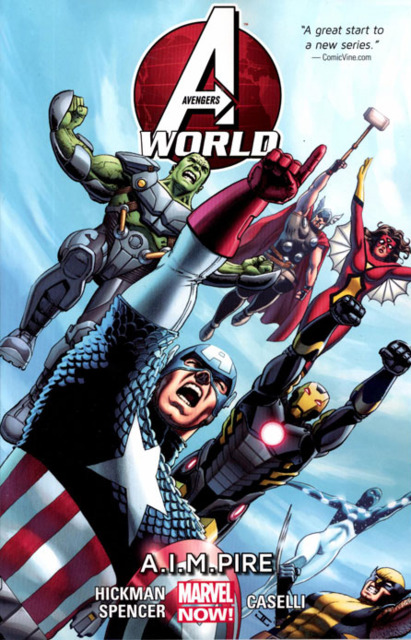
 

avengers world cover

PUBLISHER: MARVEL COMICS

STORY: 3/5

ARTWORK: 4/5

DIALOGUE: 3/5

OVERALL: 10/15

BEST QUOTE: “I was gonna land, stand there looking all pretty, and just say ‘Assemble’ – then wait for the goosebumps.” – Iron Man


uncanny ragnarok cover

PUBLISHER: MARVEL COMICS

STORY: 3/5

ARTWORK: 4/5

DIALOGUE: 2/5

OVERALL: 9/15

BEST QUOTE: “I say thee — NAY!” – Thor


forgeries cover

PUBLISHER: MARVEL COMICS

STORY: 4/5

ARTWORK: 4/5

DIALOGUE: 5/5

OVERALL: 13/15

BEST QUOTE: “Lady lucky. Hulk want sandwich now.” – Hulk
Batman/Superman: Cross World

Depending on how much you adhere to the concept of “self-canon” when it comes to DC’s New 52 (that is, you pick for yourself what still applies in the new universe and what gets left behind), the first volume of Batman/Superman may or may not feature the very first chronological interaction between Batman and Superman. At least, it’s chronological if you ignore the the nine other occasions they first met listed in this article (featuring Cross World as the tenth). Canon’s a tricky thing, innit?

At absolute least, Cross World negates the alleged first meeting setup in the New 52’s Justice League opener. So for the purposes of this review, just imagine it really is their first meeting and the reason they didn’t recognise each other in Origin is coz the DC Editorial team mind-wiped them between the former and latter books. That, or DC once again have a problem with fluid continuity (though many would argue that problem’s existed for a very long time now).

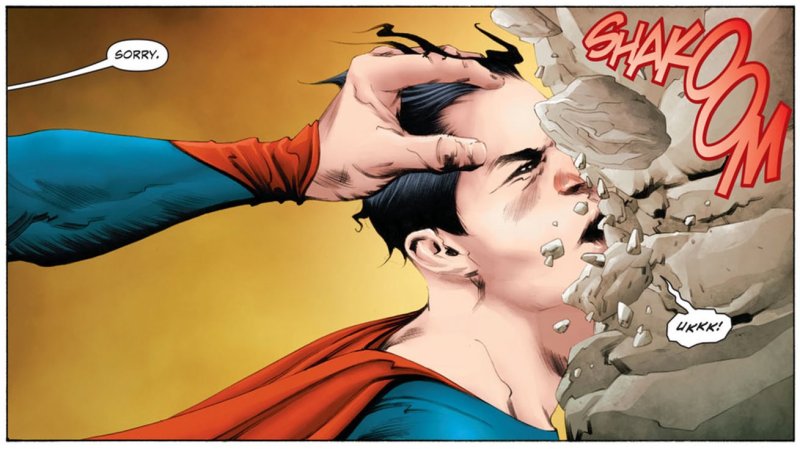
Ok, sorry. Review. Book. Things. To get back on topic, here’s a picture of Superman getting face-smashed against a rock.

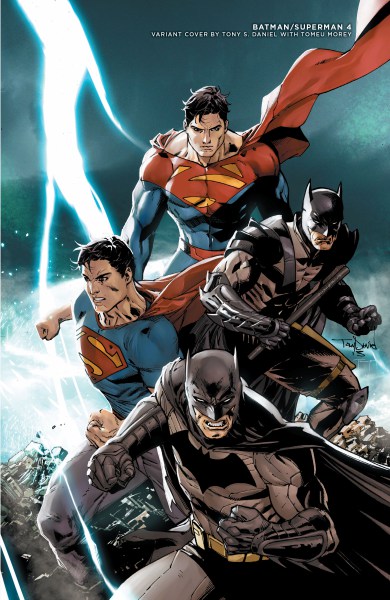
batman superman 4

Yay!

Despite its conflicting nature with the rest of the DC ‘verse, Cross World is a surprisingly enjoyable book. As has been painstakingly and repeatedly pointed out, it’s the first meeting of Bats and Supes; technically, it’s the meeting of the Bats and the Supes from both our ‘verse and that of Earth-2. Y’know, the same setting as that Earth 2 book currently running where both they and Wonder Woman met grisly deaths in the first issue. Fun, fun, fun!

batman superman 3Both sets of super-duos meet and cross dimensions due to some magical temporal shenanigans, causing havoc. There’s also an imp dude ripping off Puck from Shakespeare’s A Midsummer Night’s Dream, and an issue tacked on at the end of the book dealing with what I assume is a reboot of Darkseid’s origin story.

Hrm. Right.

I did say Cross World is enjoyable, but not for the story per se. I’m writing this review a good month after reading it, and without the book close to hand I’m struggling to remember plot points. It’s not so much a coherent A-to-B story as it is a string of scenes stitched together with some connectivity but not much in the way of proper plot. Granted, getting the Prime universe superheroes back to their depressing reality is kind of a thing, but I’m pretty sure that gets easily resolved towards the middle or end. Or maybe it didn’t, and my gaps in memory are being filled by crossings with other books. I dunno.

If I have to pick one “first time” to keep in my head as the definitive introduction between Batman and Superman (at least, in terms of things released since the reboot), I’ll stick with Justice League‘s. The meeting here happens between Clark Kent and Bruce Wayne, first, then slowly moves into cape-and-cowl territory as the borders between the two dimensions melt away. Then suddenly they’re kinda friendly because hey, the Earth-2 counterparts are way friendly! Seems like a cool way to be! Except the Prime heroes aren’t really friendly for too long, but then the end makes it seem like they will be…

Ugh. I give up. Canon conflicts do my head in.

As if the previous few paragraphs of ramshackle sentences masquerading as proper analysis didn’t clue you in, the story’s hard to judge. As I said it’s not so coherent as it should be, batman superman 2especially with an interesting premise like crossing to other dimensions. Taking the elements the book presents on their own, it’s pretty good. As a story it completely falls down, but that doesn’t make it bad; what scenes we have here that make sense are good. The Earth-2 versions of the heroes are pretty great. The Darkseid origin story is fantastic (and a great bonus on its own for anyone buying the book). Dialogue by Greg Pak is a little scratchy at times, but mostly functional. All pretty standard.

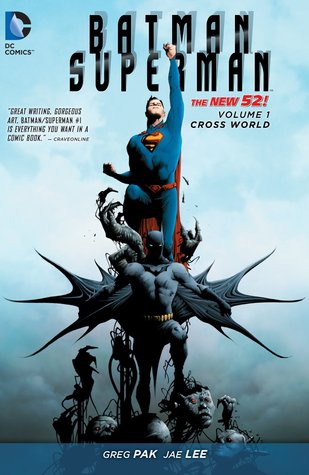
batman superman 1What elevates Cross World from “functional” to “entertaining” is the artwork. I’ve never seen Jae Lee’s work before, but dammit if it isn’t bloody gorgeous. It’s the sort of surreal, Lovecraft-meets-LSD take I love in books like Sandman but not so much Captain Marvel, and if nothing else the distinct visuals set Batman/Superman apart from any other Dark Knight or Man of Steel books on the market right now. It’s weird, striking, creepy, symbolic and evocative. My hat (if I wore on) is off to Lee for taking a fairly standard and disjointed story and making it look gorgeous.

That’s really all I can say about the new Batman/Superman. Bit shorter than normal, I guess-

Wait, what’s that? You read the pre-reboot Superman/Batman series that garnered acclaim and went for a long while? You wanna know how the new, name-reversed iteration stacks up against its predecessor?

Well, you’re lookin’ in the wrong place. I never read it, but from what I’ve heard others say it sounds like the new volume is pretty distinct from the old one. Apparently the latter had a comprehensible plot, if nothing else.

.

batman superman cover

PUBLISHER: DC COMICS

STORY: 2.5/5

ARTWORK: 5/5

DIALOGUE: 2.5/5

OVERALL: 10/15

BEST QUOTE: “Get hold of yourself, you idiot!” – Batman, after punching Superman in the face (hey, old habits die hard)

The Phantom Canon

Star Wars is dead. Long live Star Wars.

It’s been thirty-seven years since Luke Skywalker and his bunch of college friends showed up on our screens, and in that time the universe surrounding George Lucas’ magnum opus expanded to a size three times as large as the Roman Empire and only one quarter as interesting.

Fandoms are wonderful things, and when franchises build further stories for that fandom to enjoy it can either strengthen the artistic integrity of the original IP, or just add a whole lot of chaff to be targeted and ridiculed by fans and fandom foreigners alike. And let’s be honest, Star Wars has a lot of chaff.

Or, rather, had. The Expanded Universe ain’t there no more, aside from that Clone Wars cartoon most right-thinking fans prefer to forget exists.

star-wars-the-clone-wars-jedi-wallpaper
Yep, this is all that’s left. The Force help us.

This is old news, but bears scrutiny nonetheless. Was hacking off all the Star Wars tentacles at once a good idea, or should they have picked and chosen which suckers could stay? One sideways glance at Wookieepedia tells you all you need to know: there was a ton of crap with a few gems embedded. Fitting Episode VII into the 60+ years of written, scribbled and video game’d content following Return of the Jedi was never going to happen. I don’t knock Abrams, Lucasfilm or whomever was responsible for pulling the trigger.

I do, however, question why everything pre-Original Trilogy had to get the axe. Unless a plot point for the sequels deals with tying into very old (chronologically-speaking) parts of the Star Wars ‘verse, couldn’t a bunch of events preceding The Phantom Menace still have stuck around? Moving a little further inward, are there things in the gaps between the prequels or original movies that could be salvaged? Of course, carefully selecting anything to keep would raise the question of “But why couldn’t this be saved instead?” for all that gets sacrificed. I’m sure there’s at least one fan of The Force Unleashed who’s bitter they canned that but kept The Clone Wars around; surely there’s only so much poison you can let linger in Star Wars‘ veins.

So presented herein is my idea for four pieces of pre-Episode III Star Wars spin-off (and one that’s post-) that could’ve survived the cull and, hopefully, had no impact on the upcoming trilogy. Don’t worry, I’ll explain to you what each thing is in detail for those who’ve not read/played/watched the relevant entries (and if you haven’t played the first one, you should cease what you’re doing this minute and purchase it) in a way that doesn’t come off as too fanboy-ish. Maybe. I can get pretty into this stuff on a level that makes my Batman obsession look well-adjusted.

For those as embedded in canon as me, please don’t take it as an insult if I leave a piece of your favourite EU missing. This is hardly an exhaustive list, and no-one judges you for liking The Star Wars Holiday Special.

.

1 – Knights of the Old Republic

WHAT THE HELL IS IT?

KotorboxOver a millennium before Liam Neeson and Ewan McGregor invade a spaceship looking like a half-eaten donut in The Phantom Menace, you play as a recently-discovered Jedi on the run from the dominance of the Sith Empire. See, in a reverse of the Jedi situation of the Prequel Trilogy, you’re kinda one of the last of an endangered species. You might also have a mysterious past that could redecide the fate of the galaxy, once a guy with half a Darth Vader mask stops chasing you while seeming to find you strangely familiar.

WHY SHOULD WE HAVE KEPT IT?

Ask any enduring Star Wars fan what their favourite video game was. If the first answer is Battlefront, the second will be KotOR.

The first Knights set the bar for both Star Wars games and action-RPGs for the newer console generation, starting life on the original Xbox and PC. Even today, though the graphics are dated, both story and gameplay are top-notch. More importantly, the story is excellently told no matter what alignment of the Force you set yourself to; burgeoning Jedi Masters or emerging Sith Lords find equal ground for satisfaction here. Even disregarding that, both the setting and umbrella plot of the ‘verse over a thousand years before The Phantom Menace is awesome and engaging. Part of that stems from a bit of familiarity, but a lot from the fact that we’ve got literally an entire galaxy to play with here.

Also, you can fight Dark Jedi in your underwear. Because Internet.

The timeline of KotOR is verdant, free of any entanglements with protagonists that usually plague other games set within already-defined canon (see the first two Dark Forces games for an idea of what I’m on about). You can go anywhere, make any story you want, and it’s all having consequences only on itself. Nothing’s verboten. It’s a remarkably freeing feeling, knowing you’re playing a story where the ending or inclusion of characters isn’t predefined by a poorly made CGI sequel where Hayden Christensen pretends to emote.

The second game was good, but most tend not to talk about it. Let’s not break from tradition here.
.

2 – The Darth Bane trilogy

WHAT THE HELL IS IT?

Some time passes following the end of Knight of the Old Republic, during which the Jedi have thrived and the Sith are facing Path-of-destructionsomething of a cultural and military ennui. A young miner on a crapsack planet discovers he has violent tendencies that inadvertently trigger the Force, and thus sets off to join the Sith and get hold of all that passion, anger and other nasty stuff Emperor Palpatine always seems to find a turn-on. Over time, the miner becomes Darth Bane: if the Sith ever had a version of Chuck Norris, he’d be it.

Over the course of three novels, Bane sets about reformatting the Sith into a more cohesive, ordered entity, largely by cutting down their numbers from dozens to just two. Remember that Sith axiom from the prequels referring to there only being two – a master and an apprentice? Were it a royalty-driven trademark, Darth Bane’s estate would make Terry Nation’s look like nothing.

WHY SHOULD WE HAVE KEPT IT?

Not only are the Darth Bane books exceedingly well-written, especially by Star Wars standards, but they set up fundamental power dynamics between all the Sith characters throughout the existing six movies. Am I the only one who felt the explanation given in Phantom Menace – or, rather, the lack of one – about why only two black-cloak-wearing badasses are running around foiling the Jedi was kind of non-explanatory? These books go a ways towards redeeming that lacking quality, as well as giving us an interesting story that, for all intents and purposes, is the origin of the Sith as we know them.

darth-bane_00321727
Those eyes will now inhabit your nightmares.

Bane as a character also presents something of a dichotomy. Granted, he’s as evil as a bag of possessed ferrets with the ax-crazy tendencies that exemplify Sith attitudes, but there’s a number of moments – even following his adoption of the Darth moniker – where there’s real sympathy felt for the guy. The best villain protagonists are written in a way that makes me feel for them, even if only in fleeting dalliances, and this is something Bane’s trilogy managed to pull off from time to time.

The distance from all six films makes the Darth Bane books ideal to keep around, unless Episode VII plans to completely rework how the Sith got their groove back.

.

3 – Cloak of Deception

WHAT THE HELL IS IT?

cloak_of_deceptionA novel set immediately before the events of The Phantom Menace, and manages to redeem a lot of the poor storytelling choices Lucas made in that film. Cloak of Deception is an introduction to Qui-Gon Jinn, a view into the rotten, corrupted core of the Republic, and a great prelude to the events that would prove disappointing at best and disastrous at worst.

WHY SHOULD WE HAVE KEPT IT?

Admittedly it’s been a very long time since I read it, and my copy’s probably squeezed inside one of my storage boxes somewhere in the Himalayas, but in general terms James Luceno writes a lot of what should’ve been included in the first prequel here. Qui-Gon suddenly has a bit of depth and semi-consistent charactersation. The Senate’s not just an obtusely corrupt entity. Things have weight and a bit more depth here, or at least more than what was present in The Phantom Menace.

I know a movie should stand on its own in terms of conveying plot and character, and not rely on expanded universe material to give context to a story they should’ve already told. But since Cloak of Deception does quite a bit to redeem some of the dodgier parts of the first prequel film, I’d be quick to keep this fix-fic on hand for the canon guide.

.

4 – Outbound Flight

WHAT THE HELL IS IT?

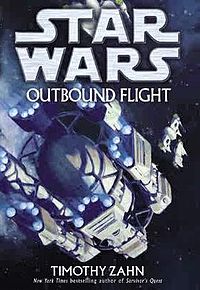
Set between Episodes I and II, the Jedi launch an expedition to go colonise other parts of the universe and see what’s out there. 200px-OutboundflightfrontcoverUnfortunately, “what’s out there” turns out to be an alien empire called the Chiss, led by this dude called Thrawn. The expedition also turns out be led by a Jedi who’s not in possession of all the marbles.

Oh dear.

WHY SHOULD WE HAVE KEPT IT?

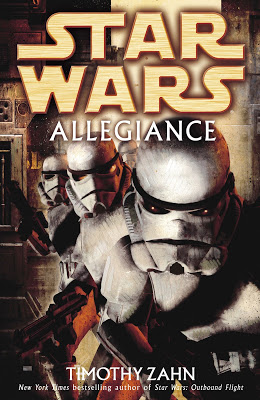
Keen-eyed readers will no doubt see one glaring thing about Outbound Flight: if nothing else, it’s a prequel to the very excellent Thrawn trilogy that began the post-Return of the Jedi canon all those years ago. Indeed, several of the major players of that trilogy are introduced in Flight‘s pages, which is probably a given when the writer of both is Timothy Zahn (a.k.a. the author most-cited by fans as being the best at the Star Wars EU).

Part of what makes Outbound Flight rock more than a Chilean landslide is its almost complete divorce from every other element of Star Wars canon of the period. Yes, Obi-Wan and a still-

Seriously, doesn't that just look awesome?
Seriously, doesn’t that just look awesome?

neophyte Anakin appear, but are quickly dispatched from the action by Palpatine and allow the story’s cast of characters to develop without the aid of movie protagonists. There’s a distinctly alien feel to the story in comparison to other EU books, and not just coz the Chiss are involved. The actual Outbound Flight ship is alone, with a bunch of new characters who may not all like each other. They’re being led by an unhinged Jedi Master. The safety net of Coruscant and the Republic is very, very far away, with the great yawning maw of the unknown staring them in the face.

As well as having Zahn’s usual flare for character and descriptive writing, Flight is a fantastic premise and story all on its own.

.

5 – Allegiance/Choices of One

WHAT THE HELL IS IT?

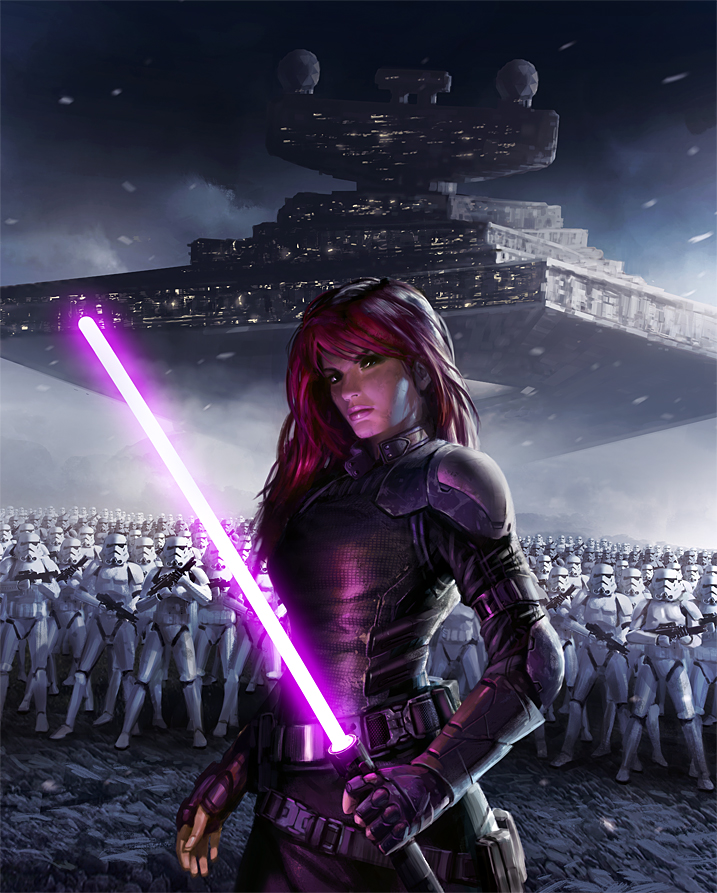
AllegianceA pair of novels set just after the end of A New Hope, featuring the chronological first appearance of Mara Jade and a bunch of stormtroopers who decide life under Imperial rule ain’t all it’s cracked up to be. The former hunts Luke Skywalker, the latter set off to become the stormtrooper Justice League (no, seriously).


WHY SHOULD WE HAVE KEPT IT?

First of all, if that premise don’t grab you, nothing will.

Join the Empire, indeed.

The stormtroopers calling themselves the Hand of Judgment are awesome, well-rounded and distinct. The idea of them taking vigilante justice into their own hands and kicking Imperial ass is awesome. Not much more I can say on that, except that it mildly comes across as a “screw-you” to George Lucas’s Clones ideas.

Mara Jade, on the other Hand (a pun for fellow Star Wars nerds), is too good not to have somewhere in the upcoming movies. I don’tchoicesofone care that she’s technically no longer canon anymore. She was awesome right up until Legacy of the Force dropped a bridge on her, and I want her back. Even if she’s not Luke Skywalker’s wife, she’s a damn good character in her own right. Who needs a character like Princess Leia when you’ve got a strong feminist with red hair and a purple lightsaber who’ll slice you for crossing her?

On the less subjective side, both books – and Allegiance especially – do a lot to fill in some gaps between A New Hope and The Empire Strikes Back. We see how Vader learns about Luke, how Luke learns about the Force, and how Han continues to be a lovable jerk. So that’s always nice.

.

BONUS – Kyle Katarn

WHO THE HELL IS HE?

If Star Wars ever had an equivalent of Chuck Norris, Vin Diesel and a grizzly bear, it was Kyle Katarn.

223505-119461-kyle-katarn
Awww yeah.

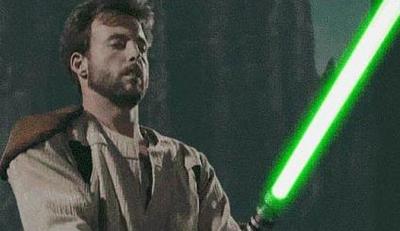
Former Imperial agent turned freelancer turned Jedi, Kyle debuted in a game called Dark Forces back in the days when 3D gameplay looked more like paddle-pop puppets shooting cellophane at you. He moved through several games after that, primarily the awesome Jedi Knight series, and made a few appearances in latter-day EU books like The Unifying Force and Fury.

Let it not be understated that Kyle is a badass. He’s killed more Dark Jedi than most main characters across all six films, carries a lightsaber and pistol, owns a kickass starship, and is able to be morally grey (at times channeling Dirty Harry) without succumbing to the Dark Side (unless you pick that ending, in which case, man is he evil).

Rated M for Manly.
Rated M for Manly.

WHY SHOULD WE HAVE KEPT HIM?

Kyle_KatarnI want to make it clear we should’ve kept Kyle, not necessarily the stories he was part of. Yes, Dark Forces and the Jedi Knight games were awesome, but by the time of the latter’s third instalment Jedi Academy Kyle was experiencing a little badass decay. Plus, does anyone really want to relive that battle with a ghost in a space pyramid?

Book-wise, Kyle was little more than a footnote except for a story called Fury, where he had a substantial appearance that almost killed him off forever. So, y’know, best forgotten.

The character’s dynamic, three-dimensional and fleshed out amongst most of the Star Wars EU’s cardboard cutout Jedi. True, that doesn’t come across so well in the books as it does in the games, but those who’ve experienced the latter can apply it to the former. The truth is Kyle is one of the best characters Star Wars ever produced, and while many may disagree with me since he is, as compared above, a bit of a Chuck Norris too-much-badass figure, I think he’s fantastic. Hell, give us a trilogy of films just focusing on him and it’d be gravy.

.

As I said at the top, this is hardly an exhaustive list. I’m sure there’s plenty more that could be added, and I’m not so socially-deprived that I’ve experienced every single piece of story the Star Wars canon had to offer. Well, I mean, I am socially-deprived, but not that socially-deprived.

I look forward to seeing what J.J. Abrams, Lawrence Kasdan and everyone else has to offer with Episode VII, but it’s always good to remember what came before. If it was something bad, just have a drink afterwards to forget it again.

Dark Avengers

One of the most daring – and, in the end, disastrous – moves that the pre-NOW Marvel universe made was the decision to knock most of its heroes out for a year. This wasn’t because they’d all appeared to die, or been captured by aliens who needed pointers on the finer aspects of table tennis. It was because the world hated them, in the wake of a supreme cock-up that saw many die and the world fall to its knees during the super-event clusterfluff that was Secret Invasion.

In the aftermath of the Skrull invasion, and the perceived failure of the Avengers (and Tony Stark in particular) to keep everyone safe, America at large rejected its star-spangled saviours in favour of the real hero of that conflict. Unfortunately for America, that hero was Norman Osborn. You may know him better as the Green Goblin – yes, that Green Goblin.

Osborn manipulated the Skrull situation to his advantage by appearing to find a weakness in their defences and exploiting it, killing the Skrull queen and saving Earth for another week. The President appointed him the head of security for the US, giving him the approval to run his own team of Avengers with little to no judicial oversight. Unfortunately for America (again), that Avengers team was composed of a bunch of supervillains masquerading as heroes. They were led by Osborn himself in the guise of Iron Patriot, a flag-painted armour “screw-you” to both Iron Man and the recently-deceased Captain America.

That’s where we find ourselves when Dark Avengers opens. See, aren’t I nice for saving you a trip to Wikipedia?

dark avengers 1

I’ve oft-referenced Dark Avengers as the defining villain protagonist superhero book a few times on this site, so I figure it’s high time I actually explain why. I know a lot of people will disagree with me, and quite a few more actually view the book with disdain especially in comparison to contemporary efforts at making villains and extremely grey anti-heroes the center of the action. Fair enough, Dark Avengers ain’t for everybody. As a book penned by Brian Bendis, it’s almost a given that it’ll prove divisive. God knows I’ve thrown stones in that direction often enough.

The thing is, Dark Avengers may well be my favourite Brian Bendis book. At least, it becomes my favourite if you disregard most of the plot and the rest of the Marvel Universe at large. So what I’m saying is it’s a good book if you ignore three quarters of it.

dark avengers 3

The spine of the story comes from my summary above; Norman Osborn leads an Avengers team that nicks inspiration from the Thunderbolts by being comprised of villains. Obviously bad things happen to them and lots of other people, and there’s the occasional hijacking of the story’s main arc whenever a bigger character’s story gets in the way (with Iron Man and his World’s Most Wanted being the biggest source of that).

It’s damn hard to write an anti-hero story with a character we can empathise with. Sympathetic protagonism is key to a well-written story; if you hate your hero, why bother watching? Granted, there’s the flipside of the coin where a villainous protagonist exists to fail prolifically and allow us to experience the kind of schadenfreude we reserve for falling trapeze artists and people forced to eat dog food.

dark avengers 2Depending on how you look at it, Dark Avengers had to balance between both those poles. It needed a story good enough to keep us invested in its main characters, but it also had to keep them as the mostly reprehensible, outright evil forces they’d been written as since time immemorial so as to avoid disingenuous characterisations. That’s one tough act to pull, and if you ignore the actual plot of the book then Dark Avengers pulls that off with precision.

What do I mean by excising the plot? Well, the actual “adventures” – for lack of a better word – that the Dark Avengers embark on are mostly either boring, ridiculous or both. The initial conflict involving Dr. Doom and Morgana le Fay is meaningless to those unfamiliar with either character or jarring to those of us expecting more of the US security-based narrative the premise offered at its opening. The subsequent battle with Molecule Man in the second story arc is more of the same. Things only really come together during the book’s third act, tying directly into Siege and its aftermath, so if nothing else it’s worth it to give that event title a bit more context.

Instead of the plot, we focus on the characters. Each of the Dark Avengers – including completely morally bankrupt assholes like Bullseye – gets a turn for fleshing out and characterisation. Yes, they’re still evil (or at best anti-heroic, as in the case of Ares and Moonstone), but they’re given extra facets. They’re made into people rather than mask-wearing mass murderers. They’ve got hopes and dreams, however lethal and despicable some might be. A couple are even a little repentant of their villainous modus operandi, though that’s the exception rather than the rule.

When Brian Bendis finds a great property that suits his talents, he can literally make magic. I hold up his Daredevil as the quintessential run of the character, expertly capturing tone, character and dialogue whilst never sacrificing innovation or improvement, and when it comes to the more grounded character moments of Dark Avengers it’s like watching a much better, more engaged and well-written version of Seinfeld or Mad Men. High praise, yes, and some may not agree, but it really is that damn good. The breakfast scenes between characters – something I wouldn’t expect anyone to write with characters like Venom and the Sentry at the table – are absolute gold, particularly because it’s a slice-of-life element so jarringly juxtaposed against both the evil protagonists and the larger-than-life setting that is the Marvel universe.

dark avengers 4

The main reason this succeeds is the dialogue. Bendis has a voice for everyone, and everyone’s voice is consistent through Bendis. As with my Superior Foes review, I’m not sure if the way the characters are written here jives with how they were written decades ago, but who cares? As its own microcosm Dark Avengers has some truly excellent dialogue, character banter, one-liners and introspective thought bubbles for each of its characters in a way that makes them feel distinct and play off each other well. Character dynamics are front and centre when the plot’s ignored, something to the book’s credit, and writing these villains in a way that actually makes me sympathise with a few (on occasion) is something no other book has been able to pull off to a similar degree since. The brevitous run of 16 issues compared to other Avengers titles also aids both character arcs being tight and actions having distinct and quickly-recognisable consequences, rather than having a plot point appear to be fulfilled seven years down the track.

dark avengers 5

Though as I said, the actual plot until the 2/3 mark is mostly forgettable. There are some cool visuals throughout courtesy of a rotating cadre of artists, predominantly Mike Deodato, but on the whole the “action” scenes aren’t the main Dark Avengers draw card. Hell, the latter tie-in to Siege isn’t even the major reason to read it, though as I mentioned it’s definitely worth checking out on its own merits. No, the strength of Dark Avengers lies in making villain protagonists sympathetic if not likeable, and through having them act as people – particularly in those aforementioned breakfast scenes – rather than antagonistic ciphers. Coming at a time when most cape-and-cowl fare was facing a bit of a slump through lack of good direction and a massive case of event fatigue, the book stood out as something different. Existing in an age where moral grey is the colour of choice for our colourful heroes, the book stands out as something lasting.

Brian Bendis divides fan groups like almost no other writer, being at once an excellent handler of maturer content and also a complete and utter hack when given the wrong tools to work with. Dark Avengers is firmly in the former category, and while others might disagree with me as to the success or failure of the text in terms of its content and character, I still point to it as the main villain protagonist yardstick.

That is, I’ll point to it until we get a Joker series written by Grant Morrison. Because no amount of anti-heroes in the world could possibly beat Grant Morrison writer a Joker series.

 
dark avengers cover

PUBLISHER: MARVEL COMICS


The Superior Foes of Spider-Man: Getting the Band Back Together

Superhero books can be funny, dammit.

You know how much I’ve read in cape-and-cowl-land recently that’s just so dour, bleak and straight-faced when it’s not being entirely disappointing? Might be the odd quip here and there, maybe an ape of a line Joss Whedon once wrote with funnier context, but on the whole it just gets so serious, you guys.

To that end, I loved the absolute basmeezus out of The Superior Foes of Spider-Man. Because goddamn is it funny.

Ok, no more italics. You get the emphasis.

I’m not preambling much more than has already been done: Superior Foes was awesome. It’s a refreshing breath of brevity that you should all go out and read now. You should doubly read it if you’re into villain protagonist stories, coz this might be the best since my personally-lauded favourite, Dark Avengers.

Yes, it is that good.

spider foes 3

Superior Foes borrows heavily from an excellent episode of Star Trek: The Next Generation called “Lower Decks”. Both narratives focus on lower-level members of both casts, with Starfleet cadets far beneath the command-level protagonists in the latter, and washed-up wannabe villains who are very poor at their jobs in the former.

After realising they suck at fighting the new and improved Spider-Man, a team of nemeses led by Aussie criminal Boomerang (not to be confused with Aussie criminal and Flash villain Captain Boomerang, coz he’s a Captain, see) set off to make a name for themselves as the titular Superior Foes. Problem is, every Foe hates each other almost as much as they hate one’s favourite neighbourhood webslinger. This’d normally be the part where they eventually get over their individual animosities and gang up to splatter that spider. Instead, they’d rather just keep on hating each other.

Let me tell you, it is delicious to watch each supervillain try to screw the others over. Schadenfreude it may be, but I don’t care.

spider foes 1The team come across as less Superior Foes and more Whingy Kids Who Hate Each Other (though that’d be a much harder title to fit on a business card). The comedic value stems from shenanigans between the five main characters whilst trying to do actual villainous things, like robbing a convenience store or breaking into a hideout, with a distinct Road Runner/Wile E Coyote feel. Primary jerk-ass awarding goes to principle character Boomerang, who manages to pull nice fast ones on the reader by appearing to slowly reform himself through character development when in reality he’s still a jerk-ass. Old habits, right?

Whether you engage enough with the anti-heroic (at best) protagonists will rely, at least in part, on your familiarity with Marvel canon. Both the villains themselves and a vast supporting cast are plumbed from the D-List depths of Marvel’s merry misfits, though the book does a great job at both brevitous introductions and fitting both categories into context. Coming from someone who only knew one character (being Shocker) before reading this story, Superior Foes does a masterful job of providing reasons to care for these characters most of us haven’t met in a remarkably short space of time. That’s a feat in and of itself.

spider foes 4Also, sing hallelujah and pickpocket each other in thanks – the book barely relies on the Superior grumpyface it’s named after. I don’t think Spidey-Ock himself actually makes an appearance besides a brief flashback at the start and the odd infrequent mention from characters throughout. I was worried this’d kinda be like the current runs of Nightwing and Batgirl, where satellite characters with their own interesting narratives exist mainly to be roped into a story for the bigger heroes and villains that follow on from. Besides, I need more Superior Spidey like I need a kidney infection.

Tying into Nick Spencer’s excellent story is artwork by Steve Lieber. It’s exactly the kind of stripped-down (I’d almost go so far as to say ‘acoustic’, but that’s not a comicky word) affair the book needs, with pretty illustrations but not so pretty that they detract attention from the story. Kinda reminds me of David Aja of Hawkeye fame a little bit, which is never a bad comparison. This isn’t a narrative requiring a lot of visual depth or intricacy, and Lieber does the best work possible for said amount of deep-ness. At times the maskless facial expressions of characters can look a bit samey, and having illustrations not reliant on lots of detail might leave you a little bored at times, but on the whole it does the job well.

Scripting is excellent. As I said, the only character I was even partly familiar with before this book was Shocker, and I remember him being a whole lot more psychotic and crazy than the reserved, human character the book presents (or spider foes 2maybe I’m mixing him up with Electro again). I mention this because I’m not sure if the protagonists were like this before Spencer got his hands on them, but they’re definitely written here in a way that feels deeply entrenched in a clear writerly vision of feel and characterisation. It’s pretty obvious Spencer’s taken a lot of time to flesh them out properly and make their alternating personalities work effortlessly for character dynamics, and this is done without any of the protagonists feeling one-note or token (though Beetle could probably do with a bit more variance when Volume 2 rolls around – there’s only so much the social-media-addicted, devil-may-care attitude works consistently).

At the end of all that rambling, you’ve got a book that’s funny, warm (when needed) and a welcome relief from the endless cavalcade of cape-fare that’s deep, dark and depressing. The Superior Foes of Spider-Man was excellent almost without trying, and a damn sight better than the mothership book it orbits.

Now that I’ve rediscovered what it means to have fun again, let me go smell some daisies before the gritty storytelling returns.

spider foes cover

PUBLISHER: MARVEL COMICS

STORY: 5/5

ARTWORK: 3.5/5

DIALOGUE: 4.5/5

OVERALL: 13/15

BEST QUOTE: “Not many women out there can resist the old Myers charm. Not with my Damon-esque boyish looks, Jackman-esque physique and Fassbender-esque…fashion sense.” – Boomerang

Pretty Deadly, Volume 1

Ongoing readers of my weekly dalliances into the world of faux-critiquing will know I like stories where not everything is spelled out. Writers like Jonathan Hickman and Grant Morrison pen stories that leave gaps in connecting story threads or ideas, inviting readers to join the dots themselves. Look at elements in Batman Incorporated: the frenetic pacing of panels, lack of much expository dialogue and brief mentions of elements that are linked (like the Ourobouros and Leviathan) prompted readers to realise things themselves without too much hand-holding. It’s an appealing style that I like when reading stories with depth and a lot of moving parts.

It’s also a style that can completely hamstring a book when there’s not enough hand-holding occurring. Giving us bits and pieces without enough context to solve the puzzles or realise settings ourselves isn’t enough to keep a reader’s interest. This is something that, until the last issue of the book, I was fairly sure Pretty Deadly would completely succumb to.

pretty deadly 5

The gothic fantasy by way of a Sergio Leone film tells the story of Death’s daughter, Ginny, who is a bounty hunter-type figure hunting down Sissy, the pre-teen unassuming spawn of some devil blood ritual shenanigans. Assisting (or impeding) Ginny’s quest is Fox the Mason, a big blindfolded dude who’s secretly protecting the devil spawn child in question, Johnny, a womanising bounty hunter assisted by a talking raven called Molly, and Big Alice, an albino hunter who might also be something supernatural and who turns into a cloud of butterflies when killed. Because, don’t we all?

Now, everything I’ve just put in the description above sounds intriguing, right? It’s especially so when you keep in mind the writer is Kelly Sue DeConnick – penwoman of the superb Captain Marvel books – and the artist is Emma Rios – whose weird, off-kilter artwork didn’t work so much for In Pursuit of Flight but is perfectly suited for a gothic fantasy western where Death has a head made from an armadillo’s skull.

What prevents the book from an immediate gold-starring is a distinct lack of context. From the off, very little is explained about who our protagonists are, what they’re after, how they know each other and why the reader should care. pretty deadly 3Granted, the impetus for Ginny’s hunt is explained through an overly-expositional kind of Western slam poetry delivered by Fox and Sissy to a crowd of rapt listeners, but apart from that there’s so little explanation for anything going on that I couldn’t help but feel adrift in a flood of scenes and dialogue. There’s no connective tissue; is Fox friends with Ginny, or do they hate each other? Who’s the woman Death keeps imprisoned in his subterranean hell? Why can’t she escape? Why does Alice hate Ginny if they both work for Death? Is the story Fox and Sissy tell at the beginning literally an exposition on Ginny’s origin, or are elements exaggerated to make it a story rather than a recounting? What’s the debt Fox owes Sarah, the lady who harbours him and Sissy when Death’s agents start chasing them?

As I said, I can dig stories where not everything is handed to the reader on a platter, but a little something to ground us in the story’s goings-on would’ve been nice. There’s far too much emphasis on past events and lack of explanation for things to be hand-waved as unimportant – like that debt Fox owes, lingered on for too long to be convenient to the plot but not long enough to explain its importance – and most of it’s the kind of stuff that’s necessary for even the most elementary understanding of events. A bit more sinew might’ve made the skeleton move a bit less awkwardly, and though there is (some) explanation of things by story’s end I still feel that DeConnick could’ve given us just a little bit more. I considered putting the book down halfway through, which is never a good sign in itself, but when it’s written by an author I really enjoy and respect that makes it a double Red Alert.

pretty deadly 1

The other big problem Pretty Deadly deals with is a lack of distinct protagonist. No-one – literally – is given enough development or time in the sun to stand out as the principle character, or even one of an ensemble of them. The closest we’d probably get is Sissy, but considering she spends most of the story either cowering in fear or, y’know, being a kid, it makes it as hard to take her as a protagonist as it was to handle Anakin Skywalker in the Star Wars prequels. Ginny certainly gets a fair amount of attention both on-panel and in the story’s myth arc, but isn’t fleshed out or followed nearly enough to be the closest thing we have to a hero. Similarly, Fox takes centre stage quite a bit, but a plot development towards the book’s end casts doubt on his long-term involvement with the series. Wannabe desperado Johnny might be it, but after the opening chapters his presence kinda fades into the background a bit. I guess maybe we should call the arid desert landscape itself the protagonist, since it’s considerably more present and fleshed than the other inhabitants that occupy its flat and well-tramped surface.

pretty deadly 2

Both these issues lead me to conclude Pretty Deadly should be read the same way one reads an H.P. Lovecraft story: you’re here for the setting, the bad guy, and the tone. The protagonist of most stories in the Cthulhu Mythos is secondary to either Cthulhu himself (or whichever otherworldly abomination is present) or the dark, gothic horror atmosphere the story pumps into your brain like reverse-dopamine. You read a story to get the sh*t shocked from you, not to follow the ongoing struggle of a perfectly sane man who slowly slips into madness at the first sign of rats in the walls. That’s not a bad way to write a story, but it’s best to declare those intentions up front and not lead readers on expecting some depth to the characters when little is present.

Linked to this latter point is the dialogue. As I said, there’s little connective tissue between events on-page and what’s come before, so dialogue is informed by this lack of information. Characters speak to each other without exposition on past events, which is a double-edged sword; they don’t sound like unreal robots offering plot information the other character knows but the reader doesn’t, but they do sound like people conversing in a manner of shared understanding. The Western setting also means many characters speak in clipped sentences, lacking words, ending letters and proper sentence structure in places. I’m a big fan of Western dialogue, so while subjectively I lapped that up (as much as one can without full in-story context) objectively you may find it difficult to get into. Put it this way – if you made it through the “Sloosha’s Hollow” chapter of Cloud Atlas without shoving the book in a blender, you’ll dig this.

So I guess you’d call Pretty Deadly a predominantly atmospheric piece. As I said that’s not a bad thing in and of itself but the opening premise of the story, and constant switching between characters who aren’t as shallow as a teaspoon but lack the depth of a glass of water, lends itself to a narrative significantly different from the one in your hands.

pretty deadly 4

Fortunately, the one thing that works gangbusters for that different narrative is the artwork. You may recall in my review of DeConnick’s previous Captain Marvel books that I was not a fan of Emma Rios’s artwork; I opine hers and fellow artists Dexter Soy and Filipe Andrade’s work would’ve functioned better in a surreal, off-kilter story that better matches their particular style of art. And lo, have I been proven right! Rios is in top form on Pretty Deadly, her bleeding together of background colour and character details evoking the harsh pencils and expressive stylings of Alex Maleev and Greg Capullo. The costumes not only look awesome but also provide plenty of cosplay fuel. The darker, gothic elements – particularly Death and all his friends – have inspired designs, colouring and form. If nothing else, Pretty Deadly is a pretty pretty book.

Ugh. Enough with the puns, Christopher.

At the end of the day I can offer Pretty Deadly as a recommendation, and it certainly lives up to claimants who trumpet it being different and structurally daring. As much as I ended up enjoying it, I do append a massive asterisk to the front cover for any planning to dive in: be aware of the book you’re about to read. This is not a superhero comic, nor is it a straight Western. It is not The Sandman, nor is it The Walking Dead. It’s a different animal to almost anything I’ve ever read, for better and worse, and you owe it to yourself for the experience alone.

PrettyDeadly_Vol1-1

PUBLISHER: IMAGE COMICS

STORY: 3/5

ARTWORK: 5/5

DIALOGUE: 3/5

OVERALL: 11/15

BEST QUOTE: “If you done been wronged, say her name, sing this song – Ginny rides for you on the wind, my child. Death rides on the wind.” – Sissy

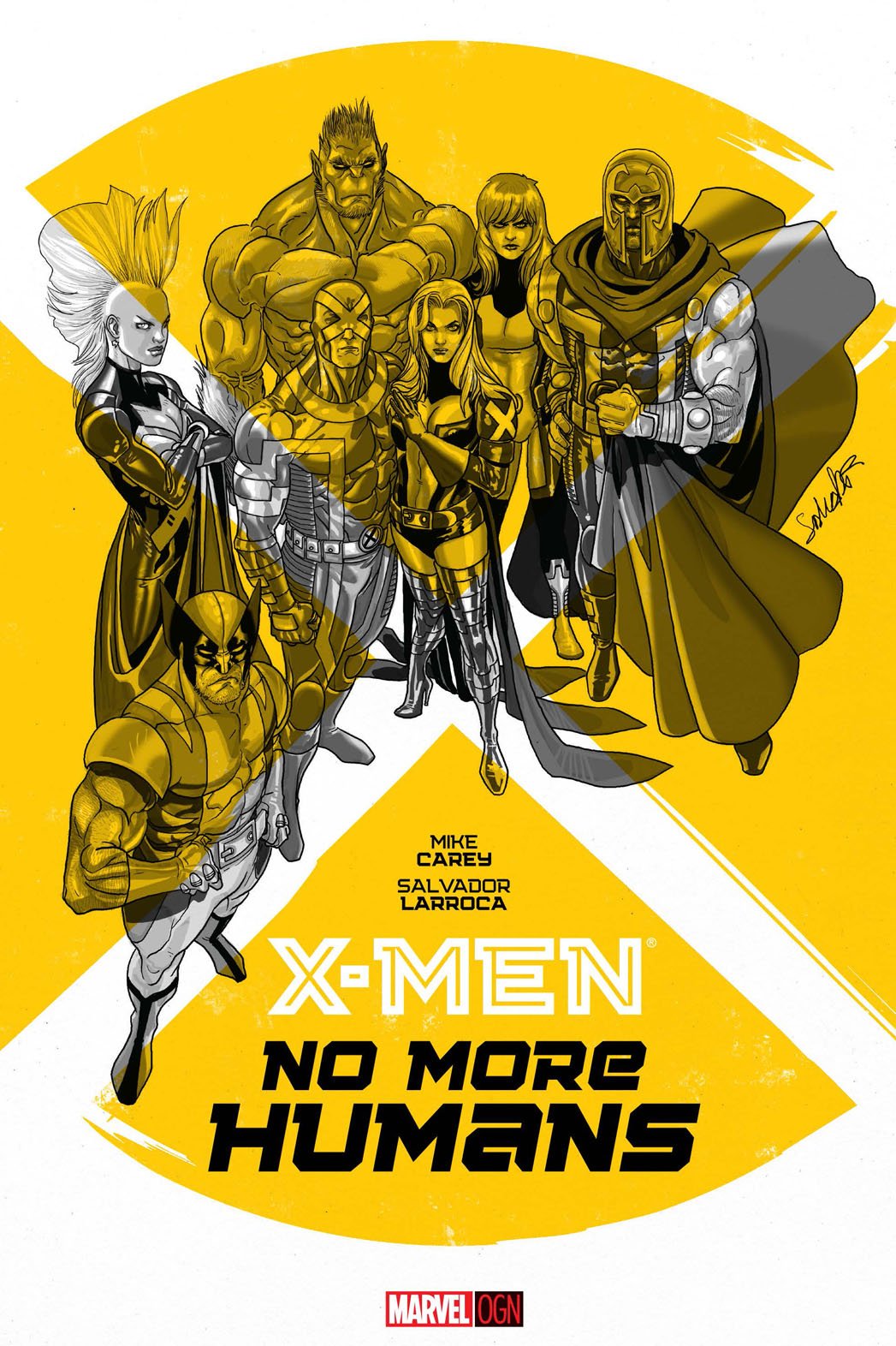
X-Men: No More Humans

“We call it a day, then. Back off, and pretend this never happened.”

– Wolverine


The above quote, from the penultimate page of X-Men: No More Humans, says everything I could possibly say in a whole review, succinctly boiled down to one indelible sentence.

If there ever were a superhero franchise hit hard by too many event titles, it’s the X-Men. They got bitch-slapped by the clusterfluffs of Avengers vs. X-Men, SchismAge of Ultron and Battle of the Atom. (the latter of which, despite having not read myself, has been described to me as worse than broken needle acupuncture.) It’s just never been the same for them since. At some point during that cavalcade of status quo shifts, maybe something broke. A gear lever snapped from its box, or a cog fell out of the wrong place. Because ever since then, I feel it’s just misstepped more often than a caffeine addict on a tightrope.

Sure, we got the anti-hero-but-maybe-villain-centred Uncanny X-Men as a breath of fresh, salty, Bendis-penned air. We were also slapped with its sister series All-New X-Men which, despite the pleas of several readers who claim that “No, really, it got better later!”, I have no interest in returning to unless accompanied by a litre bottle of Captain Morgan and a hunting knife. And don’t get me started on the plain ol’ mediocrities of the new Uncanny X-Force and A + X. Point is, the X-Men have kind of gone the way that the latter-day Justice League books have traveled; once great, going nowhere, and probably only worth purchasing if your canary’s cage needs a poop-liner.

no more humans 2

So consider the onus No More Humans had before it even left the gate. Penned by Mike Carey – sterling writer of The Unwritten – and illustrated by Salvador Larroca – artist behind Matt Fraction’s landmark Invincible Iron Man run. Set within current canon, mostly disregarding the stupider elements of Brian Bendis’s current “X-Men from the past” crap, and with a story that features a role-reversal of the impactful “no more mutants” premise that ended House of M almost a decade ago. For bonus points, it’s a story told from start-to-finish in an OGN (Original Graphic Novel) format, meaning the flow isn’t interrupted every twenty pages for a story collected from half-a-dozen single issues.

The ingredients were all there for something truly excellent, that could make me give a toss about Marvel’s mutantkind again. Instead, to use a horrible pun, No More Humans tells me I should read “no more X-Men” for the foreseeable future.

Yeah, I just read that again. Wasn’t any less lame the second time.

The story presents a world suddenly devoid of humans, leaving only mutants behind. There’s a distinct influence from FlashForward, of all things, in the opening scenes where planes being flown by humans, cars being driven by humans and buildings being inhabited by humans all happen to crash, pile-up and become abandoned, respectively.

no more humans 1

I admit, the early pages had me intrigued; for the longest time the X-Men have dealt with oppression at the hands of those homo sapiens idiots, so why not see if they can claim the Earth as their own? We could be faced with a narrative challenging the core ideas behind natural selection, survival of the fittest, and see a changed world inherited by those whom we’ve marginalised for decades. Ideologies could fracture and give rise to nations born from the several hundred people left standing on our soil. Carey and Larroca had the chance to tell a story that fundamentally interrogates the concepts behind both the X-Men and real-world assumed superiority of humans as the dominant species.

Notice the operative word at the beginning of that last sentence is “had”. Instead, we have a teaspoon-shallow plot about the son of Wolverine and Mystique (maybe? Still fuzzy on that count) removing the humans so he can turn the world into a multiversal way-station for mutants from other universes. Also there’s a lot of fighting, because superhero comics, amirite?

No More Humans is not just a bad book, it’s a disappointing one. The premise is so rich with narrative potential that I was dubious no more humans 3the idea would hold water in the Spartan space of a 160 page hardcover. It’s the kind of idea I’d love to have seen fully unpacked over a few books, or maybe an ongoing in a separate universe like what the Ultimates Comics line does. As it is, not even half of the ideas I’ve just opined are even hinted at, let along explored in any great detail, and we’re more concerned with a bunch of techno-babble, a zombie scientist and the aforementioned Wolvie-Mystie son getting aggro. It’s kind of like opening up Giorgio Agamben’s State of Exception and finding a bunch of mad libs instead of the dense material you were hoping for.

Like Avengers: Endless Wartime before it, the story doesn’t make anything good out of the OGN format. As is, the narrative could’ve managed to be told in 2 single issues. It’s got less of a film-in-a-book feel than what Endless Wartime had, but in exchange it just meanders and doesn’t delve as deeply as it could’ve.

The shallow execution isn’t helped by dialogue that’s just plain when it’s not just plain bad; the best quote at the bottom was literally the only slightly-funny quip I read that didn’t make my palm slap my forehead. This doesn’t really feel like it’s Mike Carey’s writing at all, come to think of it. His work on The Unwritten is fantastic, and characters have distinct voices with his words put to page. Everyone here feels flimsy, ill-defined and overly-reliant on character work that other writers have done better. Wolverine growls, Cyclops sounds prudish, Beast is the resident tech guy and speaks in that lingo, etc. Nothing remarkable, and especially disappointing coming from a writer of Carey’s caliber.

no more humans 4

To add insult to injury, Salvador Larroca’s artwork is equally tepid. Let me just state unequivocably that his Iron Man work was bloody gorgeous; rich tones, great use of shadows, facial expressions masterfully executed, and colours leaping off the page when needed to. His work on No More Humans almost feels like something a computerised artwork production program might make, and is a far cry from the expressive work I’ve seen previously. Colours are just there. Character faces are bland, uninteresting and uninspired. Action scenes are overly cluttered. Everyone’s either frowning, grimacing or (in the main villain’s case) creepy smiling. It’s standard, unengaging and lacklustre.

But, dear readers, all these previously mentioned faults pale in comparison to the colossal one No More Humans makes at its conclusion. At this point I shall issue a SPOILER WARNING for anyone brave enough to have made it this far through my vitriolic deconstruction.

Remember that quote at the start of this review? That seems to have been the unconsciously-held mission statement that Carey and Larroca subscribed to when writing this book. Why I say so? Because, during the final overly-complicated dust-up between our X-Heroes and X-Villains, the ultimate deus ex machina is played.

no more humans 5

The Phoenix shows up. Yes, that Phoenix, the one that made Jean Grey go all kooky and homicidal. Oh wait, sorry, it’s a Phoenix from another universe. And it literally retcons everything that’s happened in the story so far, restores the humans to the Earth and returns each mutant from another universe to their home. There’s also a point explicitly made by the characters that, since the humans will be restored to the physical place they were when they were taken, those thousands who were in planes that have fallen from the sky or driving cars that have crashed will appear in mid-air or inside twenty-car pile-ups, respectively. What little impact this may have had is removed when the Phoenix basically says “Pffft, please. The laws of physics are my bitch,” right before restoring all to life with no ill effects.

Yeah, I’m with you Wolverine. Let’s just pretend this story never happened, because clearly the writer, the artist and the editorial team are intent on doing so.

no more humans cover

PUBLISHER: MARVEL COMICS

STORY: 1.5/5

ARTWORK: 2.5/5

DIALOGUE: 2/5

OVERALL: 6/15

BEST QUOTE: “Let me surf this non-digital interface and I’ll retrieve that information for you before you can recite the complete works of Shakespeare.” – Beast

Batman – Zero Year, Book 1: Secret City

If there’s one thing the current cinematic canon of both DC and Marvel’s movie ‘verses have in abundance, it’s origin stories. Seriously, I think I’ve seen the on-screen genesis of Spider-Man more times than I’ve read my favourite novel. Considering that novel’s spine looks like vertical bars of television static, that’s saying a lot.

Comics are also fond of origin stories, and not really for the reasons one would assume. Nine times out of ten, it’s to rope in the newbies with old stories updated to modern settings; you see Andrew Garfield put on the leotard, you want to read some Spider-Man. But comics canon is long, and confusing, and full of inconsistencies, and completely alienating to non-readers! What do you do? Put out an updated origin story, guaranteed to sell to new folk and piss off the oldies, and watch the money and vitriol flow in, respectively.

This practice enters play with things like Marvel’s overly mediocre Season One sometimes-an-origin-but-also-a-story series, and I can only assume DC’s upcoming Secret Origins monthly series will follow a similar path. You guys do know there’s such a thing as Wikipedia, right? Those overly compendious articles on famous superheroes, detailing their complete journey from rags to roof-hopping, aren’t there for giggles.

As I said, nine out of ten rebooted origins are the older stories in newer digs. But then you hit the tenth book, and it not only provides an interesting alternative to the origin story you grew up with, it also feels like an actual story told for the sake of artistic integrity that just happens to rake in the big bucks as a byproduct. If the first book of Zero Year is any indication, Scott Snyder’s retooling of Batman’s beginnings is most definitely the tenth book.

zero year 1

Actually, thinking closely about it, calling Zero Year an origin story is slightly unfair. The plot’s less concerned with how Bruce gets into the actual suit than it is with what he does with it; the story shares similarities with the first film in Christopher Nolan’s Dark Knight trilogy, featuring a lot of Bruce Wayne before the cape comes out, but the journey is focused on the impact Bruce’s return from the dead has on those around him rather than Bruce himself.

If anything the “origin” part of the narrative is fairly condensed compared to other works like Year One; on the subject of that work, Snyder seems to be actively distancing himself from a straight-up reinterpretation of Frank Miller’s classic opus, which can only work to his credit. You could almost slot Zero Year between Batman’s birth and subsequent first meeting with Jim Gordon and leave Year One reasonably intact, which will ensure diehard Miller fans don’t launch a crusade to torch Snyder’s home.

Once Bruce gets it in his head that the lawless, corrupt, terrorism-ridden city of Gotham needs a dude in a bat costume to sort things zero year 3out, we reach the grander plot. Y’see, if this tale belongs to anyone as a straight-out, traditional origin story, it’s actually the Riddler; Edward Nygma’s debut is a grand plan to throw the city off-balance (using a dude in a red hood who may or may not one day become the Joker). When that plan kicks into gear…well, not wishing to spoil, but the cliffhanger ending will probably leave you grasping at air until the conclusion arrives in October this year. At the very least you’ll probably shout “GODDAMMIT WHY DID YOU END IT THERE???

As yet another Scott Snyder/Greg Capullo tome, Zero Year continues the fine quality those books have exemplified for the past two-and-a-bit years. The story is tight, engaging and doesn’t lose focus. The artwork by Capullo and new addition Danny Miki is fantastic, articulate, layered and gorgeous. Dialogue is smart, though a little flat for new characters like Phillip Kane. The nods both to existing Bat-origin tales and others part of the mythos are cute, even if things like the splash-page that opens the book’s final chapter – meant to evoke the original cover of Detective Comics #27 – get a little too fanboylove-ish at times.

zero year 2

I do have one asterisk to append to my review of this otherwise great title: it shouldn’t have been in the main run. Batman’s present day story ends following Death of the Family and the subsequent death of Damian Wayne, leaving our hero broken and battered. It’s interesting to see how he’ll build himself back up from the twin guns of these tribulations…and then we get what is effectively a year’s worth of issues devoted to a flashback. This does somewhat disrupt the narrative flow of Snyder and Capullo’s run, even if it is an interesting concept. I mean, if all I’ve got to go on with present-day Batman is the stuff in Detective Comics and Batman: The Dark Knight…well, that doesn’t bode real well for those of us who like seeing a character, y’know, deal with grief, rather than brush it off with another villain uppercut.

I reckon Zero Year might’ve done better if released as its own series, a limited-run event that anyone can pick up. As it stands, not only using current Batman issues but touting Secret City as Volume 4 of a run makes it unlikely that those not already onboard withzero year 4 Snyder and Capullo probably won’t jump on here. If it were a straight origin story as detailed above, meant to snare newcomers to our fair and fertile lands of frolicking superheroes, then this’d be a shot in the kneecaps. As an origin-story-but-not-really, well, I guess it works a bit better. If nothing else I guess I’m annoyed that I haven’t seen Greg Capullo’s take on Stephanie Brown yet.

On the flip-side, I suppose, this does act as something of a breather arc after the harrowing, dark tales of Death of the Family and that business with the Owls. Take Zero Year as an entertaining intermission in Snyder’s landmark run. You’ve just sat through The Empire Strikes Back, so have fun with this lighter interlude before Return of the Jedstarts up.

zero year coverPUBLISHER: DC COMICS

STORY: 4/5

ARTWORK: 4.5/5

DIALOGUE: 4/5

OVERALL: 12.5/15

BEST QUOTE: “We come here, to Gotham, because it’s transformative, this place. We come here with our dreams and the city, it looks at us with its unblinking stone eye – an eye that sees all our faults, everything we’re afraid is true about ourselves – and it says ‘Try. I dare you.’ And then Gotham stares you down, doesn’t it? More than any other city in the world, it fights you, challenges you to give up, to leave, to fall down and die. But you don’t. No. Because deep down you know – you know – that if you stand up to the challenge, if you walk through the fire, you will emerge changed. Burned down to that self you knew was there all along, the one you came here to be. The hero.” – Bruce Wayne

[VS REVIEW] – Green Lantern: Dark Days vs. Justice League: Trinity War vs. Saga, Volume 3

I’m sure when the Proto-Germanic coined the word “hundrath”, they knew it’d one day become a term used to describe the number of entries a comic review site would eventually reach. Forward thinkers, they were.

One hundred posts in anything besides a genital region is an achievement, and I’d like to take a quick sec and just thank each and every person who’s ever stumbled across this site and taken a second to look on my works, ye mighty, and despair at the rambling digressions within.

THANK YOU.

You guys are pretty awesome. And pretty. Added bonus.

So, what then to mark this slightly auspicious occasion? I could tell you how great the latest Saga turned out to be, or how completely lousy Robert Venditti’s debut on Green Lantern ended up being in complete contrast. Maybe I could even throw in some incongruous nods to Trinity War, the latest poor event offering from DC in the leadup to their year-long(ish) Forever Evil thing. Actually, wait, that sounds like a good idea. Let’s go with that.

VS REVIEW TIME!!!

I’m not even gonna try finding a connecting theme between these three; it’s less a true vs. review in the spirit of my three past attempts, but more a roundup of stuff I’ve read recently that doesn’t bear going into a full-length review. I’ve shown my hand pretty early for each book’s quality, but let’s dive in anyway. It’s our hundredth postversary, after all! Anything goes! Why not wear a lampshade as a dress and quote William Blake poetry while you read? Whatever! Go for it!

.

STORY

Saga. Yup. It’s great. But you knew that already.

Our protagonists are still on the run, Prince Robot IV is still chasing them, and The Will is busy trying to get laid. Oversimplification, but trust me when I say writer Brian K. Vaughan finds a way to make that brief summary a hell of a lot more interesting in practice.

saga gl justice 2The reason Volume 3 won’t get a full review is because everything really great I could say about it has been said before. That’s not at all for one tenth of a picosecond suggesting that Volume 3 is bad, or not worth reading – it most certainly, absolutely and assuredly is not any of those things. Still a top-notch effort, still carrying a fantastic cast of characters with entertaining dynamics, adding pieces to a much larger story with each issue. It’s just the same praise as before, with different scenes and a few more characters. I won’t waste your time telling you what you already know, but Volume 3 is outstanding. Read it. Right now.

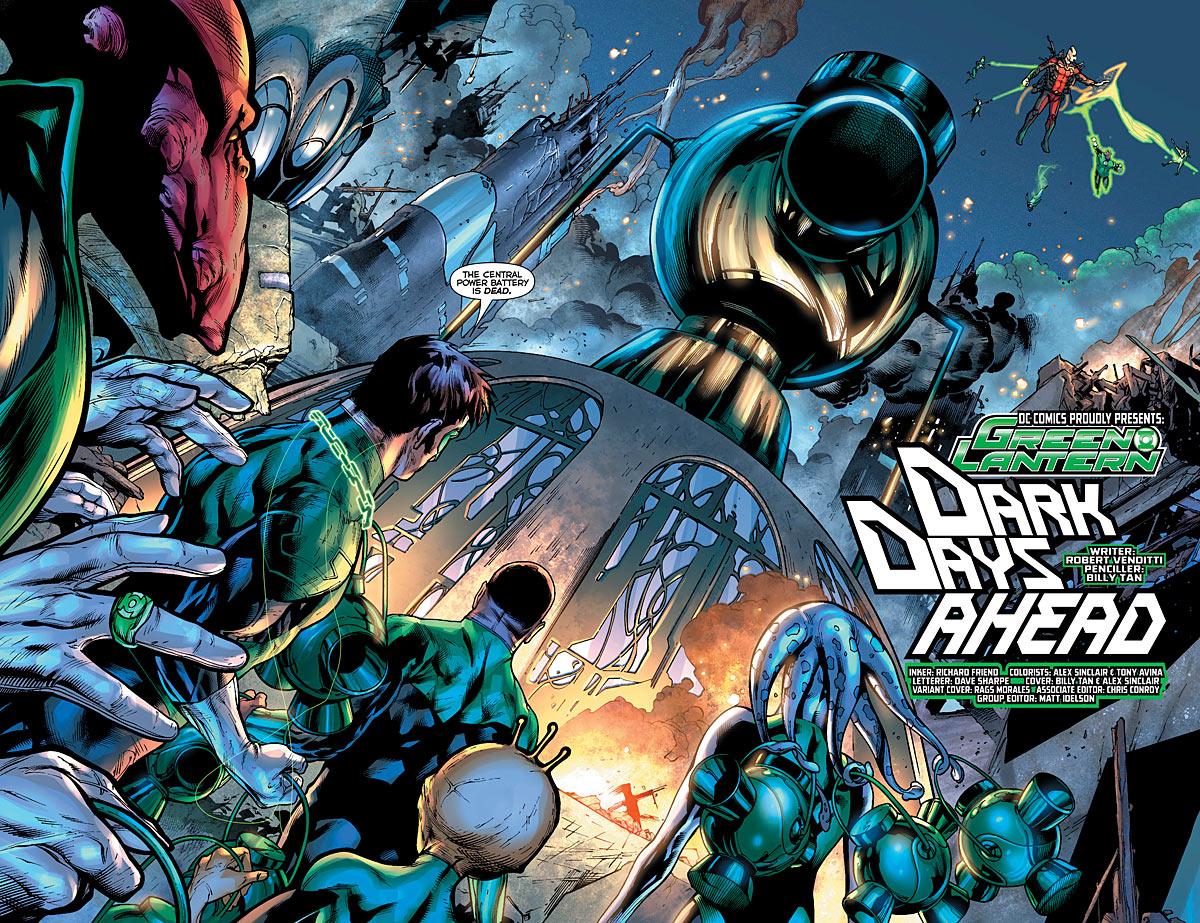
Green Lantern: Dark Days is the opposite end of the spectrum. It’s trash. Writer Robert Venditti had tremendously cavernous and fresh-smelling shoes to fill in the wake of Geoff Johns’s acclaimed run, and now those shoes smell like dead ferrets and failure. In a nutshell, the Green Lantern Corps is now led by its own maverick renegade Hal Jordan in the first of many status quo changes Venditti imposes in the first couple of issues. Only a few of these aid the story in any way, and the rest feel like subtle comments of “Huh, that Geoff Johns guy did a pretty great job when he was on this title and there is no way I’m gonna top that. Time to go in the opposite direction, all the way baby!”

saga gl justice 6

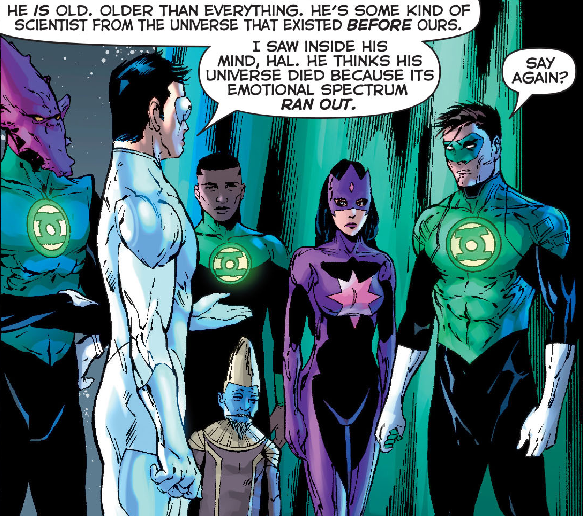
I have no problem with a creator leaving a thumbprint on a property – just look at the various iterations of Daredevil over the last decade for an example of how that can necessarily be a good thing – but Venditti adds things that I’m almost certain no-one asked for. A lacklustre villain from a parallel universe who’s also a giant? The revelation that the emotional spectrum is actually a reservoir that gets slowly depleted each time a Lantern ring gets used? Hal no longer being cocky, arrogant or lovable in any way, shape or form and breaking up with Carol Ferris?

picard facepalm

Somewhere inbetween both these books is Trinity War. A crossover between Justice League, Justice League Dark and Justice League of America (there’s enough League on display to displace the entirety of American football). At least, that’s what it’s touted as.

In broad terms, Superman kills another superhero; don’t worry, it’s a guy named Dr. Light, so it’s nobody you’ll care about if you’re not a long-term comics reader (or even if you are). As the Leagues of Legend scramble to uncover how that couldn’t possibly ever be something Superman would do without either coercion or some kind of mind control, a strange box shaped like a skull starts making superheroes do crazy things. It’s being hunted by Pandora, last seen giving the Flash a pep talk after he broke time and having incongruous and enigmatic dialogue with the Phantom Stranger. Apparently it holds the end of the world, or something.

saga gl justice 4

Trinity War‘s an event that’s more akin to a prologue than an event proper, and thus can’t really fall under the guidelines I set out a few weeks ago for how events can be awesome. A prologue to what? Another event called Forever Evil.

Sigh.

Point goes to Saga.

.

ARTWORK

This one’s actually a little harder to judge; all three books have sterling illustrations. Saga continues adding to what must by now surely be an immensely impressive portfolio for artist Fiona Staples, carrying the expressive, colourful awesomefest of volumes previous.

Green Lantern‘s saving grace is its pencils and colours, with artist Billy Tan giving a look distinctive enough to be carried on its own saga gl justice 5whilst still drawing inspiration from former Green Lantern mainstays like Ivan Reis and Ethan Van Sciver. Faces are a bit of a problem, with most character’s visages looking a little generic, and the main villain, Relic, doesn’t look particularly notable for his appearance (though that may have something to do with his lack of notability in the story’s context, too). On the whole, pretty decent work.

Trinity War is a mess. It’s par for the course not only on events but on books cultivating chapters from several ongoing series – since Trinity War is made up of issues from six different titles – for there to be some disparity in art styles. It is not, however, acceptable for that disparity to be so glaring that I’m hurled away from the visuals like I’m riding a catapult.

saga gl justice 3

Let’s give it to Saga, with a note that DC might want to shoot for some more visually-engaging villains and consistency of artwork, respectively, when each book comes back for round two.

.

DIALOGUE

saga gl justice 1Saga still has the crisp writing, excellent character dynamics and use of…actually, forget it, you’ve heard this before.

Green Lantern feels clunky, standard and by-the-numbers. There’s very little heart to…nah, you’ve heard that too.

And Trinity War…do I even need to bother?


Ok, so this crazy-ass random pancakes review seems to have gone off the rails more than it already was when it started. Why? Because I’m burnt out. I’m finding it harder and harder to give a crap about superhero comics, and even harder to be in DC’s corner when their books come out each week. Even Marvel, easily the better of the Big Two with the levity afforded their writers and editorial staff in comparison, is getting stale. Y’know I read Dark Days and Trinity War quite a while before I sat down to pretend to write something intelligent about both of them? Couldn’t be assed beforehand.

And why’s that?

We don’t want to take risks. We want to read the safe and familiar, and only ever so rarely take a chance on something that might step outside the bounds of the norm occasionally. We want more Transformers Baypocalypses. We want sequels to DreamWorks films we didn’t like the first time ’round. If a TV show’s not on HBO or called Breaking Bad, it has to be safe and homogenous and easily digestible.

And if we want superhero comics, we sure as hell don’t want strange and off-beat narratives that challenge the nature of decades-long canon. We aren’t after throwing old-hand heroes into settings diametrically opposed to their normal modus operandiWe’re surely not trying to diversify old concepts with new ideas. Of course, we can’t have anything written for them pesky girly-types, either. We aren’t trying to challenge ourselves with a broader range of reading.

We want something safe. Something stupid. Something boring. Something uninspired. Something sexist.

We’re mired, much like our superheroes who will never age, will never stay dead, and, for the foreseeable future, will never stop making money.

I sound like the world’s loudest and most obnoxious broken record when I say this, but indie comics should be top of your reading pile. Saga. Revival. Chew. Sex Criminals. Fatale. Inspired, creative, envelope-pushing books, written from a spark of innovation rather than a need for greenback. Something with heart, not numbers.

I’ve had markedly more enjoyment and engagement reading Sex Criminals a couple weeks ago than I did reading almost any superhero book that’s come out in the last two months. I got through Saga curled up on my lounge with a hot chocolate, cover-to-cover, compared to the month or so I spent reading bits and pieces of Trinity War when time allowed or I felt like something mindless and unchallenging. The number of cape-and-cowl scribes actually working to innovate the genre pales compared to the army who don’t.

So, superhero comics, consider yourselves on notice: clean up your act, get back on track, or lose yourself a reader. I want to pick up the next volume of Green Lantern and enjoy a story going in a new direction from the beloved Johns arc that preceded it. I want to dive into Justice League or Forever Evil and freaking enjoy doing so. I want to recommend this stuff to my friends again, not tell them to read the early stuff and just “forget about everything after that reboot happened”.

I want my Batman back, dammit.

Whew. Wow, that was whiny. Apologies to the two or three of you who’ve been brave enough to stick through this authorial soapbox filibuster.

Oh! Right. I need to pick a winner.

Erm…

.

WINNER

And the winner of this three-way duel is…Batwoman: This Blood Is Thick. I was caught between either telling you Saga is still as brilliant as before, or giving an ironic “it wins but it’s actually terrible” award to one of the other two, so I went with a third (or fourth, in this case) option.

saga gl justice cover 4

So yay! Congratulations Batwoman! I can’t wait to see what happens to your engaging, creative title ne–oh. Ohhhhh.

Well, at least we still have Hawkeye.

.

Thanks to everyone who’s read my work; first-timers and long-runners, casuals and die-hards, those who were there at the start and those who are here ’til the end. These reviews wouldn’t have made it to 100 posts without you lot reading, liking and condemning (where applicable).

Chris Kills Comics <3’s you all. Here’s to the next 100!

saga gl justice cover 1


PUBLISHER: IMAGE COMICS

STORY: 5/5

ARTWORK: 4.5/5

DIALOGUE: 5/5

OVERALL: 14.5/15

BEST QUOTE: “Would one of you overgrown condom failures kindly remove the dead f***ing dragon from my runway?” – Countess Robot X

.

saga gl justice cover 3

PUBLISHER: DC COMICS

STORY: 2.5/5

ARTWORK: 2/5

DIALOGUE: 2.5/5

OVERALL: 7/15

BEST QUOTE: “The boy and I are swapping voices for a bit. I sound like Squeaky, here, he gets to try on me charming baritone. Oh, and I hold onto his special word.” – John Constantine

.

saga gl justice cover 2

PUBLISHER: DC COMICS

STORY: 1/5

ARTWORK: 3.5/5

DIALOGUE: 2/5

OVERALL: 6.5/15

BEST QUOTE: “All will be well.” – Saint Walker (yes, the dialogue is so bad I had to use a catch-phrase first coined years ago. Thank God it was actually in this book, or this section’d be blank)

Captain America: Loose Nuke

I’m going to assume most of the civilised world has taken two-and-a-half-hours out of their week at some point to see Captain America: The Winter Soldier. If you haven’t, might be time to turn off the soap operas and go for a walk.

The film does much what the original book (and its subsequent run) did to revitalise Cap in the modern world, presenting an old-world relic with time-appropriate values who gets introduced to the grimier setting of the present. Rather than abject patriotism and a recognisable threat, Cap now contends with murky politics and enemies both within and outside the country he wears as his sigil. I loved the film, based on a book that literally both got me interested in the character and helped form parts of my Honours thesis for my Bachelor’s degree, and it went a long way to reinforce my love of everyone’s favourite Star-Spangled Man.

But if Winter Soldier was many steps in the right direction, Loose Nuke takes most of them back, takes a few more, then leaps off the diving board into a pool of frozen disappointment.

loose nuke 4

Fresh from having returned after the harrowing events of Dimension Z, Cap once again finds himself the figurative “man out of time”; twelve years have passed for him in DmZ whilst only a few minutes elapsed for those in the real world. The grittier soldier Cap forged himself into within Dimension Z out of necessity is far removed from the (relatively) more peaceful setting of present-day New York. How can he go back to the life he had here, after already spending years getting over his time as a Capsicle following World War II, when everything seems so radically different after over a decade spent fighting?

Apparently the answer is to go Guy Fawkes by starting a bonfire made of your old possessions and try to start anew. If only all problems could be solved with such finality; I would imagine the night air would blaze with the smell of burning credit cards.

Believe it or not, the above summary only covers the first chapter of Loose Nuke; a story built around that concept could be an introspective interrogation of both Cap and his place in the world, potentially from a slightly new angle. I’d’ve been much happier with that than what I was slapped in the face with instead.

loose nuke 3Y’see, there’s a new enemy (or, rather, an old one, but I’ll get to that in a bit) running around Russia with the American flag tattooed on his face. He’s called Nuke, he has a best friend on his arm called Minigun who he never leaves the house without, and he’s fighting “for our boys”; that is, taking down them pesky Red commies because ‘MURICA, Y’ALL.

Ok, maybe I’m being a bit harsh. Loose Nuke isn’t a bad book the way Thunderbolts was a bad book, but it’s definitely several steps below the decent work writer Rick Remender did with the Dimension Z saga. Cap doesn’t even meet Nuke for nearly half of the book, and when he does their fight is ridiculously anticlimactic. The overblown robot vs. giant Cap fight in Captain America: Reborn wasn’t as BS as Cap vs. Nuke was. So there’s that.

My problem overall with the book is that it’s both treading old ground and going in a new direction, and both simultaneous actions are at odds with each other. As noted above Cap’s trying to adjust to life in a displaced world, which has practically been the character’s hallmark since he joined the Avengers in 1963, but he’s also surging forward with his own ideals and trumpeting his idealism as a standard we should look up to (the latter used egregiously during a final conversation with Nuke). He’s lamenting the loss of a loved one (Peggy Carter in ’63, Sharon Carter now) and also possibly moving forward with another (Sharon, now Jet Black Zola). All we need now is for him to meet his end on the steps of a courthouse after a civil war with Thor and we’ve got an almost perfect symmetry.

loose nuke 5

Loose Nuke‘s repetition syndrome also manifests in the titular antagonist; Nuke is a layover from the old Weapon Plus project that gave powers to Cap, Wolverine and a bunch of other killing machines. As such, he’s the pawn of a bigger bad guy that’s defrosted him with his old world values so they can point towards enemy and unleash hell. If you didn’t immediately recognise Nuke’s an old leftover from early American jingoism thanks to that bloody tattoo on his noggin, you probably don’t have a sore face of your own from the facepalming that caused me to undergo when reading it.

Old Weapon Plus and Captain America knock-offs returning in present day as murderous fish out of water has been done before. Ed Brubaker’s run did that a lot to great effect, ending with a final issue devoted to that ideal as something both romantic and loose nuke 1disastrous. Here, it seems Remender misses the nuanced way these old world relics can be brought back in a tragic manner, their diehard love of America juxtaposed with the complexities of the present day and how both are incongruous. Instead, Remender seems more concerned with heavy-handed, blatant dialogue conversely about how America is frikkin’ awesome (from Nuke) and how America is a wretched hive of scum and villainy (from Nuke’s Asian boss – which also seems quite on the nose). The politics of Loose Nuke are on full display, for better or worse.

On that subject, dialogue’s either awful or just there. I had a hard time finding a Best Quote for below, since most of what’s said is either too plain to stand out or far too terrible to warrant remembering. There’s no subtlety to any of this; Cap’s dialogue after going back to his apartment and Guy Fawkes’ing his memorabilia is overly maudlin and contemplative. Nuke’s the Team America theme song with steroids and tight trousers. His Asian master Iron Nail thinks the Yankees are capitalist dogs that deserve the needle (or a bomb, y’know, whatever works). Jet Black is adjusting to life on Earth after stepping from her murderous father’s shadow, but also she’s grumpy at everyone. Characterisations are consistent for the returning players, but the nuance is gone. It’s disappointing, especially since his run on Uncanny X-Force has shown me Remender is quite capable of saying a lot by saying a little, letting either lack of extensive dialogue or combination of the written with the visual tell the story more than overlong jingoist exposition ever could.

The only area Loose Nuke isn’t a disappointment loose nuke 2is the artwork. Removing John Romita Jr. in favour of Carlos Pacheco and Nick Klein was a good move, returning to something a little brighter and a lot less messy. The pencils look thicker, facial expressions aren’t all one and the same, and there’s great use of shadowing here and there to aid the visual storytelling without drawing explicit attention to them. Nuke does look absolutely ridiculous, as is intended, and Jet Black should probably put some jeans and a jumper on, but for the most part the two artists and their colourists do a great job. The covers to each issue might even be the most memorable part of the book, since a lot of the plot kinda fades into the white noise.

And that is the bigger problem with Loose Nuke at the end of the day: we’ve seen it all before, so it fades in memory a bit. It’s done a little different and the specifics have changed, but as rehashes of old superhero stories go it’s pretty blatant and, more critically, uninteresting. Recycling is par for the course with cape-and-cowl fare, but it feels like we’ve gone a little too far here. Maybe it’s time to throw Cap into the future and see how his 2014 values hold up against the overlords of the Chinese Robot Empire.

loose nuke cover

PUBLISHER: MARVEL COMICS

STORY: 2/5

ARTWORK: 4/5

DIALOGUE: 2/5

OVERALL: 8/15

BEST QUOTE: “That’s the gift of this place, Steve. The unyielding spirit of a free people. Optimism is the American state of being. No matter the calamity, we remain surefooted, confident of tomorrow’s return…it’s why we came here, Steve. Never allow this challenge, this grief, to defeat you, Steve. Get past this and no matter what life throws at you, you’ll overcome it.” – Sarah Rogers